Across major global economies from North America to Europe and East Asia, financial policymakers and market participants are growing increasingly uneasy as government bond yields climb to levels not witnessed in a decade or longer. This sharp uptick is pushing borrowing costs higher for every segment of the economy: national governments, private businesses, and ordinary consumers alike.
At the core of this trend is a toxic combination of ballooning government budget deficits and swelling national debt loads, which have eroded investor confidence in the ability of major economies to restore long-term fiscal sustainability. Compounding this pressure is persistently high inflation across the United States and Europe, which has been further stoked by rising energy prices tied to ongoing Middle East conflict — creating greater odds that central banks will keep interest rates elevated, or even push them higher, in the coming months.
To understand the current landscape, it is important to contextualize just how far yields have risen. Bond yields move inversely to bond prices, rising when investors demand higher interest returns to purchase or hold government-issued debt. For decades, U.S. Treasury bonds have been viewed as the global gold standard of safe-haven assets, allowing the U.S. government to borrow from international investors at historically favorable rates. But even this market is seeing unprecedented shifts: the yield on 30-year U.S. Treasuries, a key benchmark for gauging long-term economic confidence, hit 5.34% in mid-August — its highest level since 2007, just before the onset of the global financial crisis. While it has since pulled back slightly to around 5.17%, it remains far above levels seen over the past 15 years.
The same upward trend is playing out across European bond markets. Germany’s benchmark 10-year bund, the eurozone’s de facto risk-free rate, currently trades around 3.22% — a level not reached since 2011. In France, where the sitting government faces intense pressure to implement unpopular spending cuts ahead of next year’s presidential election, the 10-year government bond yield has hit 4.05%, its highest since 2008 and a full 0.5 percentage points above its yield at the start of 2024. Even Japan, which spent decades grappling with deflation and maintaining near-zero bond yields to stimulate growth, has seen a sharp jump: its 10-year yield has surged to nearly 2.9%, up from just 2.1% in February 2024.
Economists point to repeated large-scale economic shocks over the past 15 years as the root cause of ballooning deficits and debt. Since the 2008–2009 global financial crisis, public debt levels have continued a steady upward climb across nearly all major advanced economies. That acceleration grew even steeper after the COVID-19 pandemic, when governments rolled out massive stimulus packages to prevent economic collapse, and was exacerbated by the onset of new geopolitical shocks, including the Ukraine war, escalating Middle East tensions, and the reversion to tit-for-tat trade conflicts between major global powers. All of these events required extraordinary government spending to buffer domestic economies from the fallout.
Notably, even countries with a longstanding reputation for fiscal prudence are now facing rising deficits. Charlotte de Montpellier, an economist at ING, pointed out that traditional fiscal conservatives like Germany are no longer immune to expanding budget shortfalls. To fund these ongoing deficits, governments have to issue a growing volume of new bonds, creating intense competition between issuers to attract limited global capital. This competition forces governments to offer higher interest rates to lure buyers, which in turn pushes up overall bond yields across the market.
Adding to the competitive pressure on capital is a surge in borrowing from large technology companies, which are taking on massive debt to fund the ongoing global boom in artificial intelligence research and deployment. This creates an additional strain on available capital, further pushing borrowing costs higher.
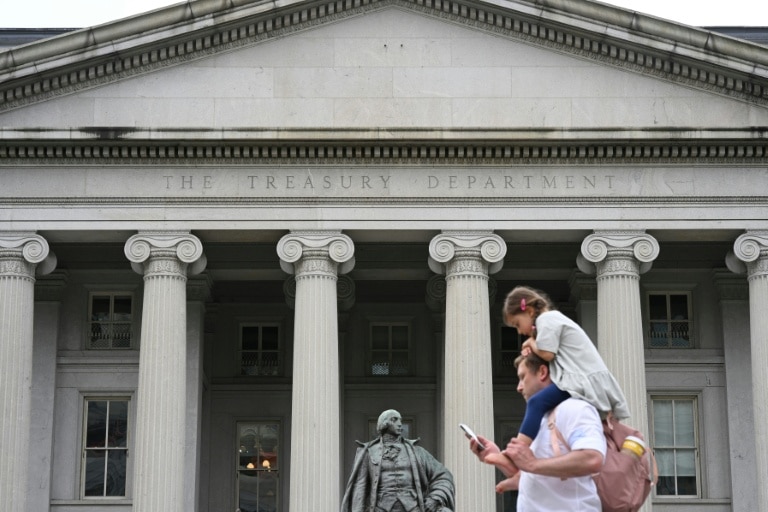
The most alarming headline comes from the United States, where the U.S. Treasury announced this month that total U.S. national debt has crossed the $40 trillion threshold for the first time in history — doubling the country’s total debt load from just 10 years ago. As yields have climbed, the annual cost of servicing this national debt has ballooned dramatically, consuming taxpayer dollars that could otherwise be allocated to core public priorities including education, health care, and national defense. In 2023 alone, U.S. federal interest outlays hit a staggering $970 billion, up from just $350 billion in 2021.
Uncertainty over U.S. monetary policy is also amplifying market volatility. With U.S. inflation currently running at 3.7% — nearly double the Federal Reserve’s 2% target — bond investors remain unsure what path new Federal Reserve Chair Kevin Warsh will take to bring prices under control. De Montpellier noted that Warsh has shifted away from the Fed’s recent practice of clear forward guidance on interest rate moves, adopting a more opaque communication strategy that has left markets guessing. Because U.S. monetary policy sets the tone for global bond markets and interest rates worldwide, this uncertainty has spilled over into markets across the globe.
For ordinary households and businesses, the impact of rising bond yields is immediate and tangible. Higher government bond yields directly translate to higher borrowing costs for everyday consumers, from home mortgages to auto loans and personal credit. For businesses, higher interest rates mean more expensive borrowing to fund expansion, research, and new hiring — a dynamic that weighs on overall economic activity. Ultimately, this translates to fewer home purchases, fewer business investment projects, and slower overall economic growth. As de Montpellier put it: “It’s clearly not good news” for the global economic outlook.