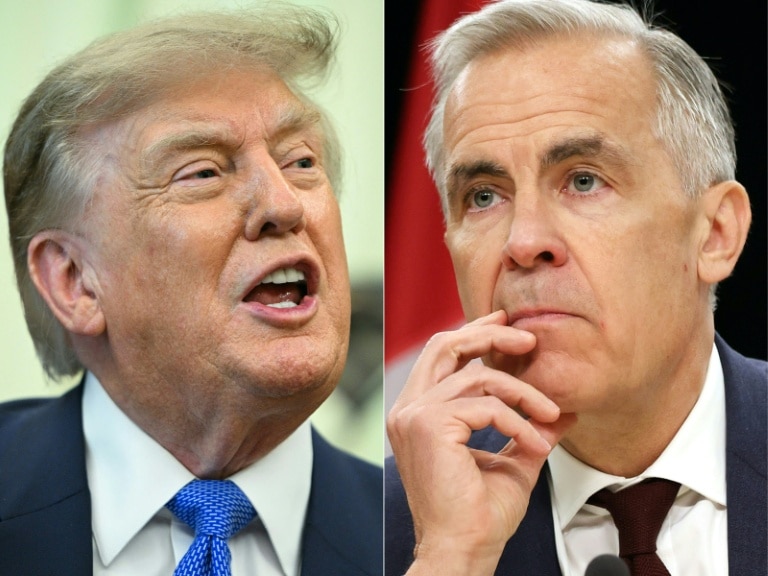
A rapidly escalating trade conflict between two long-standing North American allies entered a tense new phase this week, as Canada readies a formal response to U.S. President Donald Trump’s sweeping new 50 percent tariffs that took effect over the weekend.
The new levies, which hit a broad swathe of Canadian exports ranging from hockey sticks to cement, went into force Saturday after last-minute trade negotiations between the two countries collapsed on Friday. Economists estimate the tariffs cover roughly $20 billion worth of goods, equal to approximately 5.5 percent of all Canadian exports bound for the United States. Canadian Prime Minister Mark Carney has confirmed that retaliatory Canadian tariffs will enter into effect September 8, as trade analysts warn the dispute risks spiraling into a full-blown tit-for-tat escalation that would upend decades of integrated cross-border commerce.
In a statement issued late Monday, the Canadian government said its countermeasures are designed to protect domestic workers and businesses amid this period of mounting trade uncertainty, with senior officials set to hold a public press briefing Tuesday morning to lay out the full details of Ottawa’s response. The escalation did not stop with the initial round of tariffs: On Monday, Trump added new fuel to the fire by pledging to double existing U.S. tariffs on Canadian automobiles with non-U.S. content, raising the rate from the current 25 percent to 50 percent starting in 2026.
The proposed auto tariffs drew a fiery rebuke from Ontario Premier Doug Ford, who publicly told Trump to “kiss my ass” and floated the possibility of imposing a new surcharge on Canadian electricity exports to the United States. This is not the first time the province has taken such action: during an earlier phase of the trade dispute, Ontario implemented a temporary 25 percent surcharge on power shipments to three U.S. states. Trump quickly fired back at Ford in an online post, warning of “far worse” consequences for Canada if the province follows through on the threat, and even mocked Carney by incorrectly referring to him as Canada’s “governor” while renewing his long-running provocative call for Canada to become the 51st U.S. state.
In a new striking display of rising cross-border animosity, Trump told reporters Tuesday that he is considering renaming Lake Ontario to “Lake America,” echoing his controversial decision last year to rename the Gulf of Mexico as the “Gulf of America.”
Forecasting firm Oxford Economics estimates that Trump’s latest round of tariffs will push the average effective U.S. tariff rate on Canadian exports up from 5.1 percent to 6.9 percent, with the steepest increases falling on plastics, electrical machinery, and wood and paper products. The research firm added that manufacturing hubs in Quebec, New Brunswick, and Ontario will bear the brunt of the new economic costs.
Tensions have also spilled over into cultural disputes. Over the weekend, Carney claimed that U.S. negotiators introduced last-minute demands that would restrict Canada’s ability to sign independent trade deals with third countries, and also made unacceptable “threats” to the French language and the distinct cultural identity of Quebec, Canada’s majority French-speaking province. Trump pushed back against the claim early Tuesday in a post on his Truth Social platform, writing “I would never interfere with Canadians speaking French!” and dismissing the accusation as a “lie” fabricated by a “weak and ineffective Prime Minister” to shore up domestic political support.
The stakes of the dispute are exceptionally high: U.S. data shows the United States is Canada’s largest trading partner by a wide margin, with roughly 70 percent of all Canadian exports flowing south across the border. For the United States, Canada ranks as the second-largest goods trading partner in 2025, trailing only Mexico.
Recent public opinion polling released Sunday by the Angus Reid Institute finds that a majority of Canadian voters back Carney’s decision to walk away from the stalled negotiations, though a significant share of respondents expressed concern about potential negative economic fallout for the country. The White House has defended the new 50 percent tariffs, saying they are a response to alleged “discriminatory treatment” of U.S. alcohol, automobile, and dairy products by Canadian trade regulators. Trump had previously delayed implementation of the levies to give negotiations time to progress, but the two sides failed to bridge their differences even after talks extended down to the final deadline.
Beyond the immediate tariff fight, Washington and Ottawa also face a looming deadline to revise the U.S.-Mexico-Canada Agreement (USMCA), the existing trilateral free trade pact for North America. Trump has already made clear he will not renew the agreement in its current form, adding another layer of uncertainty to the already fraught bilateral trade relationship.