BANGKOK – A long-awaited amnesty covering political offenses committed across Thailand over the past 20 years officially entered into force on Monday, but targeted exclusions for high-profile and controversial crimes – most notably violations of the country’s harsh lese-majeste law that criminalizes defamation of the monarchy – have left advocates of national reconciliation skeptical of the policy’s ability to heal deep-seated political rifts.
First introduced as a measure to mend divisions sparked by decades of political unrest, violent mass protests, and repeated military coups, the amnesty is projected to apply to roughly 6,000 eligible individuals, according to parliamentary estimates. Formally named the Peaceful Society Promotion Act, the legislation passed its final parliamentary vote in July and was officially published in the Royal Gazette on Sunday, clearing the final procedural hurdle before it could take effect.
A special committee led by Thailand’s prime minister will be tasked with reviewing applications and confirming which individuals qualify for amnesty. The panel is required to convene its first meeting within 30 days of the law’s entry into force, though no official timeline has been set for how long the full eligibility review process will take.
The amnesty covers a broad spectrum of political offenses committed between January 1, 2005, and July 15, 2025. For qualifying recipients, the law will not only secure the release of currently imprisoned individuals, but also terminate open investigations and prosecutions, dismiss pending court cases, and permanently expunge related criminal records. Beyond lese-majeste offenses, the policy also excludes convictions for public corruption and any political crimes that resulted in death or severe bodily harm.
Critics have centered their pushback on the exclusion of lese-majeste cases, formally codified as Article 112 of Thailand’s Criminal Code. The law has long been a flashpoint of national controversy: critics argue it is routinely weaponized to suppress political dissent, with penalties including a maximum prison sentence of 15 years per conviction. Complaints can be filed by any private citizen, not just government or royal officials, and most defendants are ordered to remain in detention for the duration of often years-long legal proceedings. Even minor acts, such as liking a critical social media post on Facebook, have resulted in charges in recent years.
Mass student-led pro-democracy protests that erupted across Thailand in 2020 centered calls for reform of Article 112, only for many of the movement’s leading organizers to be charged with lese-majeste offenses themselves. Thai Lawyers for Human Rights, a Bangkok-based legal advocacy organization, reports that more than 290 people – the majority of whom are young student activists – have faced Article 112 charges since early 2020. As of July this year, at least 54 people remain imprisoned in connection with political cases, and only around 10 of those detainees are expected to qualify for release under the new amnesty, the group confirmed, because all others are being held on lese-majeste charges.
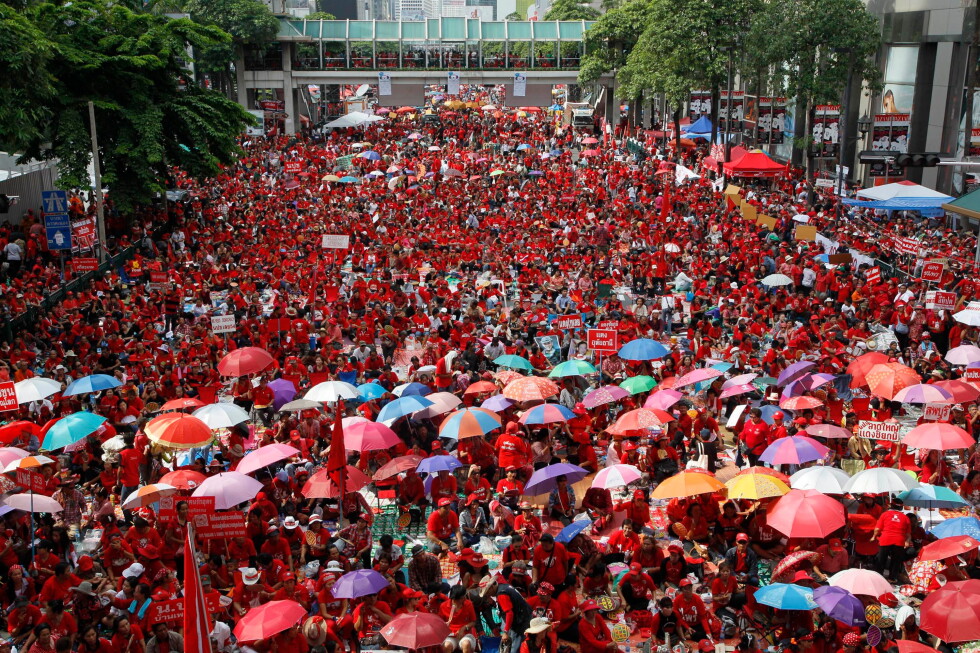
Thailand’s long-running political divides have largely centered on the polarizing figure of former Prime Minister Thaksin Shinawatra, who was removed from office in a 2006 military coup. Thaksin’s populist policy agenda earned him fierce loyalty among low-income and rural voters, particularly in the country’s northern and northeastern regions, but his widespread popularity and assertive governing style created deep, lasting fractures between his political base and the kingdom’s conservative establishment: urban elites, traditional royalists, and the military. Over the past two decades, parties aligned with Thaksin have repeatedly won general elections and returned to power, while Thaksin himself lived in self-imposed exile abroad for many years to avoid prison time on past political convictions. Just last week, Thaksin was granted an early royal pardon and released from parole just over a year after he returned to Thailand, a development that has reignited debate over the country’s uneven application of political justice.