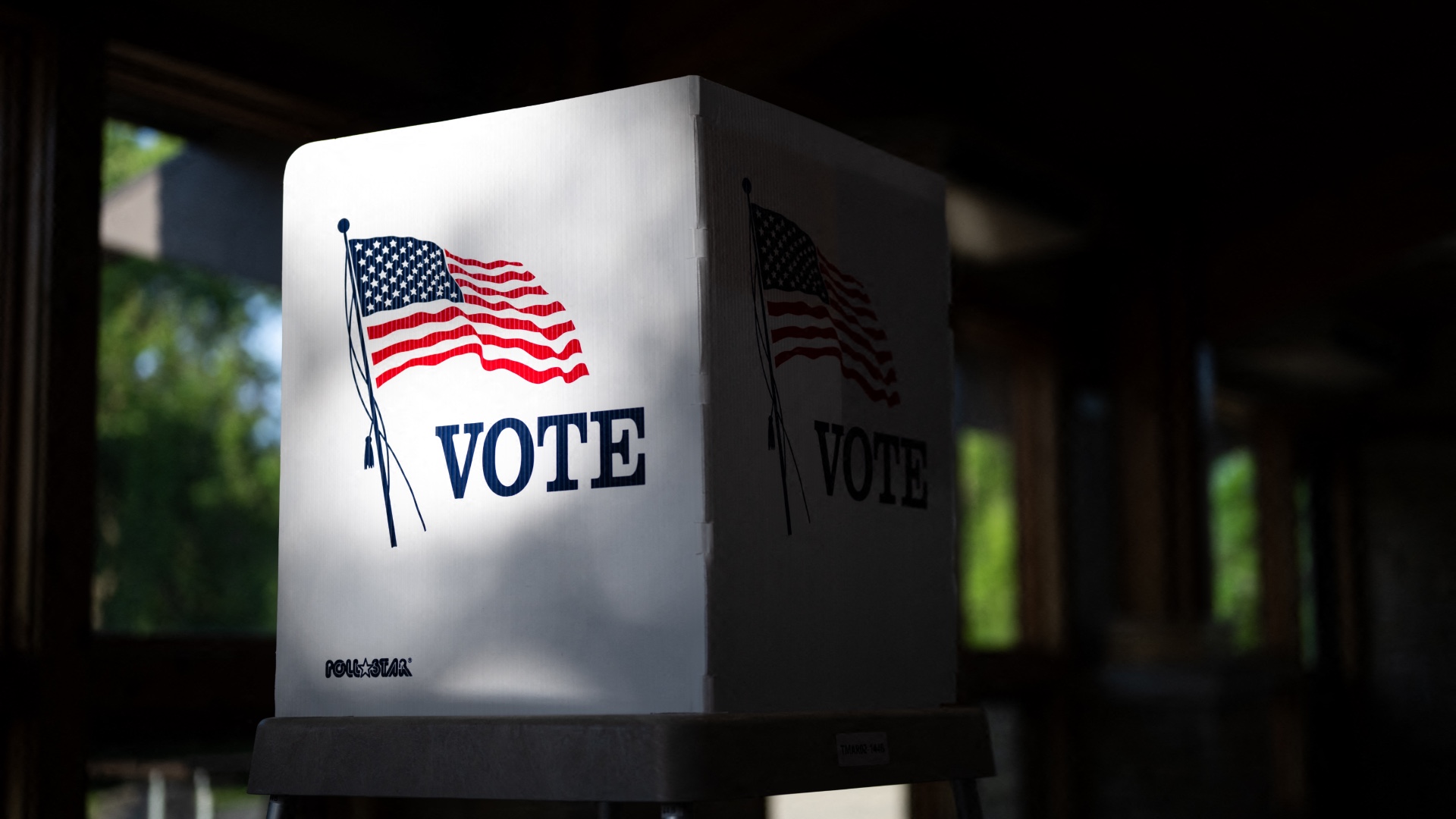
The United States stands alone among global democracies in the massive scale of money that flows through its political elections. Washington D.C.’s political ecosystem is uniquely molded by cash infusion and lobbying influence, and the billions poured into state and federal contests are not merely used to cover administrative costs for voting access — they are deployed to control public narrative and swing electoral outcomes.
According to OpenSecrets, a nonpartisan organization that tracks U.S. campaign finance, total spending by individuals, organized groups, and independent outside spenders for the 2024 presidential and congressional election cycle is approaching nearly $5 billion — a staggering jump from pre-2010 levels when the figure never exceeded $1 billion.
This explosive growth in campaign spending traces directly back to the 2010 U.S. Supreme Court *Citizens United v. FEC* ruling, which eliminated longstanding caps on independent political spending by corporations, labor unions, and special interest groups. The court’s majority argued that political spending qualifies as protected free speech under the First Amendment, writing that “the Government may not suppress political speech based on the speaker’s corporate identity” and that “no sufficient governmental interest justifies limits on the political speech of nonprofit or for-profit corporations.”
The ruling cleared the way for the creation of Super Political Action Committees (Super PACs), independent groups that can raise and spend unlimited sums from corporations, wealthy individuals, and organizations to support or oppose political candidates. While traditional PACs face strict federal contribution caps of $5,000 per election cycle from individual donors and cannot accept corporate funds, Super PACs face no such limits — they are only barred from formally coordinating spending with the candidate they support, a restriction that campaign finance experts say is often loosely enforced.
“Basically they can take over $100 million if they wanted to from a single individual, and spend all that money in support of a candidate,” explained Anna Massoglia, a campaign finance expert, in an interview with Middle East Eye. “And as long as they disclose the spending, and whoever the donor is — at least the immediate donor — then that is perfectly legal.”
Direct individual donations to official candidate campaigns remain capped at $3,500 per federal election cycle, and individual contributions to national party committees are capped at $44,300. But earlier this year, the Supreme Court further loosened campaign finance rules by allowing candidates to control independent party funds allocated to their races, a decision former President Donald Trump hailed as a major victory for political speech.
Even with disclosure rules on paper, a massive share of independent political spending comes from so-called “dark money” groups that hide their original donors. Since the *Citizens United* decision, these anonymous actors have spent more than $4 billion on federal elections alone, according to Massoglia’s research. Dark money groups often avoid formal disclosure requirements by running issue ads that praise or criticize candidates without using explicit phrases calling for a vote for or against them, allowing them to shield their funding sources. Many route donations through nonprofits or shell companies to further hide the identity of major contributors.
The role of unlimited independent spending played a central role in a stunning 2024 Democratic Senate primary upset in Michigan, where progressive first-time candidate Abdul El-Sayed defeated centrist incumbent Congresswoman Haley Stevens. If El-Sayed wins the general election in November, he will become the first Muslim U.S. senator in American history.
Stevens, backed by the Democratic Party establishment and Michigan’s sitting governor, attracted more than $50 million in outside corporate and special interest spending to defeat El-Sayed — with the pro-Israel lobby’s United Democracy Project (UDP), a Super Pac affiliated with the American Israel Public Affairs Committee (AIPAC), alone contributing $30 million to her campaign. By contrast, El-Sayed received just over $5 million in outside spending, mostly from progressive advocacy groups. That figure does not include direct donations raised by each candidate’s official campaign, all spent on a single primary contest rather than the general election.
Conventional political wisdom holds that overwhelming spending almost always guarantees victory: Craig Holman, a government affairs lobbyist for consumer advocacy non-profit Public Citizen, notes that candidates who outspend their opponents win roughly 95% of the time. El-Sayed’s victory, therefore, marked a rare exception to the rule that has defined post-*Citizens United* U.S. elections.
In the 2024 cycle, outside spending by Republican-aligned groups has already far outpaced Democratic spending, accounting for 65% of total independent expenditures compared to 29% for pro-Democratic groups. The Make America Great Again Super PAC, formed to support Donald Trump’s 2024 presidential bid, has raised more than $410 million, making it the cycle’s top fundraiser. Nearly 91% of all 2024 outside spending comes from ideological or single-issue groups focused on causes ranging from gun rights and anti-abortion policy to oil and gas development and defense policy.
For years, consistent top spenders in U.S. elections have included the U.S. Chamber of Commerce, which advocates for corporate interests, the National Association of Realtors, which works to shape property law, and the Pharmaceutical Research and Manufacturers of America, which lobbies on health policy. Big tech giants including Meta and Amazon have rapidly increased their election spending in recent cycles. AIPAC, already the third highest-spending PAC in the 2024 cycle, counts its Super PAC arm UDP among the top 15 highest-spending independent groups across all industries — making it the most influential foreign interest-focused group in U.S. electoral politics. For the 2026 election cycle, an Americans for Tax Fairness report found that as of March 1, nearly 80% of all billionaire contributions to Super PACs go to Republican candidates and causes, with top donors including Tesla and SpaceX CEO Elon Musk, Wall Street fund manager Jeffrey Yass, and tech entrepreneur Greg Brockman.
Critics argue that the current system of unlimited campaign spending fundamentally undermines American democratic representation. Because U.S. House terms last only two years, presidential terms four, and Senate terms six, elected officials are forced to fundraise continuously from the earliest days of their terms to prepare for their next campaign. “It allows wealthy individuals, wealthy groups, corporations, and even foreign interests to invest heavily into who is elected to our government. If [candidates] want to remain in office, they know where the money is coming from,” Holman said.
Northwestern University law professor Michael S Kang, who studies campaign finance regulation, noted that while fundraising can help grassroots unknown candidates get on their feet, the outsized role of money systematically favors wealthy interests. “There are people who say that fundraising is kind of a proxy for popularity, but that’s not really true, because we come from different communities and different communities have different amounts of wealth, and so the way that the role and the importance that money plays in politics has a way of favouring the wealthy [gives them] outsized influence,” he explained.
Not all analysts agree that money distorts election outcomes: a 2016 paper from conservative think tank the Manhattan Institute argued that political donations rarely change candidates’ policy positions, noting that donors typically give to candidates who already share their ideological views and are already positioned to win.
In the wake of El-Sayed’s Michigan primary win, grassroots groups such as Mop Up Michigan have gained traction pushing for campaign finance reform, calling for bans on corporate donations to candidates and greater transparency for political ad funding. A small number of U.S. states, including Arizona, have implemented stricter disclosure rules to shine a light on dark money, but experts say these efforts have had limited success, as dark money groups continuously develop new tactics to hide their funding sources.
While both major political parties have introduced campaign reform bills in recent Congresses, no major federal reform legislation has been signed into law. The Brennan Center for Justice at NYU Law has proposed small donor public financing, a system that would match small individual campaign contributions with public funds to incentivize candidates to court widespread grassroots support rather than a small number of wealthy mega-donors. Still, the system requires more outreach work from candidates, who often find it easier to rely on unlimited ad spending from supportive Super PACs.
Holman argues that current U.S. campaign finance regulation is effectively useless, pointing to the large legal loophole for unlimited spending by independent nonprofit groups opened by Supreme Court rulings. “The biggest effort is to reform the court system, because it’s the courts that have destroyed our campaign finance laws,” he said.