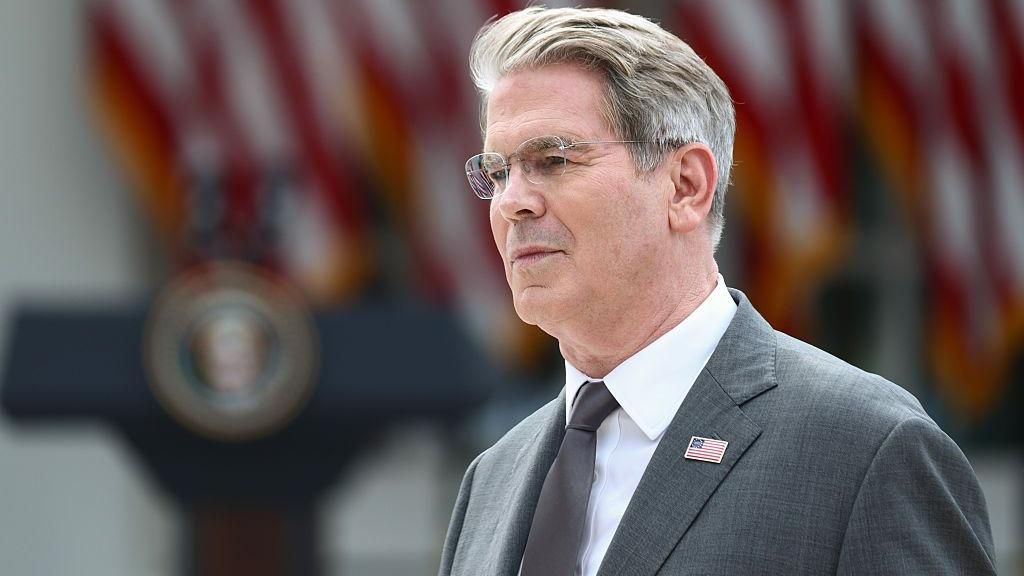
Amid a months-long conflict between the U.S.-aligned alliance and Iran, top U.S. financial official Scott Bessent has issued an extraordinary new threat, promising what he calls “the single greatest financial offensive” in modern history against Tehran, as the confrontation enters what Washington frames as its endgame phase.
In an opinion piece published by the *Financial Times*, Bessent framed the planned pressure campaign as an “economic D-Day”, noting that the U.S. intends to cut all remaining economic ties with Iran. He added that any country maintaining financial partnerships with Tehran will also face international isolation at the hands of Washington. The official stopped short of outlining specific measures in the op-ed, but confirmed he will lay out full details during a scheduled press conference in the U.S. Monday at 13:00 local time, equal to 18:00 BST.
“The world should understand that our objective is to sever every economic lifeline that sustains the tyrannical regime until Tehran stands alone,” Bessent wrote in the commentary.
Bessent’s latest warning comes on the heels of repeated backtracking and extended deadline delays from the second Trump administration on previous threats to take aggressive action against Iran. This pattern of reversed positions stretches back to April of this year, when former President Trump issued a dramatic ultimatum, warning that “a whole civilisation will die tonight” unless Iran struck a deal to end the conflict and reopen a critical global waterway. That threat was ultimately walked back after Pakistan, acting as a neutral mediator, stepped in to call for renewed diplomatic negotiations.
Tehran has already pushed back fiercely against Bessent’s new remarks, per reporting from Reuters. Iranian officials have warned that if the U.S. follows through on its escalatory plans, the country will halt all oil exports from the broader Persian Gulf region. Iran has also issued a fresh warning to global maritime operators, barring any commercial ships from transiting the Strait of Hormuz without explicit official permission from Tehran.
The Strait of Hormuz, a narrow waterway located off Iran’s southern coast, is one of the most critical energy chokepoints on the planet: roughly one-fifth of the world’s total oil and natural gas supplies pass through the strait for global export. Since the outbreak of open conflict at the end of February, Iran has effectively blocked all traffic through the strategic route, creating widespread ripple effects for global energy markets.
Iran has been living under harsh sweeping U.S. economic sanctions for years, a situation rooted in shifting U.S. policy toward the country over the past decade. In 2015, former President Barack Obama and a coalition of international allies reached a landmark nuclear agreement with Tehran: the deal lifted a wide range of international sanctions in exchange for Iran accepting strict limits on its nuclear development program to prevent it from developing nuclear weapons. However, when former President Trump first took office in 2018, he withdrew the U.S. from the agreement, calling it “defective at its core”, and reimposed all unilateral U.S. sanctions on Iran.
During President Joe Biden’s term, the administration made multiple attempts to restart negotiations and revive the 2015 nuclear deal, but those efforts never produced a final agreement. After winning re-election in 2024, the Trump administration launched a new wave of sanctions in April of this year targeting foreign banks and commercial firms that continued to conduct business with Tehran, after initial U.S. military operations failed to force the Iranian regime into surrender.