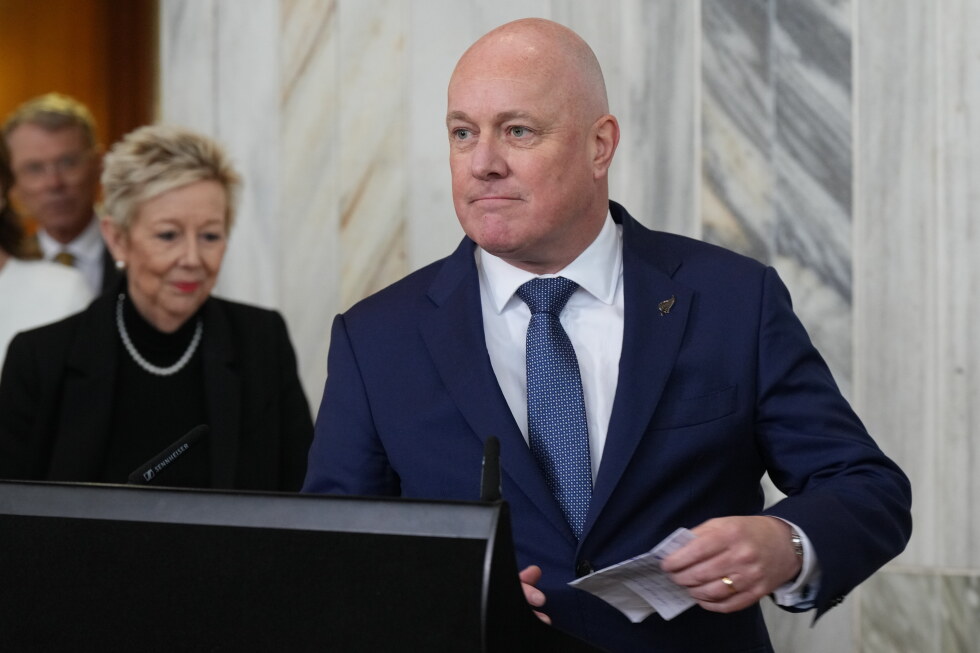
WELLINGTON, New Zealand — Prime Minister Christopher Luxon has introduced a landmark draft law that would bar all children under the age of 16 from accessing major social media platforms, framing the proposal as an urgent response to what he described as widespread, generational harm to New Zealand’s young people. Announced on Monday, the policy joins a growing global wave of age-based restrictions on big tech, but faces immediate gridlock within Luxon’s own ruling coalition, leaving its path to passage deeply uncertain.
The proposed legislation targets leading platforms including Instagram, TikTok, Snapchat, and Facebook, requiring these companies to implement verifiable age-checking measures to exclude underage users. Acceptable verification methods outlined in the policy document from Luxon’s center-right National Party include existing user account data, facial age estimation technology, digital identity services, and formal government-issued identification. Critical carve-outs exclude one-on-one messaging services such as WhatsApp, user-generated online gaming platforms like Roblox, and productivity-focused artificial intelligence tools including ChatGPT, Google Gemini, and Microsoft Copilot.
Notably, the draft law imposes no penalties on children or parents who access platforms in violation of the ban. Instead, enforcement falls entirely on tech companies, which could face fines of up to 10 percent of their annual global revenue for failing to meet their compliance obligations. The bill also mandates that platforms with significant child user bases must conduct regular public risk assessments and publish reports detailing potential harms to young users on their networks.
Luxon framed the policy as a necessary intervention based on local data, noting that 2025 research found one-third of New Zealand teenagers spend at least five hours per day on social media. “Social media is exposing them to harmful content, addictive technology and pressures they are not equipped to deal with and it’s affecting their family life, mental health, sleep, and education,” he told reporters on Monday.
Luxon’s push for the ban follows Australia’s implementation of a world-first under-16 social media ban that took effect in December 2025. Since Australia’s ban came into force, Canada, Brazil, and Indonesia have also enacted similar age restrictions, while dozens of other nations are currently drafting or evaluating their own rules. Early results from Australia show that just one month after the ban took effect, major platforms reported revoking access to roughly 4.7 million accounts confirmed to belong to underage users. The policy has divided global stakeholders: child safety advocates and many parents have praised the measures as a long-overdue protection for young people, while digital privacy organizations argue age-verification rules are easily circumvented and create unacceptable risks to users’ personal data.
Despite the prime minister’s support, the bill faces steep procedural and political obstacles. Two of the three parties in Luxon’s ruling coalition — the libertarian ACT Party and populist NZ First — have repeatedly and vehemently opposed the legislation, and confirmed Monday they will vote against it. For the bill to advance, Luxon will need backing from opposition lawmakers, who have not yet committed to supporting the proposal. Chris Hipkins, leader of the center-left Labour Party, the largest opposition bloc, said Monday his caucus has not reached a final decision on how to vote.
Complicating matters further, Luxon confirmed there is insufficient time to complete the legislative process before Parliament dissolves on October 1, ahead of New Zealand’s general election scheduled for November. Under New Zealand law, all bills must pass three separate rounds of parliamentary voting, a process that typically takes several months, before they can be signed into law. If Luxon’s National Party is reelected to lead the next government, he has pledged to reintroduce and advance the bill to make New Zealand the latest nation to implement strict age limits for social media access.
This is not the first time Luxon’s government has taken action to limit young New Zealanders’ screen time: in 2024, the administration enacted a nationwide ban on cellphone use during school hours for students of all age groups.