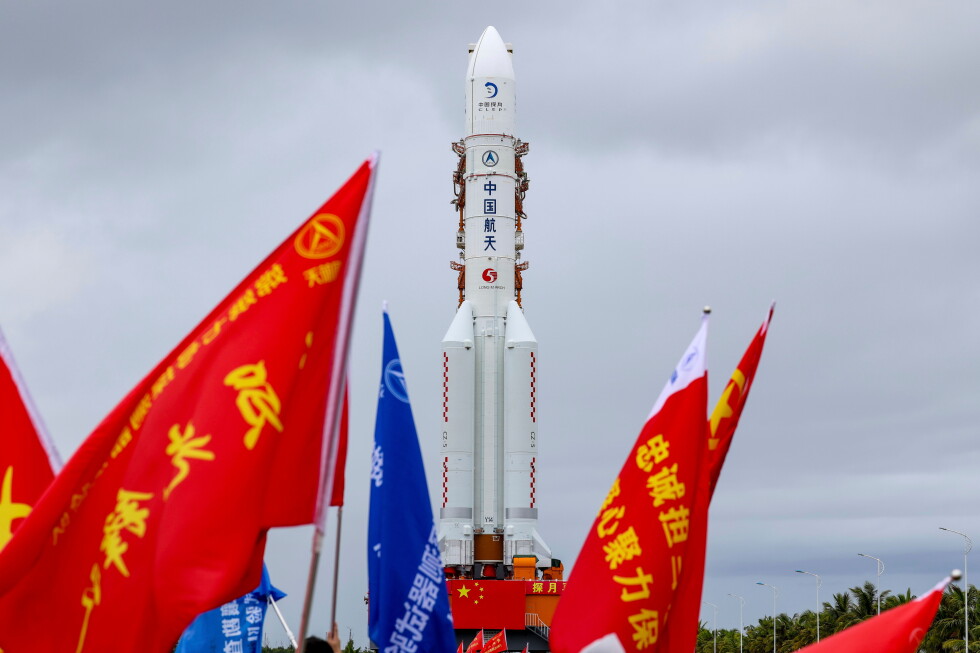
In an unexpected announcement made on Sunday, China has confirmed the postponement of its highly anticipated Chang’e-7 lunar mission, a groundbreaking expedition designed to hunt for water ice and conduct extensive surveys of the moon’s southern polar region. The robotic spacecraft, which forms the seventh installment of China’s expanding Chang’e lunar exploration program, was originally scheduled to launch within days from the Wenchang Space Launch Center located on the southern island province of Hainan. The China National Space Administration (CNSA) stated in a concise official statement that the mission currently fails to meet required launch conditions, meaning it cannot proceed within the pre-scheduled launch window for 2025. The postponement decision was reached after a comprehensive technical review, with the space agency noting that the call aligns with its core guiding principles of prudence, reliability, and a commitment to ensuring absolute mission success. No further details regarding the specific technical issues or the revised launch timeline have been released to the public at this time. Over the past several weeks, launch teams at the Wenchang facility had been conducting final pre-launch preparations for the mission, which was billed as a major step forward in China’s lunar exploration ambitions. Prior to the postponement announcement, China’s official state news agency Xinhua had outlined the mission’s far-reaching scientific objectives. Beyond its primary goal of detecting and mapping water ice deposits in the moon’s permanently shadowed polar craters, Chang’e-7 was tasked with carrying out comprehensive surveys of the lunar south pole’s surface environment and natural resource potential. The mission was also expected to deliver major breakthroughs in several key lunar exploration technologies, including precision landing, rover mobility, and deep space remote sensing. China’s Chang’e lunar program takes its name from the legendary moon goddess of Chinese mythology. The program has achieved a string of historic milestones in recent years, most recently the 2024 return of the Chang’e-6 probe, which brought the first ever samples of rock and soil collected from the far side of the moon back to Earth — a feat no other space program had accomplished before.