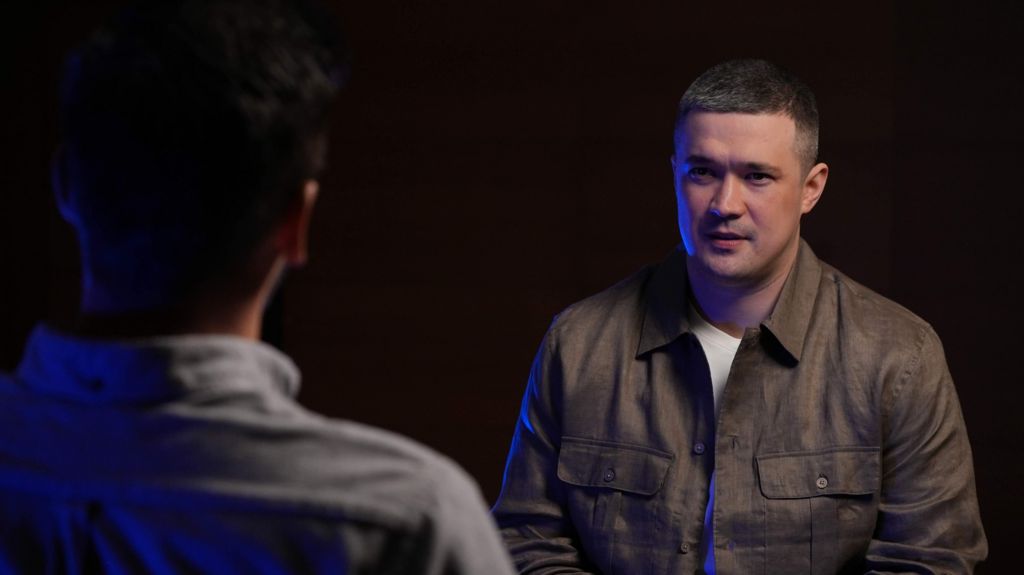
In a revealing new interview with the BBC, Ukraine’s recently dismissed Defence Minister Mykhailo Fedorov has thrown into sharp focus long-simmering questions of corruption in Volodymyr Zelensky’s government, while pushing for an urgent national conversation about restarting suspended elections amid ongoing martial law. The 35-year-old minister, widely credited with revolutionizing Ukraine’s military capabilities through his pioneering drone warfare program and successful modernization of the armed forces, was removed from his post last month amid unconfirmed reports of friction with the leadership of Ukraine’s armed forces.
Fedorov’s questioning of Zelensky comes on the heels of a high-profile money laundering investigation announced by Ukraine’s anti-corruption bureau last week. The probe uncovered a scheme to divert more than $3 million in public funds to post bail for a former Ukrainian energy minister facing money laundering charges, and led to the dismissal of a senior official embedded in Zelensky’s own office. In his interview, Fedorov argued that this case demands clear answers from the president about whether he was aware of corrupt activity among his closest aides.
“Let him answer this question… I believe that he’s ready for such questions. It’s his responsibility to tell us all whether he was aware of all that or not… I don’t want to make any assumptions,” Fedorov told the BBC. He was careful to clarify that he has no evidence of personal corruption by Zelensky, noting that in their years working together, the president never gave him an order that violated laws or ethical standards. He added, however, that corruption still remains a systemic barrier that undermines Ukraine’s frontline combat capacity, even after he rooted out corrupt networks in defence procurement during his tenure.
The former minister has sparked political controversy in recent weeks after posting a public video calling for an end to the suspension of elections, which have been put on hold since Russia launched its full-scale invasion of Ukraine in 2022 under nationwide martial law. Fedorov defended his call for a public debate on elections, framing it as a core democratic principle rather than a power grab.
“We should not be afraid of discussing it. That’s what democracy is all about. If I cannot share my ideas and be open about them with my own society, then what are we fighting for? If elections were never held, then we are no longer a democracy,” he said. While he stopped short of confirming immediate presidential ambitions, he also declined to rule out a future run for office, noting that any decision would depend on the resumption of electoral processes, public trust, and his own ability to take on the role. He also sidestepped questions about whether he would support Zelensky’s re-election if votes are held.
Following Fedorov’s dismissal, weekly public protests have been held in Kyiv by his supporters demanding Zelensky reinstate him to his post. The demonstrations wrapped up this week after the confirmation of Fedorov’s replacement, just hours after he released a second video calling for broad political reform. When asked if he missed his former role, Fedorov said no, citing the unrelenting pressure of managing defence operations during an active full-scale war while simultaneously overhauling the ministry.
A spokesperson for Zelensky pushed back against Fedorov’s claims in a statement to the BBC, noting that Fedorov was a core member of every presidential administration since 2019, and questioned why he had not raised similar public concerns during his time in government.
Beyond domestic political and corruption issues, Fedorov also criticized bureaucratic delays in weapons deliveries from Western backers including the United Kingdom, which has committed £16 billion in military support to Ukraine since the start of the war. While he expressed gratitude for the UK’s longstanding support, he blamed unnecessary red tape for holding up shipments of promised equipment, a problem he said is common across many partner nations that announce assistance but take months to deliver it.
“Governments are lagging behind the realities on the ground. It’s not only the issue for UK, but for other countries as well that announce some assistance and we are not getting it until the end of the year,” he explained. Fedorov argued that Western partners should shift their support to directly funding Ukraine’s cutting-edge domestic drone production, rather than sending outdated legacy equipment that is no longer suited to modern battlefield needs: “We don’t need repairs of tanks when we no longer use tanks.”
Looking ahead, Fedorov confirmed he will travel to the United States in the coming weeks to meet with Tesla and SpaceX CEO Elon Musk, whose Starlink satellite internet system has been a critical enabler of Ukraine’s military operations. The former minister aims to convince Musk to expand Starlink access into Russian-occupied and Russian airspace to support Ukrainian strike operations, while implementing safeguards to prevent the Kremlin from misusing the technology. He emphasized that maintaining relationships with leading global tech companies remains critical to securing Ukraine’s victory, regardless of his formal government position.
Fedorov stressed that Ukraine’s wartime military experience, gained at the cost of thousands of soldier’s lives, delivers unique benefits to Western nations, and that timely weapons support would not only save Ukrainian lives but also help Western powers prepare for future conflicts.
Reiterating his core democratic principles, Fedorov said that “democracy should not be the hostage of Putin”, framing his calls for transparency and elections as consistent with the values Ukraine is defending against Russian aggression.