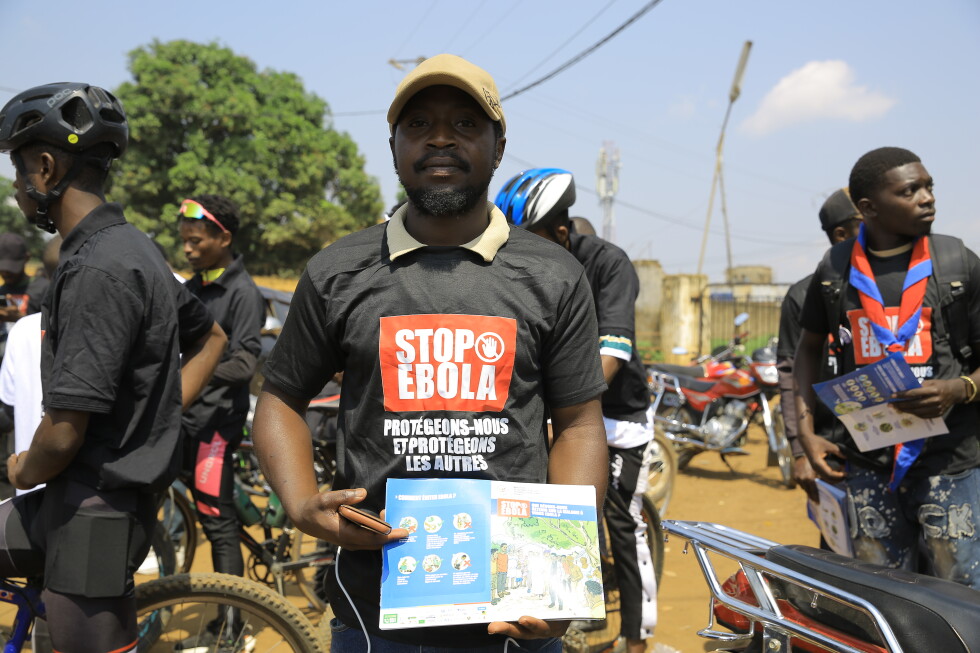
BUNIA, Democratic Republic of the Congo – As the Central African nation fights what has become the fastest-spreading Ebola outbreak in recorded history, its first shipment of 16,250 doses of the Ervebo vaccine has arrived on the ground, the country’s health minister confirmed.
The vaccine shipment touched down at Kinshasa’s N’djili International Airport on Friday evening. This delivery marks the first installment of the 70,000 total doses promised to Congo by the World Health Organization and its global health partners, an aid package first announced publicly this past Thursday. Additional shipments of more vaccine doses are scheduled to arrive in the country early next week, according to official updates.
The unfolding public health crisis is being driven by the Bundibugyo Ebola virus strain, a rare variant that currently has no specifically approved treatment or licensed vaccine designed exclusively to target it. The virus presents a unique challenge to containment: its early symptoms overlap heavily with common regional illnesses like malaria, allowing infections to go undetected while the virus spreads easily through communities.
While Ervebo is formally approved only for another common Ebola strain, it has a proven track record of successfully stopping transmission in past outbreaks. WHO public health experts have indicated the vaccine may still offer meaningful cross-protection against the Bundibugyo variant, making it a critical stopgap tool while more targeted medical countermeasures are developed.
As of Friday’s official count, the outbreak has already claimed 2,516 lives among 5,290 confirmed confirmed cases. The rate of spread is unprecedented, and public health officials warn the outbreak is on course to overtake the 2014-2016 West African Ebola epidemic, the deadliest on record which killed more than 11,000 people across five countries. Data analysis from the Africa Centers for Disease Control and Prevention shows transmission has not yet reached its peak, with projections indicating the known infection rate could triple in coming weeks if containment efforts cannot slow spread.
Complicating all response efforts are a series of overlapping humanitarian and security crises that have blocked access to affected communities. Much of the outbreak’s epicenter is controlled by rebel groups engaged in active armed conflict with the Congolese government, making it dangerous for response teams to operate. Medical workers and facilities have repeatedly been targeted in attacks, while large populations of displaced people and mobile migrant laborers have helped the virus cross regional borders. The lack of basic healthcare infrastructure in affected regions has further undermined efforts to test, trace, and isolate cases.