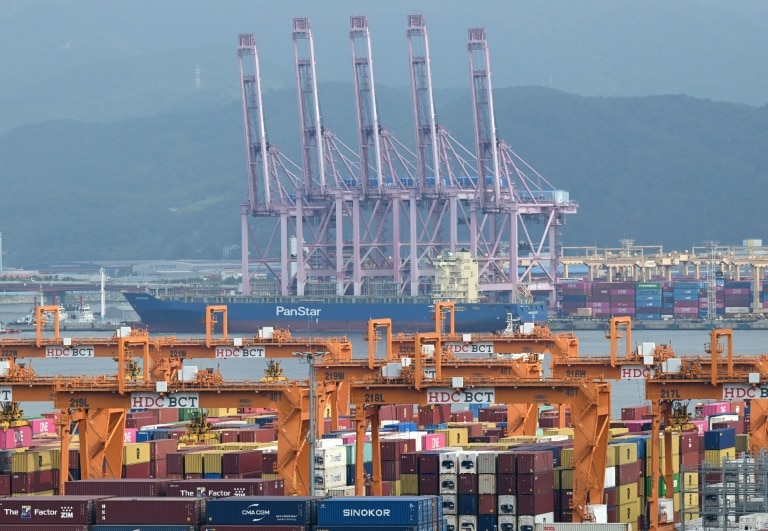
Geopolitical chaos triggered by conflict in the Middle East has upended long-standing global shipping patterns, pushing Asian maritime powers to test a melting Arctic shipping corridor as a viable alternative to crowded, high-risk traditional routes. On Saturday, South Korea prepared to make history with its first experimental commercial container voyage through the Northern Sea Route (NSR), a journey that carries both economic promise and steep controversy over climate and sanctions risks. The 45-day trial voyage, operated by the container vessel *PanStar Acro*, is set to depart from Busan New Port for major European ports including Britain’s Felixstowe, Rotterdam in the Netherlands and Poland’s Gdansk, unless unexpected bad weather or other disruptions force a delay, according to South Korea’s Ministry of Oceans and Fisheries.
This trial comes just weeks after China launched its own commercial container voyage through the Arctic, when the *Dubai Tower* departed Ningbo for Europe, traveling north through the Bering Strait before following Russia’s Arctic coast westward. For decades, the primary shipping artery connecting Asia and Europe has run through the Suez Canal, but the ongoing Middle East conflict has put this route under growing strain. The Korea Institute for International Economic Policy estimates that the Arctic route cuts the total journey distance by roughly 7,000 kilometers (4,300 miles) and reduces travel time by about 10 days, a significant saving for commercial shipping firms.
South Korean Vice Oceans Minister Nam Jae-hon framed the Arctic corridor as an inevitable alternative to the vulnerable Middle East shipping lanes, noting that rising geopolitical risks paired with advancing ice navigation technology have made the route increasingly competitive for commercial use. Marc Lanteigne, a political science professor at the Arctic University of Norway, argues that the back-to-back trial voyages from China and South Korea mark a key turning point: the NSR is rapidly becoming normalized as a permanent secondary maritime transit corridor between Asia and Europe. A successful trial would confirm South Korea’s ambition to secure access to alternative shipping lanes, Lanteigne added, as Seoul fears falling behind Chinese firms that are already expanding regular services along the increasingly navigable Arctic route.
However, the plan has sparked significant concerns on two fronts: Western sanctions on Russia and accelerating Arctic climate breakdown. Any vessel traveling the NSR relies on Russian-provided navigation and weather services, which require small but mandatory payments to Russian entities. Experts warn that this could put South Korean shipping operators at risk of violating Western sanctions imposed on Moscow over its war in Ukraine, particularly amid Russia’s growing military alliance with North Korea, South Korea’s primary regional adversary. When reached for comment by AFP, South Korea’s foreign ministry declined to address the sanctions concerns. The oceans ministry, however, noted that it has already completed all required consultations with relevant countries and agencies to clear administrative hurdles for the voyage.
Vladimir Tikhonov, a Korean Studies professor at the University of Oslo, pointed out that U.S. and EU sanctions on Russia are not binding international law, unlike sanctions approved by the United Nations. Given the persistent uncertainty in the Middle East, which is itself partially fueled by U.S. foreign policy actions, Tikhonov noted that South Korea may have few other options if the Arctic route delivers on its promised economic benefits. Lanteigne also drew a distinction between the ambitions of China and South Korea: Beijing’s NSR expansion is largely politically driven, as it frames the Arctic as a strategic new frontier, a stance that has stoked security concerns among Western powers, while Seoul’s interest is primarily focused on securing alternative shipping capacity amid global supply chain disruption.
Beyond geopolitical risks, environmental organizations have sounded the alarm that growing commercial traffic along the NSR will speed up the loss of Arctic sea ice already being decimated by human-caused global warming. The Arctic is warming roughly four times faster than the global average, a trend that has already shrunk summer sea ice extent dramatically and opened the NSR to icebreaker-free transits for longer portions of the year. Several of the world’s largest container shipping firms, including CMA CGM, MSC and Hapag-Lloyd, have already pledged to avoid Arctic shipping routes over climate concerns. South Korean environmental group Paran Ocean Citizen Science Center emphasized in a 2023 statement that while Arctic warming has made the NSR more commercially viable, expanding commercial use of the route will require additional warming, creating a dangerous feedback loop that directly undermines global efforts to curb climate change.