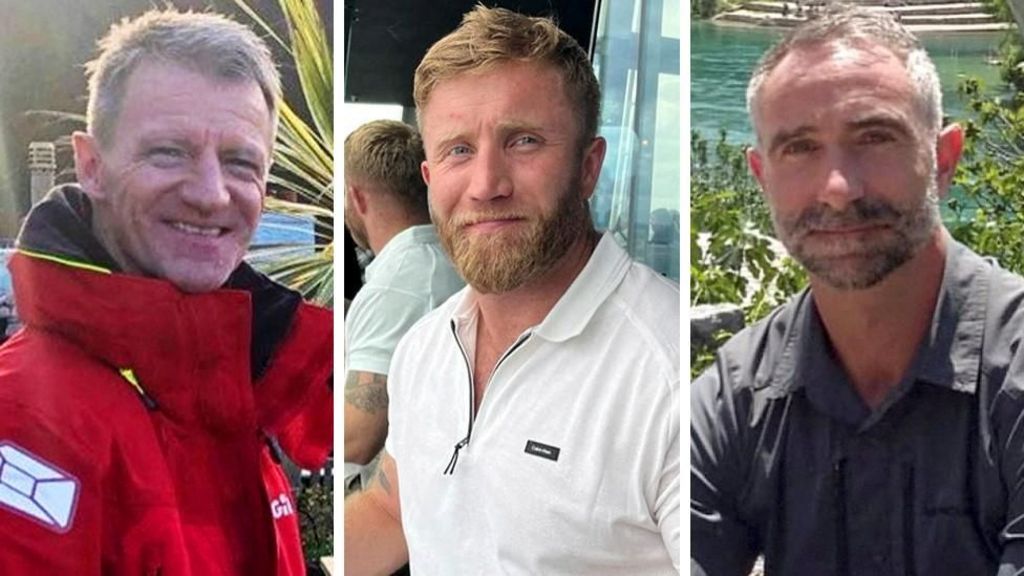
Three major Western nations have issued a sharp joint rebuke of Israel after Israeli authorities ruled out a full criminal investigation into an April 2024 air strike that killed seven humanitarian workers with World Central Kitchen (WCK) in Gaza. The victims of the strike, which targeted a WCK convoy delivering emergency food assistance to besieged Gaza civilians, included three British citizens, one Polish national, one Australian, one Canadian, and a dual U.S.-Canadian citizen.
In a joint statement released by their foreign ministries, the United Kingdom, Canada and Australia described Israel’s decision to forgo a criminal investigation as “shameful”, noting that the announcement deliberately coincided with World Humanitarian Day—an annual global observance honoring the sacrifice and courage of aid workers operating in conflict zones. The three countries called the timing of the announcement “particularly egregious”, adding that “the victims of this incident and their families deserve justice and accountability, and we will continue to seek answers on their behalf”.
For over two years following the strike, the three nations have pressured Israeli officials to open a swift, comprehensive inquiry and hold any parties found responsible for the deaths accountable, the statement confirmed. It also highlighted that the WCK strike is not an isolated case: Gaza remains the most dangerous location in the world for humanitarian work, with 186 aid workers killed in the region in 2025 alone, and almost none of these deaths have resulted in accountability for those responsible. The joint statement urged Israel to uphold its binding obligations under international humanitarian law and take immediate additional steps to guarantee safe passage for aid staff carrying out life-saving work in Gaza.
Israeli officials have defended their decision to skip a criminal investigation. Hillel Newman, Israel’s ambassador to Australia, argued that “there was no criminal intention” in the strike, and therefore no basis to pursue criminal charges. In its own official statement, the Israel Defense Forces (IDF) offered several justifications for the strike and subsequent decision not to investigate: it claimed the WCK convoy included an armed guard whose presence was not disclosed to the IDF ahead of the movement, that the guard was incorrectly misidentified as a Hamas militant, and that the convoy had deviated from a pre-coordinated route agreed upon with Israeli military officials. While the IDF acknowledged “serious failures” in the operational processes that led to the killings, it concluded that “the decisions of the commanders did not raise reasonable suspicion of criminal misconduct”.
Diplomatic backlash has spread beyond the joint statement from the three nations. Australia was the first to act, summoning Ambassador Newman to meet with officials after Israel’s announcement. Australian Foreign Minister Penny Wong said her country was “outraged” by the decision, pointing to a series of still-unresolved questions about the strike: if the initial strike on the convoy was a “catastrophic error”, why did two additional strikes hit the same convoy within minutes of the first? Poland has also joined the criticism, summoning Israel’s ambassador to Warsaw and releasing a statement saying it was “very disappointed” by the Israeli government’s call not to open a criminal probe.
Jose Andres, the celebrity chef and founder of WCK, the leading global food aid organization that was operating the convoy, called Israel’s decision “wrong” and “painful for all of us”, and repeated his longstanding call for an independent international commission to conduct a full investigation into the killings.
Israeli Prime Minister Benjamin Netanyahu has yet to issue a public response to the latest joint statement from the three Western nations. He has previously stated that the aid workers were killed “unintentionally” by Israeli forces.
The diplomatic clash over the WCK investigation decision comes on the heels of a separate public confrontation between UK Foreign Secretary Ed Miliband and Israeli Foreign Minister Gideon Saar over new Israeli settlement expansion plans in the occupied West Bank. Israel recently announced plans to open tenders for the construction of roughly 1,200 new settlement homes in the E1 corridor, a strategically sensitive area east of Jerusalem that has been the focus of widespread international condemnation for decades. All Israeli settlements in occupied Palestinian territories are considered illegal under international law.
Miliband condemned the tender announcement as “an unacceptable and destructive act”, and called on Israel to immediately halt all E1 development plans, withdraw the tender, and end all ongoing settlement expansion in the West Bank. Saar rejected Miliband’s criticism outright in a social media post, writing that “The Jewish people have the right to live throughout the Land of Israel, just as the British have the right to live in London and throughout the United Kingdom.”
In a surprising overlap in last week’s IDF announcement, while the military ruled out a criminal probe into the WCK killings, it confirmed it would open full criminal investigations into two other high-profile deadly incidents involving Israeli forces in Gaza: the 2024 killing of five-year-old Palestinian girl Hind Rajab and six of her family members, and the March 2025 killing of 15 Palestinians—including medical workers and a United Nations staff member—whose bodies were discovered buried in shallow graves next to crushed vehicles a week after the incident.