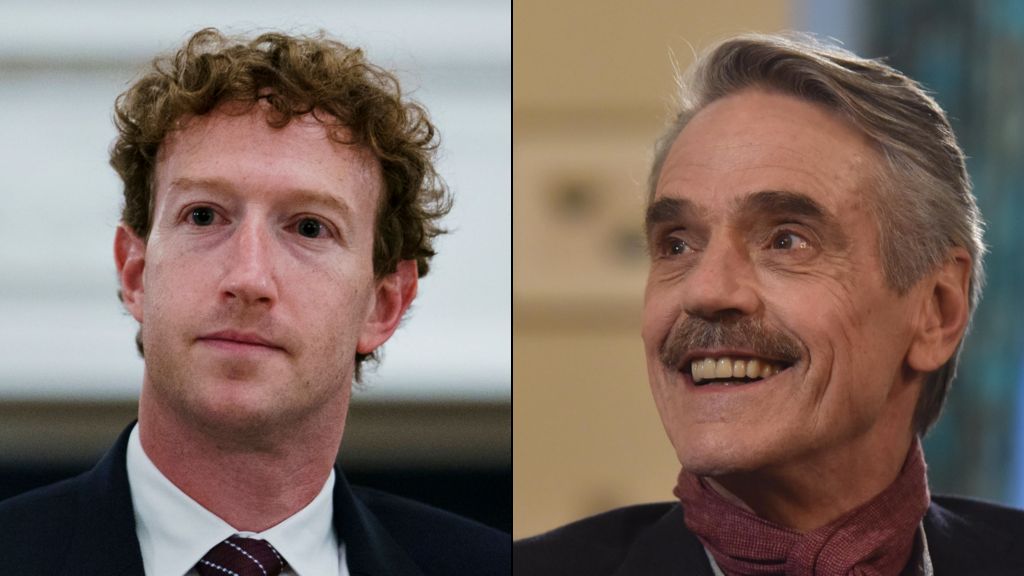
In recent weeks, news that Meta CEO Mark Zuckerberg has acquired the historic Strancally Castle in Ireland’s County Waterford has reignited public curiosity about a long-running trend: the consistent flow of high-net-worth and celebrity buyers snapping up ancient castles across the Irish island.
Zuckerberg is far from the first prominent name to join the ranks of Irish castle owners. Decades before his purchase, Oscar-winning actor Jeremy Irons bought Kilcoe Castle in County Cork, launching a multi-decade renovation project after he grew tired of constant acting work in the late 1990s. American media billionaire John Malone owns the expansive Castlemartin House and Estate in County Kildare, while author and filmmaker Christy Cashman holds the deed to County Kildare’s Kilkea Castle. Even Hollywood star Dominic West, famous for his role in *The Crown*, and his wife Catherine FitzGerald own Glin Castle in County Limerick, adding another A-lister to the list.
For Zuckerberg, practical considerations play a clear role in the purchase. Meta has maintained its international headquarters in Ireland for years, and a spokesperson for the executive confirmed that he and his family are eager to become stewards of the historic property and spend regular time in the country.
To understand why so many wealthy people are drawn to Irish castles, experts point to a mix of historical, cultural, and practical factors. First, the unique heritage of these structures traces back more than 800 years. Dr. Colin Breen, an archaeology and landscape management scholar at Ulster University, explains that Irish castles first emerged in the 12th century with the arrival of Anglo-Norman invaders, who built the fortifications to secure and control the colonial lands they seized. “They were built to intimidate, but they were also an expression of power and presence,” Breen notes, marking a permanent, radical shift in Irish architectural history. Today, that deep layered history is a core part of their appeal.
Since the 20th century, Breen explains, wealthy international buyers — particularly Americans — have been drawn to castles as a way to connect to an idealized vision of Irish history and heritage. Josh Pim, associate director of the residential and country estates team at global property firm Savills, echoes this observation, noting that many American buyers have Irish ancestral roots that make owning a piece of the country’s historic landscape particularly meaningful. “There’s a rarity and architectural significance and history to these castles,” Pim says, adding that the appeal stretches far beyond the U.S., with strong demand from wealthy buyers across the globe.
Helen Cassidy, an auctioneer who specializes in castle sales, describes a widespread “thirst” for these properties among international buyers, many of whom become deeply attached to the unique story and character of individual castles once they learn their history. Beyond the romantic appeal of heritage, Pim points out that large Irish castle estates also offer something highly sought after by ultra-wealthy buyers: unmatched privacy and security, thanks to the vast tracts of land that typically come with the properties.
Yet the trend also raises legitimate concerns among experts. Breen points out that the growing tendency for new owners to close off large estates to the public creates two key problems. First, it blocks public access to land that could be managed to support climate change adaptation and ecological conservation efforts. Second, he argues, castles hold a complicated, important place in Irish collective memory: for generations, they were visible symbols of colonial division and inequality, and locking them away entirely severs their connection to local communities. “They have a responsibility by buying into these places, these places cannot become billionaire ideals,” Breen stresses.
That said, Breen also leaves room for positive outcomes: if new owners work openly with Irish heritage authorities and local communities, their investment and stewardship can help preserve these important historic sites for future generations. Beyond preservation, status also remains a quiet driver of demand today. Breen explains that as feudalism gave way to early capitalism, castles evolved from defensive fortifications into status symbols, where wealthy families displayed their social standing through ownership of these grand historic properties. In many ways, the modern trend follows the same pattern: owning a one-of-a-kind Irish castle remains a powerful marker of wealth and influence for today’s global elite.
Local authorities have welcomed Zuckerberg’s purchase, however. A spokesperson for Waterford City and County Council noted that the news is both welcome and unsurprising, given the unrivaled natural beauty of the Blackwater Valley where Strancally Castle is located. “We hope that Mr Zuckerberg and his family fully enjoy all that Waterford has to offer,” the spokesperson said.