Amid ongoing concerns over water scarcity following a record-dry summer across the United Kingdom, the country’s water industry regulator Ofwat has sparked fierce public debate by rolling out a targeted water efficiency program that calls for adjustments to longstanding religious and cultural water use practices among minority communities.
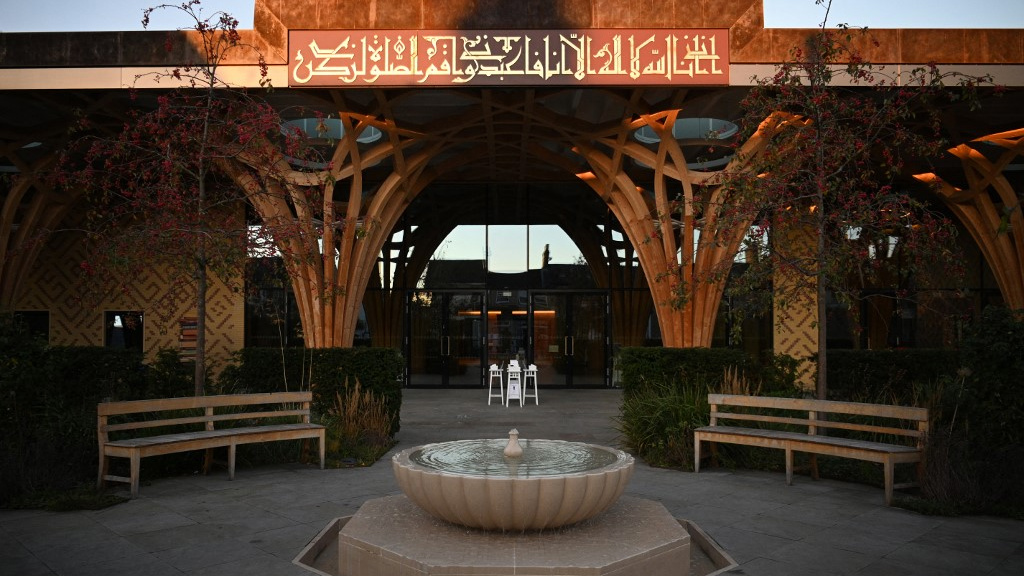
The initiative, formally named the ‘Water Efficiency in Faith and Diverse Communities’ program, is fully funded by Ofwat, the non-ministerial government body that oversees UK water services. One of its flagship pilot projects was developed through a cross-sector partnership between South Staffordshire Water, the University of Cambridge’s Faculty of Divinity, Cambridge Central Mosque – the UK’s first purpose-built eco-friendly mosque – and a range of other community and industry organizations.
The Cambridge pilot focused specifically on wudu, the ritual ablution Muslims perform before daily prayers. The project encouraged participating worshippers to complete their wudu using just one liter of water, typically measured in a reusable bottle. Ofwat data shows that many practitioners currently use up to 12 liters of running water for five daily prayer preparations, meaning switching to the one-liter method could cut an individual’s daily water use for this ritual by as much as 55 liters. Across the pilot site, the initiative delivered an estimated total daily water savings of 5,900 liters.
Program organizers have recommended that the one-liter wudu guidance be widely distributed through Islamic television channels to reach a broader audience, but they also issued a key caveat: water providers must avoid framing the guidance as an accusation that Muslim communities are uniquely responsible for water waste. Notably, the guidance aligns with historical Islamic tradition, as religious teachings widely hold that the Prophet Muhammad never used more than one liter of water for ritual ablution.
A second component of the program, backed by £270,000 in public funding, targets water use in Asian cooking, specifically the practice of washing rice before preparation. 2014 MasterChef champion Ping Coombes led outreach for this strand, sharing guidance in a public YouTube video. Coombes noted that it is common for home cooks to rinse rice five to seven times until the run-off water is completely clear, but argued that two rinses are sufficient to achieve the desired texture and cleanliness, cutting unnecessary water waste dramatically.
While Ofwat frames the program as a collaborative, community-centered effort to protect precious water supplies, it has drawn sharp criticism from across the political and environmental spectrum. Critics argue that water companies and regulators should prioritize fixing the country’s crumbling, leaky pipe infrastructure rather than asking ordinary households – particularly minority communities – to adjust their cultural and religious practices.
Data from a July 2025 Greenpeace UK investigation underscores this critique: the research found that 2.87 billion liters of water are lost to leaky pipes across England and Wales every single day – enough to fill more than 1,150 Olympic-sized swimming pools. Greenpeace’s analysis also found that the volume of water lost through infrastructure leaks is five times greater than the total water savings that would be delivered by a national hosepipe ban.
Shadow Cabinet Office Minister Mike Wood echoed public frustration in comments to The Telegraph, arguing that the program represents a misallocation of scarce public funds at a time of soaring household costs. ‘Cutting down on water waste is a noble aim, but the bigger issue here is the waste of taxpayers’ money,’ Wood said. ‘Families are already facing huge bill increases; they will not be best pleased that their money is being spent on bizarre schemes centred on trying to change longstanding religious and cultural practices.’
In an official response to Middle East Eye, an Ofwat spokesperson pushed back against criticism, emphasizing that the program was developed in close collaboration with participating faith and community groups, and does not mandate changes to religious or cultural traditions. ‘This summer’s prolonged dry weather reminds us of the need for all of us to use water more efficiently and to be stewards of this finite, precious resource,’ the spokesperson said. ‘This pilot worked in collaboration with water companies, charities and with multiple faith groups to provide different communities with relevant and practical suggestions to save water and finished in April 2025. It did not tell people what they can or can’t do, or impinge on religious worship or custom.’
The controversial Ofwat program is one part of a broader national push for water efficiency in the UK: in June 2025, the UK government launched a £75 million national public campaign titled ‘Let’s Save Water’, which urges all households to cut water use through small, daily habit changes.