Global equity markets staged a broad upward rebound on Thursday, with Asian benchmarks leading gains after a policy shift from the U.S. Treasury Department calmed investor jitters over soaring bond yields that had dragged down stock values in recent sessions.
The most dramatic surge came in South Korea, where the benchmark Kospi index jumped 6.1% to close at 6,858.91. The strong gain reversed a 5.8% drop the previous session, which was triggered by a fresh wave of sell-offs in artificial intelligence-linked stocks. Two of the country’s largest technology names led the rally: Samsung Electronics climbed 9.7%, while memory chip manufacturer SK Hynix soared 14.1% following the company’s announcement of a major share buyback initiative designed to support shareholder value.
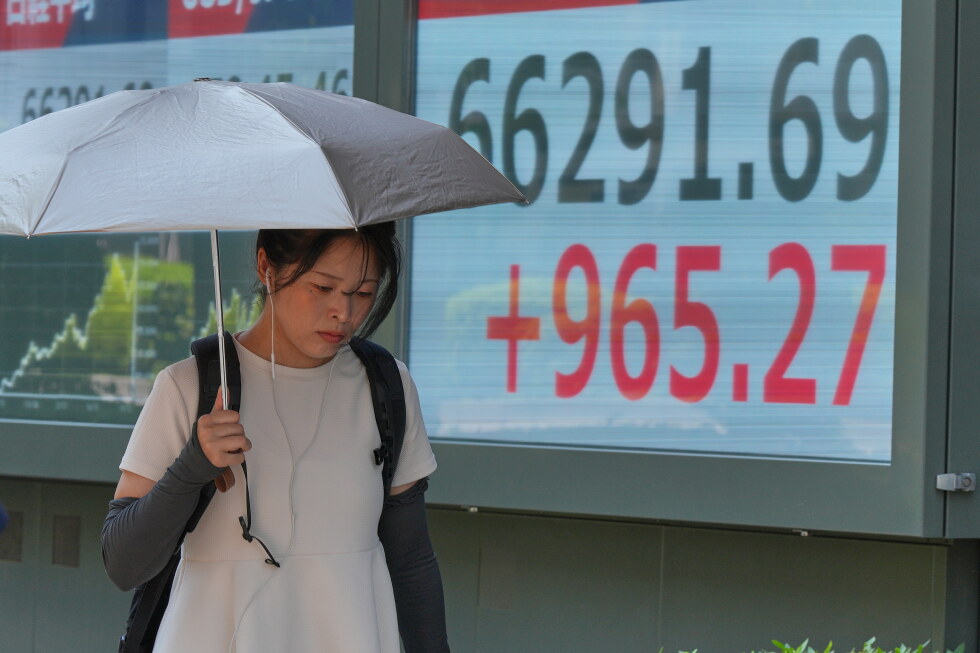
Across the rest of the region, major stock indices also posted solid gains. Japan’s Nikkei 225 rose 1.3% to 66,178.26, erasing the declines the index recorded earlier in the week. The country’s latest trade data released Thursday showed that Japan logged its third consecutive monthly trade deficit in July, with both imports and exports hitting all-time record highs. SoftBank Group, the Japanese multinational investment holding company that counts OpenAI among its high-profile investments, added 3.8% to its share price on the day.
In other Asian markets, Hong Kong’s Hang Seng Index gained 1.1% to end at 25,786.32, while mainland China’s Shanghai Composite Index edged up 0.3% to 3,905.23. Australia’s S&P/ASX 200 climbed 0.3% to 9,066.40, India’s Sensex advanced 0.7%, and Taiwan’s Taiex held nearly steady after previous volatility.
The market rebound was sparked by an announcement from the U.S. Treasury Department, which revealed it will at least double the volume of planned longer-term government debt purchases. The intervention is designed to stabilize the bond market, as increased buying pushes bond prices higher — which, due to the inverse relationship between bond prices and yields, pulls borrowing yields down. Yields have climbed steadily in recent months, driven by investor concerns over persistent inflation fueled by the ongoing months-long war in Iran, as well as rapidly growing U.S. government debt levels. Spiking yields had pulled down stock valuations across global markets in recent weeks, creating intense pressure on policymakers to act.
Following the Treasury’s announcement, U.S. government bond yields fell as expected. The 10-year Treasury yield dropped to 4.64% from 4.71% recorded earlier this week, though it remains far above levels seen before the outbreak of the war in Iran. The 30-year Treasury yield also fell, sliding from 5.28% to 5.18% by Thursday. The policy shift also pulled down bond yields across Asia: Japan’s 10-year government bond yield fell to 2.83% from over 2.89% on Wednesday, pulling back from the 30-year high it had touched in recent trading.
On Wall Street, U.S. stock futures edged higher early Thursday, extending a recovery that began a day earlier. On Wednesday, the benchmark S&P 500 notched its first gain in four trading sessions, rising 0.2%, while the Dow Jones Industrial Average and the technology-focused Nasdaq Composite also each added 0.2% to close out the day.
In commodity markets, oil prices ticked slightly higher on Thursday as diplomatic efforts between the U.S. and Iran to end the ongoing war made no major breakthrough. International benchmark Brent crude added 0.3% to trade at $91.90 per barrel, up from roughly $72 per barrel before the war began. U.S. benchmark West Texas Intermediate crude rose 0.2% to $84.57 per barrel. In currency markets, the U.S. dollar edged up slightly against the Japanese yen, rising to 158.60 yen from 158.16, while the euro dipped marginally to $1.1676 from $1.1677.