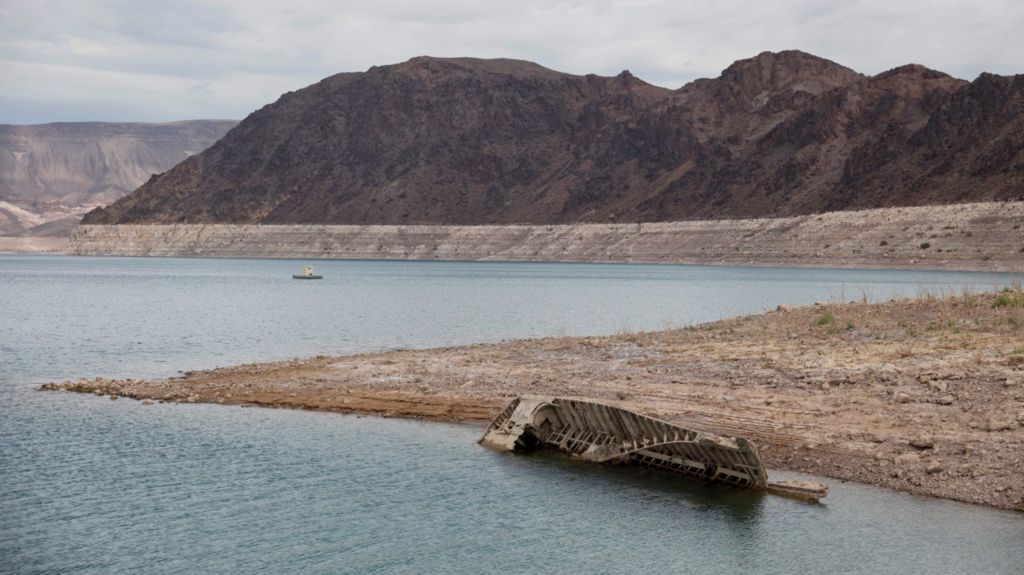
For more than two decades, the United States’ largest reservoir, Lake Mead, has faced a steady, alarming decline in water levels, driven by an intensifying drought that has gripped the American West. In the latest unexpected consequence of this accelerating dry spell, authorities have recovered what are believed to be human remains from the reservoir’s shores, a discovery that traces directly to the retreating waters.
The US National Park Service confirmed that it was alerted to the apparent skeletal remains at Boulder Beach, located on the Nevada side of the Lake Mead, which straddles the state’s border with Arizona, on August 16. In an official statement shared with CBS, the BBC’s US partner outlet, the agency confirmed that park rangers joined investigators from the Las Vegas Metropolitan Police Department to respond to the site and secure the remains. As of the latest update, the case remains open and under active investigation, with no further details on the identity or timeline of the remains available to the public.
The discovery was made by two recreational visitors: Dianelis Molina Cruz and her friend Noel De Leon. Cruz told local CBS affiliate KLAS that the find happened by chance while her companion was exploring the rocky shoreline. “My friend was playing with the rocks in the lake, and then he grabbed the jaw. And when he looked, he saw the teeth and everything,” Cruz recounted. De Leon noted that the extremely low water levels made the discovery possible, adding, “The water looks very low compared to where it should be. As the water goes down, the skeletons come up.”
Lake Mead’s water levels have been in consistent decline since 2000, a trend that has accelerated sharply in recent years as drought conditions worsen across the western United States. Last week, the US Bureau of Reclamation reported that the reservoir’s water level fell to 1,040 feet (317 meters) above sea level, a new record low that dips well below the previous low set in July 2022. According to the US Drought Monitor, nearly all of Clark County, Nevada, where most of Lake Mead is located, is currently classified as being in moderate drought. Climate scientists have repeatedly linked the deepening drought across the American West to human-caused climate change, which has amplified average temperatures and prolonged dry spells across the region.
This discovery at Lake Mead is far from an isolated event. Across the globe, record-breaking summer heat and persistent drought have driven water levels down in rivers and reservoirs, uncovering long-submerged artifacts, remains, and landscapes that have been hidden for decades.
Earlier this month in Hungary, the remains of two German World War II soldiers were recovered from the Danube River in Budapest, alongside a largely intact Wehrmacht military motorcycle. Further downstream in Serbia, additional World War II remnants, including the broken hull of a watercraft, have emerged from the Danube’s retreating waters in recent weeks. In the United Kingdom, low water levels at a reservoir in Rutland have exposed the ruins of Nether Hambleton, a village that was intentionally demolished and flooded in the 20th century to create the reservoir that now covers its original site.
As climate change continues to drive rising global temperatures and more frequent extreme drought events, experts warn that more unexpected discoveries of both modern and historical remains are likely to occur as water levels continue to drop across the world’s major freshwater bodies.