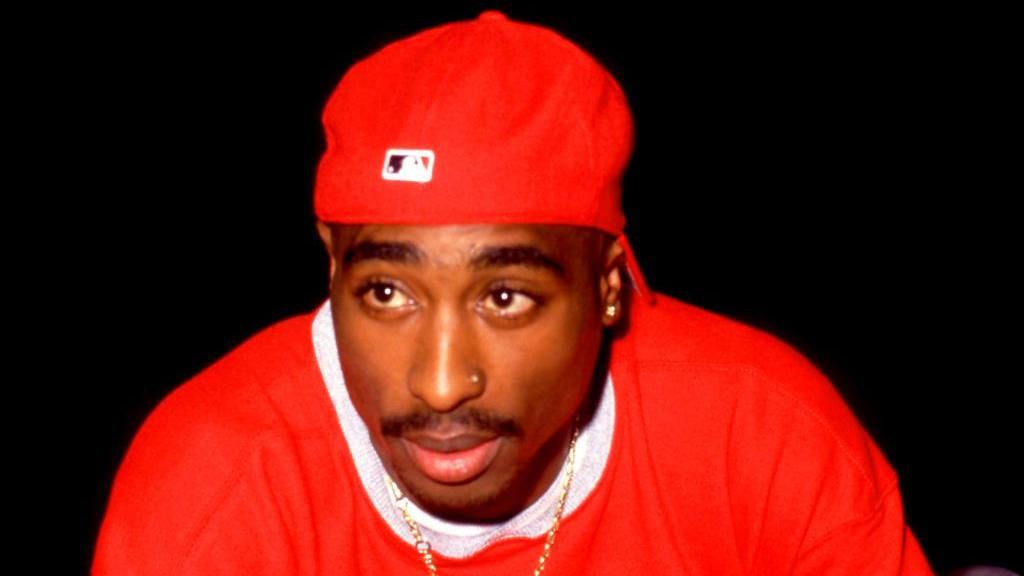
Thirty years after the fatal drive-by shooting that left legendary West Coast rapper Tupac Shakur dead at 25, one of the highest-profile unsolved murder cases in American modern history finally reached its trial phase – and on the second day of proceedings, a key witness from Shakur’s own inner circle openly defied the court, citing long-held street gang loyalties that have defined the case from its beginning.
James “Mob James” McDonald, a former enforcer for Shakur’s label Death Row Records and member of the Mob Piru Bloods gang, was openly combative during his testimony Tuesday, decrying court orders forcing him to take the stand and identify the parties responsible for Shakur’s 1996 killing. He told the court he was explicitly threatened with contempt of court sanctions if he refused to testify, prompting him to request that he be formally treated as a hostile witness over his repeated refusal to answer key questions from legal teams.
The defendant at the center of the trial is Duane “Keffe D” Davis, a former South Side Compton Crips leader who stands charged with orchestrating Shakur’s murder. Davis has maintained his innocence and entered a formal not guilty plea. Prosecutors argue Davis planned the September 7, 1996, shooting in retaliation for a fight between Shakur and Davis’s nephew, Orlando Anderson, that unfolded earlier that same night outside a Las Vegas boxing match featuring Mike Tyson. Prosecutors contend Davis believed the attack on his nephew could not go unanswered, setting the stage for the killing that shook the 1990s hip-hop world.
McDonald’s refusal to cooperate is rooted in the street culture and gang dynamics that shaped the 1990s Los Angeles hip-hop scene, a period when entrenched street codes banned cooperation with police, and widespread distrust of law enforcement ran deep in Black communities in the wake of the brutal Rodney King police brutality case and the 1992 Los Angeles riots. Even Shakur, while he was being transported to an ambulance after the shooting, refused to speak to investigators about the attack, telling officers “we’ll take care of it” before dying six days later in a local hospital.
When pressed repeatedly by Davis’s defense attorney Michael Sanft to confirm what he knew about who was present at the shooting and who bore responsibility, McDonald openly pushed back. Pointing directly at Davis, he told the court: “You’re asking me something that wouldn’t be good for him. I’m not going to send him to prison, you are.” He later added, under oath: “I don’t want to send him to prison, even though we don’t like each other. I don’t want to send you to prison.”
Though McDonald confirmed he was not present in the vehicle with Shakur when the shooting occurred, he acknowledged that members of the rapper’s entourage who were on the scene quickly identified the responsible parties in the immediate aftermath. He testified that the killing was a product of a brutal 1990s gang war, noting: “It was a gang war. People were getting hurt. People were being sought. Orlando (Anderson), him and certain other people were being sought because people wanted to kill them.” When his testimony concluded, he addressed Davis directly: “What you are going through brother is what you going through. I don’t want to be a part of it.” Davis remained expressionless, seated at the defense table through most of the day’s testimony.
Also testifying Tuesday was Reggie Wright Jr., a former member of Shakur’s security detail who later became general manager of Death Row Records after Suge Knight, the label’s founder who was in the car with Shakur during the shooting, stepped back from the company. Davis has previously attempted to shift blame to Wright, a former Compton police officer, and the defense team pressed Wright on his role at the label and his rise to power after Knight left the company.
The case only moved forward decades after Shakur’s death after Davis gave multiple public statements about his alleged role in the killing, including co-writing a memoir where he admitted he was a passenger in the vehicle from which the fatal shots were fired and had supplied the gun used in the attack. Davis has since walked back those claims, arguing that portions of the book were fictionalized by his co-author to boost sales. The trial is set to resume Wednesday, with ongoing proceedings covered in the BBC podcast *Fame Under Fire: The Tupac Murder Trial* available on all major podcast platforms.