As the United States gears up for the November general elections that will determine control of Congress, primary voting has wrapped up across three key states, with projected results already painting a clearer picture of the upcoming battles for statewide and federal offices.
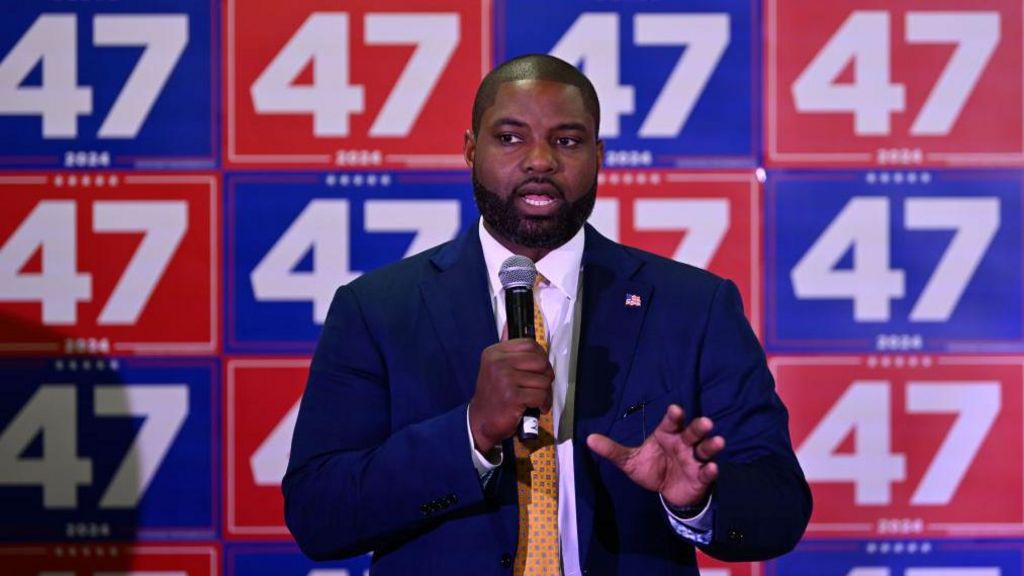
In Florida, America’s third most populous state, major projections from leading national media outlets including CNN and The Associated Press point to Republican U.S. Representative Byron Donalds and former Republican turned Democratic candidate David Jolly emerging as the winners of their respective gubernatorial primaries. With roughly 89% of all ballots counted, the two candidates are now set to face off in November’s general election to fill the seat being vacated by term-limited incumbent Governor Ron DeSantis.
Donalds, a high-profile conservative Congressman, secured the critical endorsement of former President Donald Trump ahead of the primary. He outpaced a crowded Republican field that included right-wing challenger James Fishback, who drew notable attention from young conservative voters through his provocative public statements and aggressive social media-focused campaign strategy. For Democrats, the path to the general election has been far less straightforward: the party has not held the Florida governor’s mansion since 1999, and Jolly, a well-known Trump critic who left the Republican Party to run as a Democrat, had to defeat multiple primary opponents including state legislator Dotie Joseph and criminal justice reform advocate Evelyn Castillo-Bach to claim the projected nomination.
Beyond the governor’s race, Florida voters also cast ballots in primaries for U.S. Senate and all of the state’s U.S. House seats. In the Senate race, Republican incumbent Ashley Moody is seeking her first full term after being appointed to fill the vacancy left by Marco Rubio, who stepped down to become U.S. Secretary of State. On the Democratic side, the primary has exposed ongoing intraparty divides between progressive and moderate factions: state Representative Angie Nixon is running as the progressive standard-bearer, while Alex Vindman — the former White House official who testified during Trump’s first impeachment inquiry in 2019 before being fired from the National Security Council — is positioning himself as the moderate alternative.
One of the most closely watched House contests in the state played out in Florida’s 7th Congressional District, where political newcomer Ryan Elijah has been projected to defeat incumbent Republican Congressman Cory Mills in the GOP primary. The race drew national attention after Mills was hit with a House Ethics Committee investigation and public allegations of domestic abuse, which he has repeatedly denied. Even sitting Governor DeSantis, a fellow Republican, opted to distance himself from Mills, declining to issue an endorsement ahead of the primary.
Thousands of miles away on the opposite coast, Alaska held its own competitive Senate primary, where the race gained unusual attention from an unexpected source: a little-known challenger who shared the incumbent’s name. Incumbent Republican Senator Dan Sullivan was forced to compete against Daniel J. Sullivan Jr., a little-known candidate who shared nearly the same name. Despite legal efforts to remove the namesake challenger from the ballot, both candidates appeared on the primary ballot, differentiated only by the incumbent’s “incumbent” label and the challenger’s “Jr.” suffix. Political analysts have noted that even with the clear labeling, the identical name could siphon off enough votes from the sitting senator to shake up the race in a state with a small overall voting population. Under Alaska’s election rules, the top four vote-getters regardless of party affiliation advance to the November general election, and Democrats are banking on their candidate, incumbent U.S. Representative Mary Peltola, to flip the seat and help the party take control of the U.S. Senate.
Further inland in Wyoming, a deeply red state where the outcome of the Republican primary is widely seen as a predictor of the November general election result, voters are choosing a new governor after incumbent Mark Gordon hit his term limit. Three Republican candidates — Megan Degenfelder, Eric Barlow, and Brent Bien — are competing for the GOP nomination, while Democrat Kenneth Casner is running unopposed for his party’s spot on the general election ballot. Voters are also selecting a new U.S. Senator following the announced retirement of incumbent Cynthia Lummis, with former President Trump throwing his weight behind Republican U.S. Representative Harriet Hageman for the open seat.