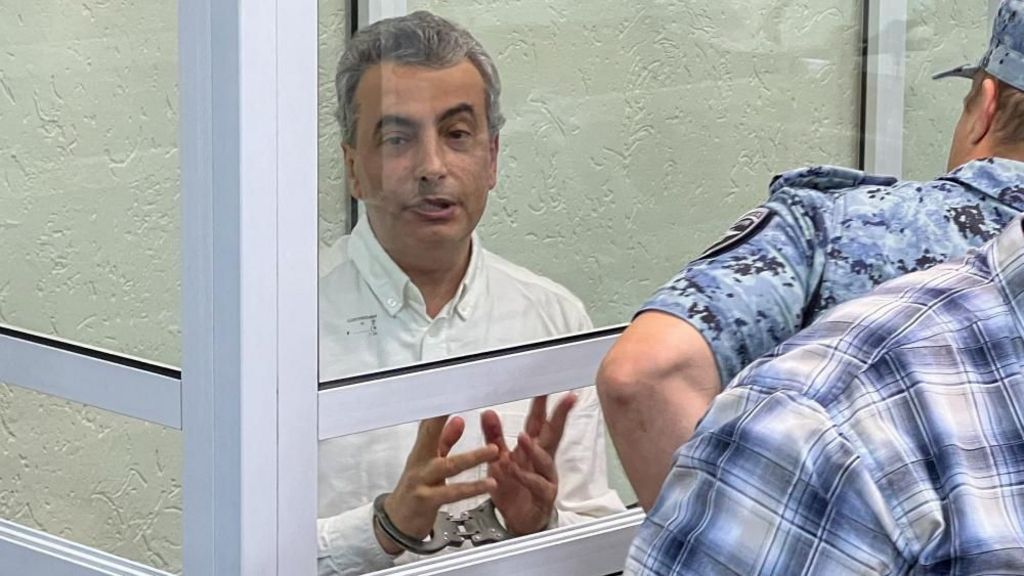
In a sweeping escalation of Russia’s crackdown on domestic dissent amid its ongoing full-scale invasion of Ukraine, one of the country’s most high-profile anti-war opposition politicians has received a lengthy prison sentence, while the only major registered opposition party has been formally blocked from competing in upcoming national parliamentary elections.
Sixty-three-year-old Lev Shlosberg, deputy leader of the liberal opposition party Yabloko, was handed an 11-year and one-month sentence in a maximum-security penal colony by a court in the northwestern Russian city of Pskov on Monday. The conviction centers on charges of discrediting Russia’s armed forces and disseminating false information about the military, allegations that stem from critical comments Shlosberg published on social media platforms.
Prosecutors had originally pushed for a 12-year and one-month prison term, but the court handed down a slightly reduced sentence. Shlosberg has forcefully rejected all charges against him, framing the conviction as a targeted act of political retribution. In a closing statement to the court, a transcript of which was published by independent Russian outlet Novaya Gazeta, Shlosberg dismissed the entire proceedings as a fake investigation designed to achieve an unlawful end. He noted that the court’s sole purpose was to punish a citizen for holding an unpopular political, public, and civil position. Throughout his closing remarks, Shlosberg reiterated his longstanding call for an immediate ceasefire in the Russia-Ukraine war and a return to political dialogue between the two sides, and he was repeatedly cut off by the presiding judge during his statement.
The verdict against Shlosberg came down mere minutes before Russia’s Supreme Court issued a ruling rejecting Yabloko’s final appeal against its disqualification from the September parliamentary elections, scheduled to take place between September 18 and 20. Yabloko, which made history as the only registered Russian political party to publicly oppose the 2022 full-scale invasion of Ukraine, was removed from election ballots earlier this month over two contested claims. Russian authorities argued the party publicly supports the so-called international LGBT movement, which Russia’s Supreme Court has labeled an extremist organization, while a separate lawsuit filed by pro-Kremlin nationalist party Rodina also accused Yabloko of copyright violations. Yabloko has denied all accusations against it, and party leadership confirmed it would pursue an appeal against Shlosberg’s conviction.
This series of actions comes as part of a broader nationwide crackdown on all remaining opposition to Russian President Vladimir Putin, who has held power for nearly 27 years. Since the invasion began in early 2022, any public dissent against the war has been effectively criminalized under strict wartime censorship laws, with violations carrying penalties ranging from steep fines to decade-long prison sentences. All 10 other political parties that will appear on September’s ballots are open supporters of the war in Ukraine.
Latest polling from Russian state-owned pollster VCIOM shows that support for Putin’s ruling United Russia party slipped to 32.1% earlier this month, marking the lowest rating the party has recorded since May. Despite this drop in public approval, political analysts widely expect the Kremlin to leverage its extensive administrative and regulatory resources to secure the election outcome it favors. Independent election monitoring groups have already been stripped of nearly all their authority to oversee the voting process and challenge any irregularities or unfair practices.