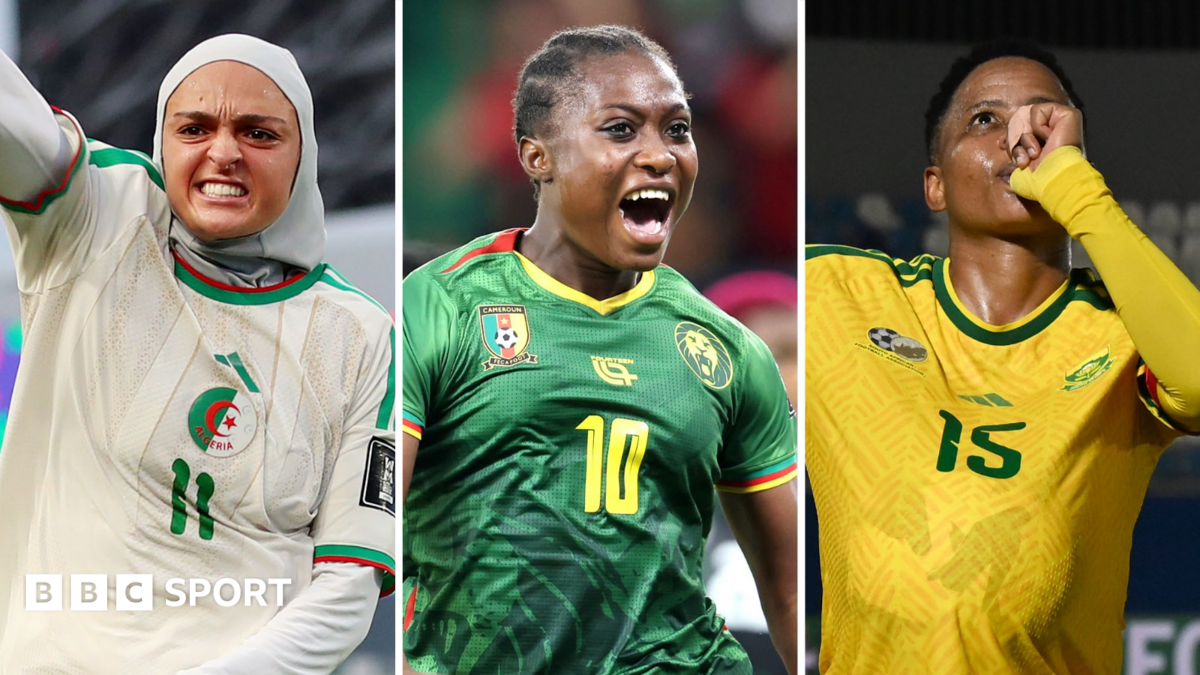
The 2026 Women’s Africa Cup of Nations (Wafcon), held across Rabat and Casablanca, Morocco, wrapped up Sunday with an unexpected champion, stunning underdog runs, and seismic shifts that are reshaping the landscape of women’s football across the African continent. Cameroon’s Indomitable Lionesses secured their first ever Wafcon crown with a dominant 3-0 victory over debutant finalists Malawi, capping off a remarkable tournament that defied pre-event predictions and delivered on the promise of expanded elite competition for African women’s football. What made Cameroon’s win even more extraordinary is that the side only secured a spot in the expanded 16-team tournament after Confederation of African Football (Caf) made a last-minute format change mid-qualification. Originally planned as a 12-team event, the expansion saw Cameroon – who had been eliminated by Algeria in the initial qualifying round – granted a place based on their global ranking. They made the most of their second chance, cutting through the knockout rounds to lift the trophy, becoming just the fourth nation to claim Wafcon gold after Nigeria, Equatorial Guinea, and South Africa. The format shift has already proven its value: by opening the door to more high-stakes matches for emerging sides, the 16-team structure boosted competitive balance across the three-week tournament, delivering far more upsets than the 2024 edition. Cinderella story Malawi, ranked 153rd in the world entering the competition, shocked 10-time defending champions Nigeria 3-2 in their opening match, then defeated Ghana and Algeria to advance all the way to the final. Their run was powered by the iconic attacking performances of the Chawinga sisters, with Temwa Chawinga claiming the tournament golden boot after netting five goals and adding two assists to outpace other top scorers including Marie Ngah Manga of Cameroon and Zambia’s Barbra Banda. Other shock results saw Tanzania, ranked 65 places lower than 2022 champion South Africa, defeat the defending titleholders in the group stage, while South Africa only salvaged a late 99th-minute equalizer against Ivory Coast – another side that reached the finals thanks to the expanded ranking-based invites. Zambia amassed six points in Group C but still missed out on knockout qualification, while Mali was eliminated on goal difference after tying Ghana on points. In total, the tournament recorded 90 goals across 32 matches (excluding inter-confederation World Cup play-offs), averaging 2.81 goals per game, a marked increase from the 2.54 average recorded at the 2024 edition. All four semi-finalists – Algeria, Cameroon, Malawi, and Morocco – earned automatic qualification to the 2027 FIFA Women’s World Cup, with Algeria and Malawi set to make their historic debuts at the global tournament. South Africa and Ghana, by contrast, will have to navigate inter-confederation play-offs to secure their spots in the 2027 event. Cameroon’s historic win also made history for women in coaching: head coach Valentine Nguele became just the fifth woman to lead a Wafcon-winning side, emulating the achievements of previous trailblazers Clementine Toure, Eucharia Uche, Florence Omagbemi, and Desiree Ellis. What makes her feat even more remarkable is that she only took charge of the side in June, just two months before the tournament kicked off. “We worked as crazy since two months ago, day and night, and this is the result,” Cameroon technical co-ordinator Dimitri Lipoff told BBC World Service. “We had no team, nothing was ready. We tried to build a kind of bubble. This is an incredible team effort.” The tournament also delivered one of the most shocking results in African women’s football history: perennial powerhouse Nigeria, who entered the tournament targeting an 11th Wafcon title, suffered their worst ever performance and will miss the 2027 Women’s World Cup for the first time in the event’s history. After finishing second in their group and being knocked out by Cameroon in the quarter-finals, the Super Falcons fell 2-1 to South Africa in the World Cup play-off, ending their streak of consecutive World Cup appearances. Analysts point to long-term structural issues in Nigeria’s women’s football program, which has relied on talent developed abroad for years while failing to build a sustainable domestic institutional structure. With Cameroon collecting $2 million in prize money to invest back into the program, and Morocco, Algeria, Ghana, and Malawi all making significant strides in women’s football development, Nigeria’s decades-long hold on the top spot in African women’s football is no longer unchallenged. The Nigeria Football Federation has already established a fact-finding committee to examine the team’s failure, with former star striker Desire Oparanozie calling for a full re-evaluation of the program. Despite the many successes of the expanded 2026 tournament, it was not without its challenges. Attendance at matches not featuring hosts Morocco remained a persistent issue, continuing the trend of largely empty stadiums seen at the 2022 and 2024 editions. Organizers cited the tournament’s last-minute postponement – it was pushed back from its original March start date just 12 days before kickoff – as a contributing factor, while longstanding barriers including high cross-continental travel costs and strict visa requirements also suppressed turnout. VAR review processes also faced criticism, with one pitch-side check during Cameroon’s group stage win over Mali taking nearly four minutes to complete, slowing the pace of play. Host Morocco, who have hosted the last three editions of Wafcon, made the semi-finals but saw several controversial late penalty decisions go their way against Cameroon and Algeria, though the side failed to convert nine of 13 total penalties across the tournament, highlighting a key area for improvement as they pursue their first ever Wafcon title. As of yet, Caf has not announced a host or confirmed dates for the 2028 Wafcon tournament, with organizers needing to avoid a schedule clash with the 2028 Los Angeles Olympic Games – a similar conflict with the Paris Olympics forced the 2024 Wafcon to be delayed until 2025, highlighting the ongoing need to secure a consistent, viable slot for the continental tournament on the global FIFA calendar. Attention now turns to qualification for the 2028 Los Angeles Olympic women’s football tournament, which will restart in October and continue across three international match windows next year, with 32 African nations competing for two coveted spots at the global Games.