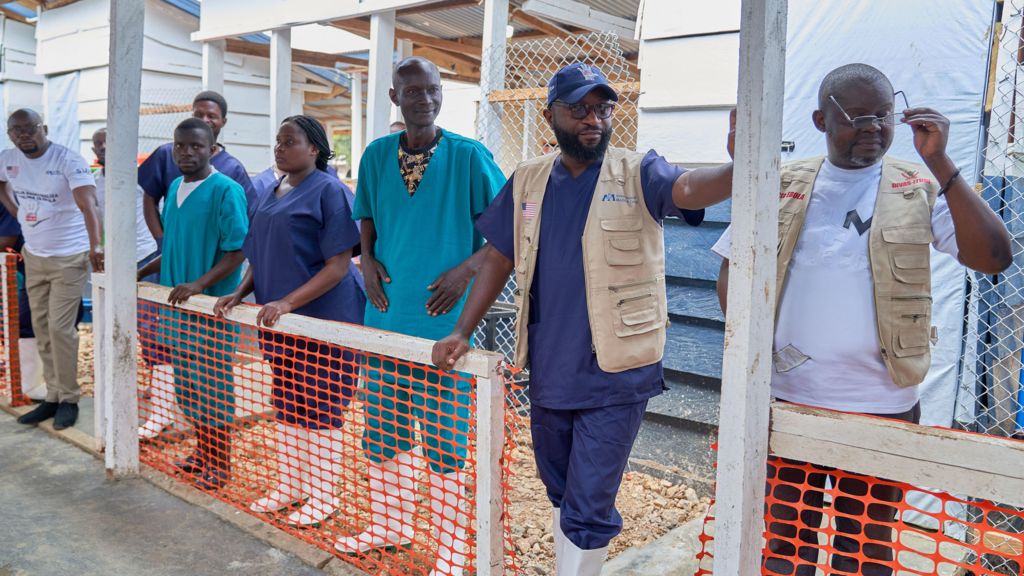
The Democratic Republic of the Congo (DRC) is currently facing the most devastating Ebola outbreak in the nation’s recorded history, public health authorities have confirmed. As of mid-August 2026, the death toll from the outbreak, first declared on 15 May, has reached 2,325, surpassing the fatalities recorded during the country’s 2018–2020 Ebola epidemic to claim the grim title of the deadliest outbreak in DRC history.
Just one week ahead of the new death toll announcement, United Nations Under-Secretary-General for Humanitarian Affairs Tom Fletcher described the current outbreak as the fastest-spreading on record. In a stark warning, Fletcher noted that the virus is claiming a human life every 30 minutes on average.
On 4 August, authorities inaugurated a new Ebola treatment facility in Rwakole, located in the Bunia region of northeastern DRC, to help expand care capacity amid the surging crisis. As of the latest update from the DRC Institute of Public Health released on 10 August, the country has confirmed 4,945 total cases of the virus, with 101 new positive cases recorded in the 24 hours prior to the announcement.
Unlike previous Ebola outbreaks that have impacted the DRC, the current epidemic is driven by the rare Bundibugyo strain of the virus, for which no globally approved vaccine currently exists. That said, multiple vaccine candidates are already in active development, including one candidate built on the same viral vector technology that powered the Oxford-AstraZeneca COVID-19 vaccine. The UK’s Medicines and Healthcare products Regulatory Agency (MHRA) has already granted regulatory approval for the first human clinical trials of this Oxford University-developed candidate, with three additional research groups also working on separate Bundibugyo vaccine candidates. The World Health Organization (WHO) is also sponsoring an independent clinical trial based in the DRC to test whether two existing antiviral therapies can improve survival rates for patients infected with the virus.
Transmission of the virus has outpaced all recent precedents, the WHO has confirmed, noting the spread of the pathogen to six of the DRC’s 26 provinces is moving at an “exceptional” pace. To contextualize the speed: the 2014–2016 West African Ebola outbreak, the deadliest globally in recorded history, took nearly five months to reach 1,000 fatalities. The current DRC outbreak surpassed 2,000 deaths in less than three months since it was declared.
So far, cross-border spread has been limited. As of 12 August, only 20 confirmed cases have been detected in neighboring Uganda, two patients have received treatment in Germany, and a single case has been reported in France.
This current outbreak marks the 17th Ebola event the DRC has responded to since the virus was first identified half a century ago. Long-standing systemic challenges, including years of armed conflict in affected regions and a highly mobile population, have compounded the country’s ability to control transmission and slow the outbreak.
Ebola is a highly lethal viral pathogen that spreads through direct contact with infected bodily fluids such as blood or vomit. Initial symptoms, which develop between two and 21 days after infection, are easily mistaken for more common illnesses like malaria or influenza, including sudden onset fever, headache, and fatigue. As the infection progresses, patients often develop severe vomiting and diarrhea that can lead to acute organ failure and death. The Bundibugyo strain responsible for the current outbreak is particularly rare, with only two documented prior outbreaks recorded globally.
The WHO has outlined an ambitious target to reverse the trend of transmission within three months, though the organization clarifies that this goal focuses on bringing community spread under control, not fully eradicating the outbreak entirely at this stage.