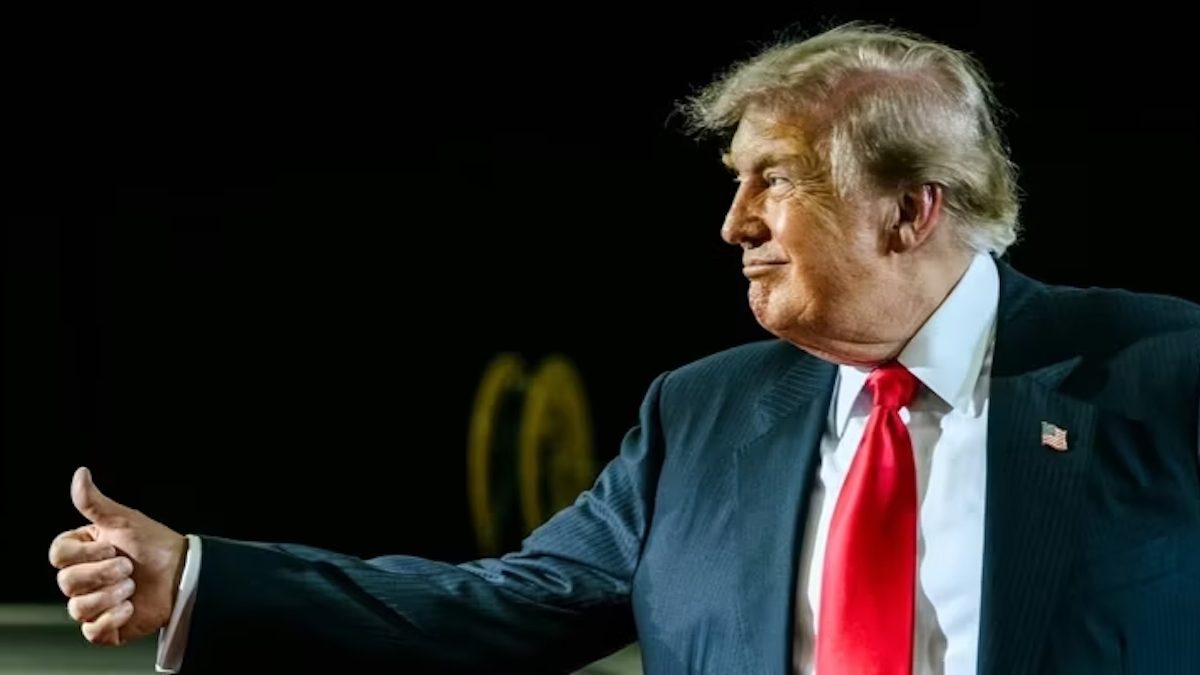
On a recent Friday appearance before a crowd in Long Island, former U.S. President Donald Trump reignited global geopolitical anxiety with a startling announcement: following what he claimed would be an imminent defeat of Iran, he intends to formally designate the strategically critical Strait of Hormuz as a territory of the United States.
The provocative comment comes against a tense existing backdrop: for five months, Iran has restricted commercial vessel traffic through the strait, a response to what Tehran frames as an illegal joint military campaign led by the U.S. and Israel. This disruption to global energy shipping has already sent fuel prices soaring worldwide, exacerbating economic pressures that have drawn sharp criticism of Trump’s economic stewardship. Just 48 hours before Trump’s announcement, new inflation data confirmed what one economic analyst describes as “Trump’s catastrophic mismanagement of our economy,” a judgment that underscores the deep domestic fallout from his aggressive foreign policy toward Iran.
During the Long Island event, Trump attempted to downplay growing public anger over rising energy costs, claiming his administration would “bring the prices way down.” He doubled down on his confrontation with Tehran, asserting that Iran is “being very badly defeated” and that the territorial designation would follow swiftly on the heels of military victory.
Critics across the political spectrum have swiftly condemned the remark, with many dismissing it as yet another outlandish falsehood from a president long known for misleading public statements. On the social platform X, Democratic Representative Ted Lieu of California mocked the announcement with a sarcastic quip: “Awesome! And the Easter Bunny is real.”
Ryan Costello, policy director at the National Iranian American Council, pointed out the hollow nature of Trump’s jingoistic threat, noting that most U.S. military bases positioned near the strait have already been effectively evacuated due to the persistent threat of Iranian drone and missile attacks. Progressive political commentator Kyle Kulinski went even further, calling for Trump’s immediate removal from office and prosecution, labeling him “a completely unhinged lunatic, and a sadistic violent menace to the world.”
Trump has pushed back against criticism, acknowledging that gasoline prices have surged as a direct result of his administration’s war with Iran but defending the policy as a necessary national security measure. He argued that American consumers are paying slightly higher prices to prevent Iran — which he calls the “No. 1 state sponsor of terror” — from developing a nuclear weapon. “I’ll never apologize. I did the right thing,” he stated.
Trump’s territorial threat comes just days before a month-long bilateral ceasefire between the U.S. and Iran is set to expire this coming Monday. A senior anonymous White House official told Politico that the current situation along the conflict line remains “static,” and that the administration has not discussed extending the truce. “What matters is if Iran wants to come to the table and agree to a deal. Right now, they haven’t done that,” the official said.
The Associated Press reported Friday that the Trump administration is currently expanding diplomatic outreach to a wider group of nations in an effort to build international pressure on Tehran. Ali Vaez, Iran project director at the International Crisis Group, told the outlet that the international community is unified in calling for de-escalation: “everyone is just urging both sides to stop this reckless game of chicken.”
This latest provocation fits a pattern of aggressive unilateral actions taken by Trump during his second term. In addition to launching military action against Iran in February, the administration ordered an invasion of Venezuela in January to abduct the country’s sitting president. Trump has also issued verbal threats against a host of other nations, including Canada, Cuba, Colombia, Mexico, and has previously claimed U.S. claims to Greenland. He has further threatened to seize control of the Panama Canal, and authorized military strikes that have killed hundreds of people aboard vessels alleged to be engaged in drug smuggling.