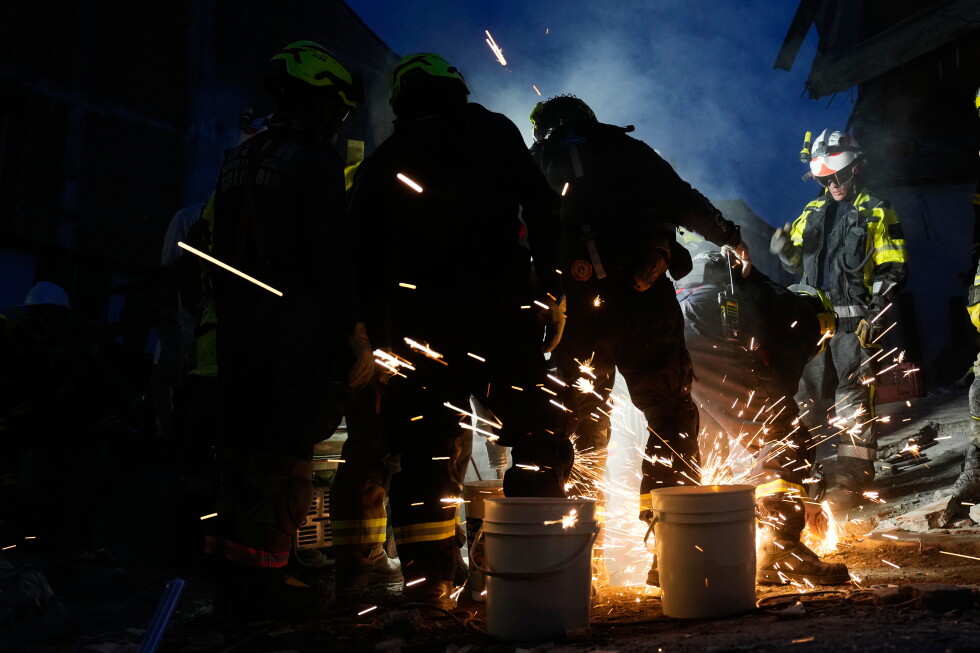
In the wake of two catastrophic earthquakes that struck across northern South America, leaving a trail of destroyed infrastructure, fractured communities and lost lives, one seasoned photojournalist has opened up about the ethical and emotional weight of capturing disaster on camera. After two decades documenting breaking news across the region for the Associated Press, Fernando Vergara stepped back this week to share his reflections on working through physical risk and emotional distress, and the delicate balance journalists must strike when bearing witness to human tragedy.
Vergara spoke to AP Thursday while working at a Bogota aid collection center, where donations are being sorted and shipped to survivors of the August 10 earthquake that centered near Pereira, Colombia. He drew direct comparisons between the destruction he documented in Pereira and the damage he witnessed following the late-June earthquakes that hit Venezuela’s northern coastal region.
According to Vergara, the impact of the Venezuelan earthquakes was far more severe. Multiple high-rise apartment buildings collapsed in the heavily populated La Guaira state, driving a far higher death toll than the Colombian event. Photographs from the region show crumpled concrete structures, rescue teams picking through rubble pile by pile, and heartbroken relatives grieving the loss of family members. Vergara recalled the visceral, unshakable details of working in the disaster zone: streets choked with fine dust, the pervasive stench of decomposing bodies lingering in the thick, hot air, and rescue crews working around the clock under brutal, nearly impossible conditions.
In Pereira, by contrast, most damaged structures were low-rise residential buildings between one and three stories tall. Even so, Vergara documented harrowing rescue efforts, including the emotional moment 24-year-old survivor Daniela Largos Sanchez was pulled alive from collapsed rubble the day after the earthquake.
For the veteran photographer, moments like that are the ones he prioritizes capturing amid widespread chaos and grief. In his reflections shared from the earthquake zone, Vergara broke down his approach to ethical photojournalism in the wake of disaster.
“Compared to the earthquake in Colombia, the one in Venezuela was a bit stronger, considering the losses. Venezuela had many tall buildings. A lot of people were living in apartment buildings, and the number of deaths was much higher than in Colombia. Recently in Pereira, the number of deaths are lower. It remains dramatic, but the buildings there were a bit shorter. The damaged houses were one to three stories tall, compared to Venezuela, where the buildings were much, much taller,” Vergara explained.
Describing conditions on the ground in La Guaira, he said: “What I witnessed in Venezuela, walking through the streets in La Guaira, the smell of rot was overwhelming, the dust in the air and the heat made the rescue of those trapped under the rubble much more dramatic.”
Central to Vergara’s practice is a core commitment to respecting the privacy and dignity of people experiencing their worst possible moments. “What is the photograph that I, as a reporter, seek in an earthquake or in a situation of such calamity? It’s important not to disrespect the victims’ families with my photographs. On the other hand, it’s about showing the situation with great sensitivity as it unfolds and to convey a message to people with my photographs,” he said.
Amid the widespread sorrow and loss that define disaster zones, Vergara actively seeks out and captures moments of hope and joy, most of all the miracle of a live rescue. “The most important message is the rescue of a person alive during an earthquake. Seeing someone alive brings immense joy. When a rescue team, firefighters, civil defense, or even volunteers rescue a person alive, everyone embraces with happiness, and that is the happiness I seek to capture with a photograph in an earthquake,” he added.