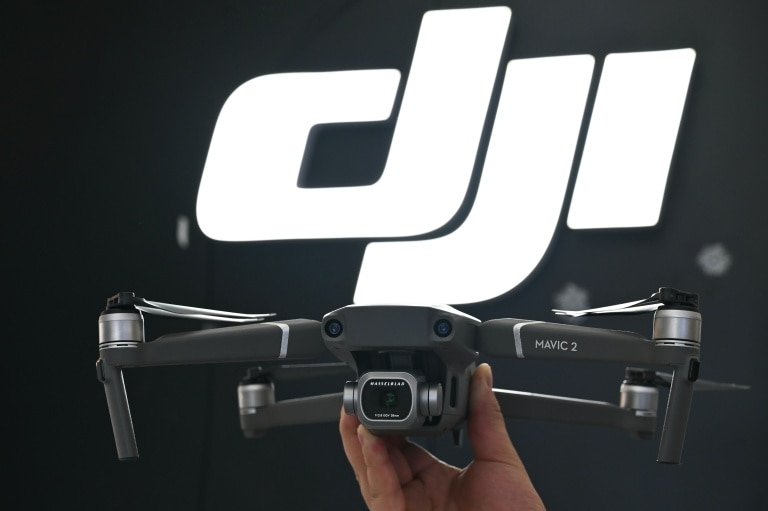
In a sharp new escalation of trade and tech tensions between Washington and Beijing, former President Donald Trump announced Thursday sweeping new tariffs of up to 100 percent on imported unmanned aircraft systems (UAS, the formal name for drones) and their core components. The move is explicitly designed to cut U.S. reliance on Chinese-dominated global drone supply chains, the White House confirmed in an official statement.
Under the new tariff structure, drones with a takeoff weight exceeding 25 kilograms that are equipped with sensitive capabilities deemed relevant to national security—including thermal imaging cameras and specialized docking systems—will face the full 100 percent import duty. Smaller, lighter drones, by contrast, will be subject to a lower 25 percent tariff. The statement argues the new duties will create incentives for expanded domestic U.S. production of drones and their parts, reducing American dependence on foreign manufacturing networks for the strategically critical technology.
Most of the new tariffs are scheduled to enter into force on September 3. According to Clayton Swope, a senior fellow at the Center for Strategic and Analysis, the tariffs are primarily targeted at commercial and industrial-grade drones, with far less impact on small recreational drones used by hobbyists.
The policy builds on national security concerns that U.S. regulators have raised for months. Back in December 2025, the U.S. Federal Communications Commission (FCC), the body responsible for overseeing domestic telecommunications, argued that expanding domestic drone manufacturing would lower the risk of enemy drone attacks, service disruptions, unauthorized surveillance, unauthorized transfer of sensitive data off U.S. soil, and other UAS-related threats to American homeland security.
The FCC also highlighted that drones have inherent dual-use properties: they function as everyday commercial platforms, but can easily be repurposed as military or paramilitary sensors and weapons. Foreign-manufactured drones and components, the agency warned, could enable hostile actors to conduct long-term surveillance, steal data, and carry out destructive attacks across U.S. territory. The ongoing war in Ukraine has further underscored this risk, showing how readily available commercial and even consumer drones can be modified for offensive frontline operations.
For years, the Chinese drone manufacturing giant DJI has dominated the global market, holding more than two-thirds of global market share in recent years, according to multiple independent industry studies. The company has also been a top target of U.S. regulatory and political scrutiny for years. U.S. officials have repeatedly accused DJI of supplying equipment used to surveil ethnic minority groups in China, most notably the Uyghur population in Xinjiang.
Since 2022, DJI has been included on a U.S. government list of Chinese companies tied to the People’s Liberation Army, a designation that bars the firm from accessing sensitive American technology. In 2024, DJI launched a legal challenge to its placement on the list, repeatedly stating that it is not owned or controlled by any Chinese military body.
Joshua Steinman, a supply chain policy expert who previously served on the Trump administration’s own National Security Council, told Agence France-Presse that developing fully domestic U.S. drone manufacturing capacity, independent of Chinese parts or even raw materials, is a critical national priority.
The new U.S. tariff announcement comes in direct response to recent Chinese trade moves. Just last week, Beijing implemented its own restrictions on drone exports to the United States and blacklisted six U.S. companies, a retaliatory measure against earlier U.S. trade sanctions tied to forced labor and national security claims. That Chinese action followed just days after Washington imposed a new round of broad tariffs on goods from China and 59 other countries.
Tensions around strategically important advanced robotics and unmanned technology have been building rapidly in recent months. In late July 2026, the U.S. government added humanoid and quadruped robots to its import blacklist, barring entry of these products from targeted Chinese firms over what it called critical national security risks. Like the commercial drone sector, advanced robotics manufacturing is also dominated by Chinese industry, setting the stage for further escalation in the ongoing tech and trade standoff between the two global powers.