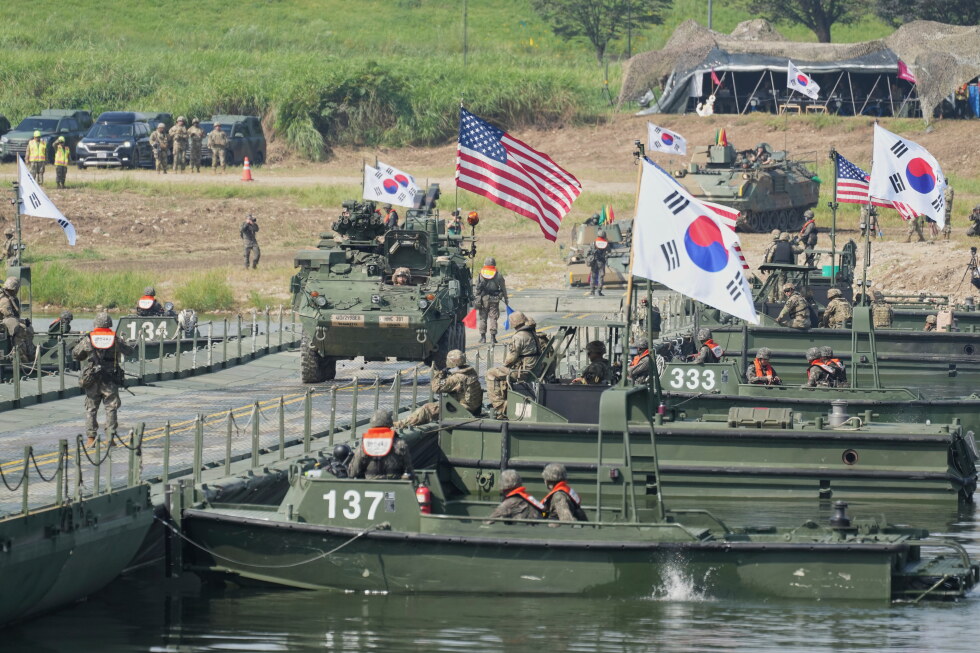
Diplomatic tensions on the Korean Peninsula are flaring once again, as North Korea has issued a sharp warning ahead of the upcoming Ulchi Freedom Shield military exercises between the United States and South Korea, scheduled to kick off Monday. In a formal statement released Friday through its official state media, North Korea’s Foreign Ministry labeled the joint drills a provocative rehearsal for aggressive war, claiming the 2024 exercises carry greater risk and destabilizing impact than those held in previous years.
Washington and Seoul have pushed back against this characterization, emphasizing that the annual large-scale drills are strictly defensive in purpose. The allied militaries confirmed the scope of this year’s training aligns with previous iterations, noting the exercises are designed to boost combined combat readiness to counter evolving security threats from North Korea. North Korea’s statement rejects this framing, arguing the drills have pushed regional security to a new, unsteady threshold. In line with Pyongyang’s long-stated security doctrine of responding to heightened threats with strengthened deterrence, the ministry warned the country would exercise its right to legitimate self-defense in a decisive, responsible manner to counter what it calls the enemies’ threats and challenges.
The latest verbal escalation aligns with a pattern of recent provocative actions from Pyongyang. Over the past week, South Korean defense monitoring systems detected two separate ballistic missile launches off North Korea’s eastern coast. Pyongyang has not officially acknowledged the tests, but independent defense analysts widely assess the launches were either a show of protest against the upcoming drills or part of ongoing efforts to upgrade the country’s missile and weapons systems.
Many regional security experts point out that North Korea has a long history of using joint U.S.-South Korea military exercises as a justification to expand its weapons testing program. Since the 2019 collapse of the nuclear summitry between North Korean leader Kim Jong Un and then-U.S. President Donald Trump, Kim has rejected repeated offers of diplomatic dialogue from Washington and Seoul, instead prioritizing rapid expansion of the country’s nuclear and ballistic missile arsenals. Analysts widely believe Kim’s end goal is to use his advancing nuclear program to force the U.S. to grant major concessions, most notably significant relief from the strict international economic sanctions imposed on Pyongyang over its weapons programs. Weapons tests also serve a domestic political purpose, helping rally public support for Kim’s authoritarian rule.
In recent years, Kim has significantly deepened diplomatic and economic ties with key geopolitical allies, most notably Russia and China. Multiple Western intelligence assessments have concluded North Korea has been supplying Moscow with ammunition and troop support to aid Russia’s full-scale invasion of Ukraine, in exchange for much-needed economic aid and military technology assistance. Kim has also made recent high-profile moves to strengthen trade and security cooperation with China, North Korea’s largest single trading partner and longstanding diplomatic backer.
The current standoff has left regional observers on high alert, with many predicting Pyongyang will carry out additional weapons tests in the coming days to back up its verbal warning. The unfolding situation underscores the persistent fragility of security on the Korean Peninsula, and the ongoing challenge of reviving meaningful diplomatic talks to curb North Korea’s nuclear ambitions.