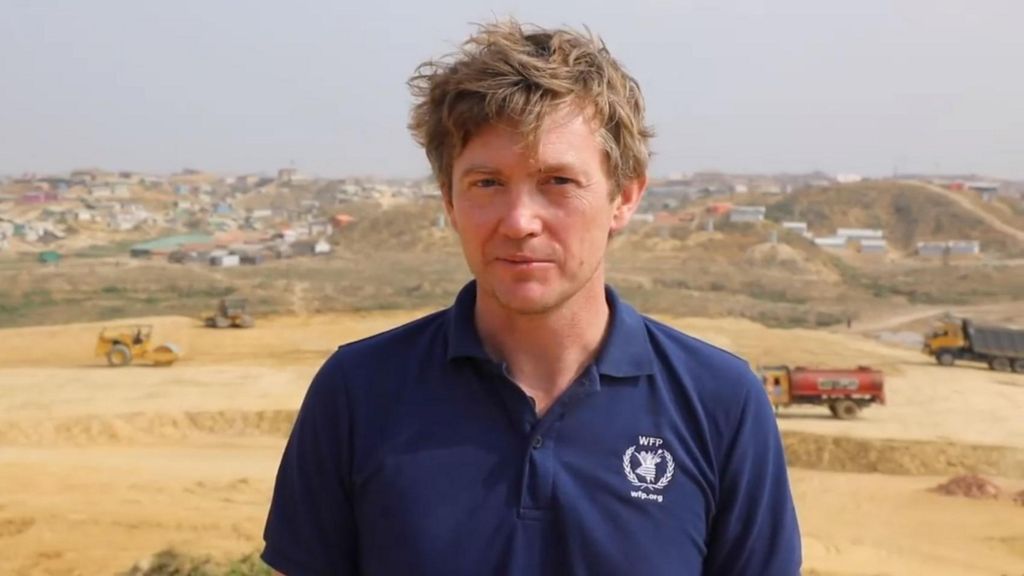
Six years after one of aviation’s deadliest modern crashes delivered unthinkable grief to families across the globe, a U.S. jury has delivered a landmark verdict holding aircraft manufacturing giant Boeing accountable for the loss of an Irish United Nations engineer who dedicated his life to aiding vulnerable communities. On March 10, 2019, Ethiopian Airlines Flight ET302, a brand-new Boeing 737 MAX jet, crashed just six minutes after departing Addis Ababa for Nairobi, Kenya, killing all 157 people on board. Among those killed was Michael “Mick” Ryan, a 40-something engineer from County Clare, Ireland, based in Cork, who worked for the UN World Food Programme (WFP) and left behind a wife and two children. This week, a Chicago civil jury ruled in favor of Ryan’s widow, Naoise Connolly Ryan, awarding her family $29 million (£21.5 million) in compensatory damages after she brought a civil wrongful death claim against Boeing over the disaster. The case marks one of the few wrongful death claims against the manufacturer to go to full trial, rather than being resolved through out-of-court settlement. Lawyers for the family say the verdict is far more than a financial award—it is a critical step toward securing long-overdue accountability and justice for the lives lost to the 737 MAX design failures that caused two deadly crashes within five months of each other. “While no amount of money can ever bring Mick back or undo the devastating loss his family has carried for six years, we are deeply grateful that the jury carefully weighed all the evidence and reached this decision,” lead family attorney Steven C Marks, of the Florida-based law firm Podhurst Orseck, told reporters after the verdict. Marks praised Connolly Ryan for her unwavering resolve in pursuing accountability, noting that she had fought for years to shine a light on the failures that led to her husband’s death. “Though this verdict is a major milestone in our fight, the larger work of holding Boeing responsible for this tragedy—and ensuring nothing like this can ever happen again to another family—remains just as urgent,” he added. In a prepared statement responding to the verdict, a Boeing spokesperson expressed remorse for the lives lost in both the Ethiopian Airlines crash and the earlier fatal 737 MAX crash of Lion Air Flight 610 off Indonesia in October 2018, which killed 189 people. “We are deeply sorry to all who lost loved ones on Lion Air Flight 610 and Ethiopian Airlines Flight 302,” the statement read. “While we have resolved nearly all of these claims through settlements, families are entitled to pursue their claims through the court process, and we respect their right to do so.” Beyond his role as a beloved husband and father, Ryan dedicated more than a decade of his career to delivering life-saving aid across some of the world’s most crisis-stricken regions. A memorial page published by the UN after his death details his extraordinary impact on vulnerable communities across Afghanistan, Sri Lanka, Nepal, Ethiopia and Bangladesh. Most notably, Ryan led infrastructure projects in Bangladesh that built flood and landslide-resistant shelters for tens of thousands of Rohingya refugees who had fled violence in Myanmar, work that saved countless lives at a time of unprecedented humanitarian crisis. He also helped construct critical medical treatment centers in Liberia during the 2014–2016 West African Ebola outbreak, when access to care was a matter of life and death for thousands of people. Speaking to BBC News NI, Marks emphasized that Ryan’s loss was felt far beyond his immediate family, saying: “Ryan will be missed by the world at large, because that was who he served. It’s tragic to the public, but it pales in comparison to the loss for the family. His impact was worldwide.” Investigations into the 2019 crash confirmed the disaster was caused by long-concealed design flaws in the 737 MAX’s Maneuvering Characteristics Augmentation System (MCAS), an automated anti-stall system that was added to the jet to compensate for its repositioned larger engines. After takeoff, two angle-of-attack sensors on Flight ET302 returned conflicting data, which triggered the MCAS system to repeatedly push the aircraft’s nose downward in a mistaken attempt to prevent a stall. Ethiopian accident investigators confirmed that pilots followed all required procedures to disable the faulty system, but were ultimately unable to overcome its repeated, uncommanded nose-down inputs before the jet crashed into the ground near Bishoftu, just 30 miles southeast of Addis Ababa. The impact of the crash was so severe that both of the plane’s engines were buried 10 meters deep in a 28-meter-wide crater, leaving little intact wreckage for recovery teams. The two 737 MAX crashes led to a 20-month global grounding of the aircraft fleet, a massive corporate scandal for Boeing, and sweeping changes to aviation safety regulations globally. To date, Boeing has paid more than $60 billion in fines, compensation, and legal settlements related to the crashes, though the latest verdict serves as a reminder that outstanding claims remain, and that many families have chosen to pursue their cases in court to secure public accountability rather than private settlement.