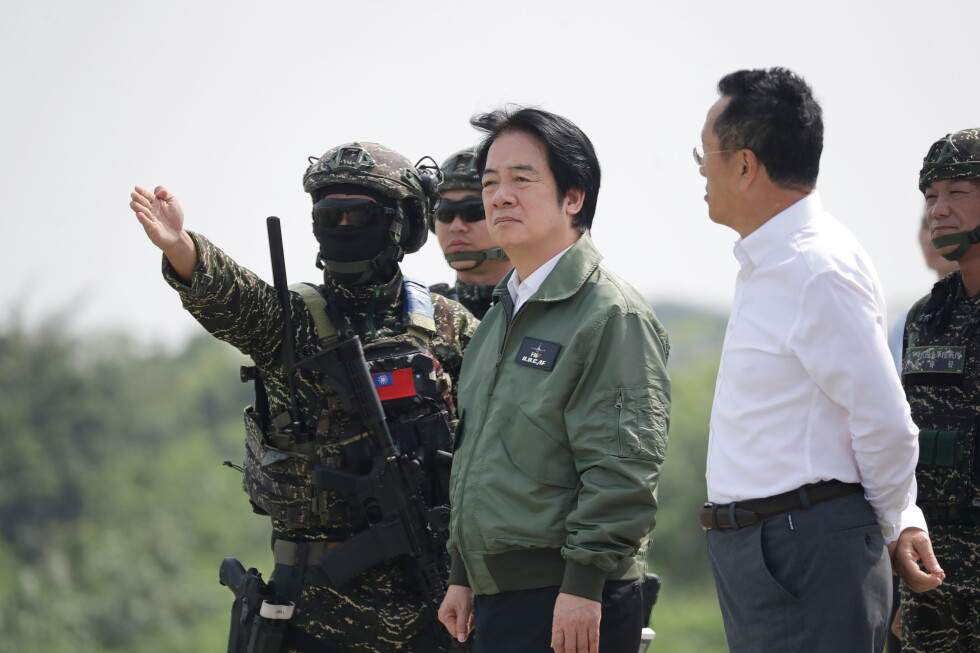
As cross-strait tensions remain at heightened levels, Taiwan has rolled out its most realistic and public-facing annual Han Kuang military exercises to date, bringing unprecedented disruption to daily civilian life across multiple urban centers as part of preparations for a potential crisis. The 30-minute slowdown of mobile internet services across Taipei and six other cities and counties on Thursday was a central component of the exercise’s final phase, a scenario-based drill designed to test the island’s ability to function under degraded communication conditions amid a simulated military incursion.
Telecom providers across the affected regions deliberately throttled mobile data speeds to a maximum of 256 Kbps, a dramatic reduction from the widespread 5G connectivity most urban residents rely on daily. The speed cap left only basic text-based messaging functional, cutting off access to streaming, social media, and most cloud-based services for half an hour. Taiwanese President Lai Ching-te publicly apologized for the inconvenience the controlled disruption caused, framing the measure as a critical, non-negotiable step for national preparedness. “We ask for your understanding and support, as this is a necessary drill,” Lai stated, after the exercise drew public attention for its tangible impact on daily routines.
This year’s drills mark a clear shift in approach from previous years, with Taiwan’s military expanding the scope of exercises to actively integrate reservists and civilian populations into realistic crisis scenarios, moving away from the low-disruption, largely unnoticeable drills held in past iterations. Previous urban preparedness drills, for example, included low-key air raid exercises in Taipei subway stations that did not interrupt regular passenger flow, attracting little public notice. This year, by contrast, closed subway station entrances and held passengers inside for the duration of the air raid simulation, mirroring conditions of a real emergency.
Local outlet the Taipei Times confirmed that civilian participation and interagency coordination with local government bodies were core priorities for the 2024 iteration of the drills. One detained passenger, Allen Hsieh, a Hong Kong tourist, told reporters he was surprised by how authentic the simulation felt, and said the minor disruption was understandable given regional security dynamics. “I did not expect it to be so real. I thought I would only receive text messages,” Hsieh said, adding “The exercise did not cause me any inconvenience. I know that Taiwan needs to conduct exercises, given the current situation. I can understand that.”
Alongside the communication and civilian evacuation drills, President Lai also visited a local Taipei hospital that was running its own simulation: testing the process of relocating critical medical services and operations to pre-prepared underground facilities, a key preparedness step for preserving healthcare capacity during a potential conflict.
The increasingly rigorous exercises come as Taiwan steadily boosts its defense training and military procurement in response to steadily rising tensions with Beijing. China continues to claim Taiwan as part of its sovereign territory, and maintains regular military presence near the island, with daily sorties by military aircraft and regular patrols by Chinese Coast Guard and naval vessels. Large-scale combat exercises near Taiwan’s borders are also conducted on a periodic basis to assert Beijing’s territorial claims. In the latest display of this sustained presence, Taiwan’s Ministry of National Defense reported that between Wednesday and Thursday morning alone, 18 Chinese military aircraft and 11 People’s Liberation Army Navy vessels were detected operating in waters and airspace surrounding the island.