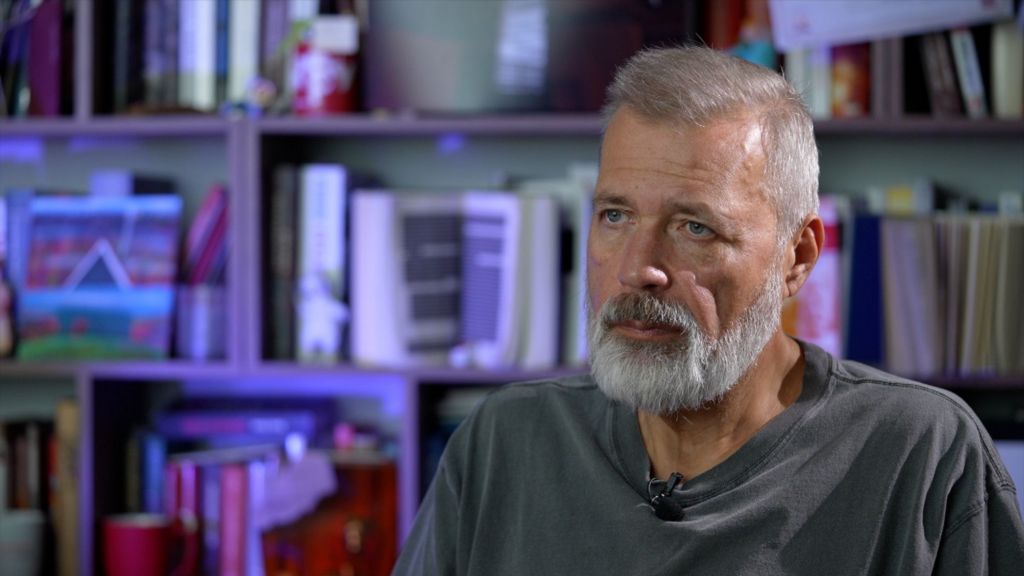
Once Russia’s most prominent beacon of independent investigative journalism, the Moscow headquarters of *Novaya Gazeta* now stands as a hollow, silent monument to the country’s eroding free speech. Its former editor-in-chief and 2021 Nobel Peace Prize co-winner Dmitry Muratov confirms what the empty corridors already make clear: the print edition of the outlet he co-founded more than 30 years ago no longer exists.
For decades, *Novaya Gazeta* built its legacy as a fearless watchdog, exposing high-level government corruption and widespread human rights abuses across Russia. Its work came at a devastating cost: six of its journalists, including iconic Chechen war correspondent Anna Politkovskaya, were assassinated for their reporting. The 2021 Nobel Peace Prize honored that extraordinary courage, with the committee highlighting the outlet’s decades-long fight to protect freedom of expression. But even this global recognition could not shield it from the Kremlin’s expanding crackdown on dissent that accelerated after the 2022 full-scale invasion of Ukraine.
Muratov, who auctioned off his Nobel medal shortly after the invasion to raise funds for UNICEF’s Ukrainian refugee humanitarian programs, explains the blunt force that shut down the print operation: “Putin issued a decree and the newspaper’s printing presses were nationalised. Its registration was revoked.” While a small digital footprint remains, Russian authorities have blocked domestic access to the outlet’s website, forcing Russian readers to rely on virtual private networks (VPNs) to access its content, a workaround available only to a small subset of the population.
The demise of *Novaya Gazeta* is far from an isolated case. Muratov estimates that at least 1,500 Russians have been imprisoned since the launch of the Kremlin’s “special military operation” in Ukraine for speaking out against state policy. That figure, he notes, is three times higher than the number of political prisoners documented in the Soviet Union during the height of KGB power. Hundreds of the country’s most prominent public voices have already been labeled “foreign agents,” “extremists,” or “terrorists” to silence their criticism. As he points out, the scale of repression today outpaces even that of the Soviet era, when dissident Andrei Sakharov could only name 120 political prisoners in his 1975 Nobel Peace Prize address, and Amnesty International counted just 600 prisoners of conscience across the entire USSR a decade later.
Against this backdrop of escalating internal repression, Muratov issues a stark warning about the growing risk of nuclear escalation in Ukraine, a conflict that has already become the bloodiest European war since World War II. While Russian President Vladimir Putin continues to publicly predict victory, Muratov rejects that framing outright: “There will never be ‘victory’. Because what has been going on for nearly five years – no matter how it ends – can no longer be considered a victory. It cannot be a victory when two Slavic nations have ripped a million people to shreds. Or more than a million.”
Muratov argues that while Russia cannot fully conquer Ukraine, it can choose to destroy it through continued escalation that could ultimately lead to the use of nuclear weapons. When asked whether he believes Putin would actually authorize a nuclear strike, he pushes back on pundits who claim to read the Russian leader’s mind: “All those political experts who say ‘Putin thinks this’ or ‘Putin is scared of that’…they’re all charlatans. It’s in the same league as astrology. Nobody knows what’s going on in Vladimir Putin’s head. And I don’t know.”
Still, as a veteran journalist analyzing public discourse, Muratov cites alarming trends: since the start of 2026, discussion of the potential need for nuclear weapons use has appeared more than 500 times in Russian public discourse. While fringe extremist rhetoric does not surprise him, he notes that these conversations have moved into mainstream state-controlled media, and even appeared at the official St. Petersburg International Economic Forum, where a speaker framed nuclear deployment as a positive outcome.
Muratov also challenges Putin’s core justification for the invasion: that it would strengthen Russia’s national security. “Tell me, has security increased?” he asks, pointing to recent Ukrainian drone strikes targeting logistics hubs deep inside Russian territory – including warehouses belonging to Wildberries, Russia’s largest online retailer – alongside widespread fuel shortages, mobile internet disruptions, and the growing population of political prisoners.
Despite reports of slipping domestic approval ratings, Muratov argues that Putin retains an iron grip on power, dismissing widespread speculation of elite splits or internal conspiracies. “The country is run by Vladimir Putin. They’re frightened of him,” he says, noting that this fear is systematically reinforced by Putin’s core base of support in the Federal Security Service (FSB), the successor agency to the Soviet KGB.
Muratov also holds little illusion about Western hypocrisy in its dealings with Putin. He notes that for years, European leaders publicly lectured Putin on human rights while simultaneously signing lucrative trade deals for Russian oil, gas, and diamonds – a contradiction that Putin openly mocks. “He knows the true value of people who preached to him those values,” Muratov says.
Now labeled a foreign agent himself, Muratov has been stripped of many basic rights: he is banned from teaching, barred from running for public office, and even restricted from accessing proceeds from selling his own property. The label is deliberately designed to stigmatize critics and frame them as enemies of the state within Russian society. Yet Muratov deflects attention from his own struggles to highlight the plight of hundreds of political prisoners locked away for opposing the war, a crisis he says has largely fallen off the global agenda.
Flipping through a folder of portraits, he shares the stories of ordinary Russians jailed for their anti-war views: four *Novaya Gazeta* journalists convicted of extremism for alleged links to Alexei Navalny’s opposition anti-corruption movement; Moscow city councilor Alexei Gorinov, jailed for spreading “false information” about the Russian military after speaking out against the invasion; 68-year-old Ukrainian-born pediatrician Nadezhda Buyanova, sentenced to five and a half years in a penal colony for criticizing the war at work; and 39-year-old concert pianist Pavel Kushnir, who died in a pre-trial detention center during a hunger strike after being arrested for posting anti-war videos online. Even the outlet’s own managing editor, Oleg Roldugin, is currently under house arrest, and police blocked the newspaper’s legal team from entering the headquarters for 13 hours during a recent search.
When asked whether his Nobel Peace Prize offers any protection to speak freely, Muratov deflects: “This is not a question for me. Whenever you have the opportunity, ask the authorities that.”
Despite the bleak picture he paints of contemporary Russia, Muratov holds small glimmers of hope. While open criticism is now effectively impossible, he says ordinary Russians continue to express quiet gratitude for *Novaya Gazeta*’s work on the streets of Moscow. “We live in a time when you stay quiet. But so many people support what we do,” he says. “They are spoken in a whisper. But what people think is very important.”