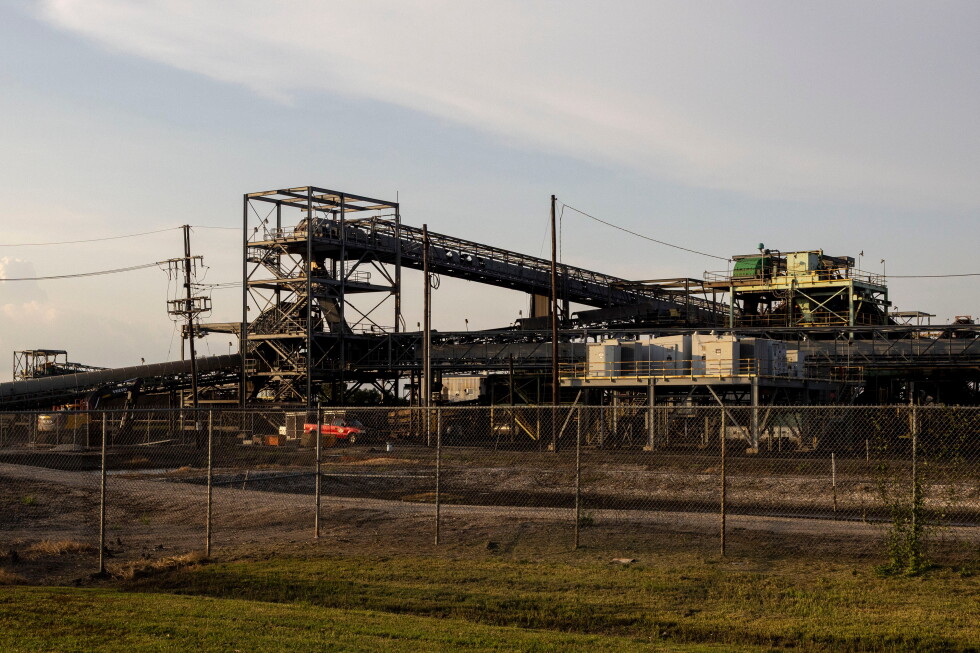
Just 24 months after launching operations, a major liquefied natural gas export terminal outside New Orleans is pushing forward with a multibillion-dollar expansion, leveraging a controversial Trump administration emergency permitting framework that cuts short environmental oversight and threatens fragile coastal ecosystems in one of America’s most vulnerable land-loss regions.
Located along the Mississippi River between the Louisiana communities of Myrtle Grove and Port Sulphur, Plaquemines LNG has qualified for expedited approval from the U.S. Army Corps of Engineers under the national energy emergency declared by former President Trump in 2024. Under the accelerated process, the public comment window has been slashed from the standard 30 days to just 10 days, closing on July 2, and Corps officials are on track to greenlight the project rapidly.
If approved, the expansion would more than double the terminal’s footprint, growing it from just under 590 acres to roughly 1,220 acres. According to the facility’s owner, Virginia-based developer Venture Global, the expansion would cement Plaquemines LNG’s status as the largest LNG export terminal in North America. The total price tag for the buildout is estimated at $18 billion.
But environmental advocates are sounding the alarm, warning that the truncated review process eliminates critical scrutiny of the dredging, in-water construction, and marshland filling required for the expansion. Corps projections confirm the project could damage or destroy up to 470 acres of sensitive wetlands and water bottoms in central Plaquemines Parish, a region already grappling with catastrophic coastal land loss just 25 miles south of New Orleans.
“Louisiana is already in the middle of an unprecedented coastal crisis,” explained Matt Rota, senior policy director for New Orleans-based environmental nonprofit Healthy Gulf. “Destroying another 400 acres of wetland in Plaquemines Parish is indefensible. Remaining land in the parish is already incredibly scarce, and this project would erase a huge chunk of what’s left.”
Data bears out Rota’s warning: Over the past 60 years, Plaquemines Parish alone has lost more than 250 square miles of coastal land to a combination of geological subsidence, human-caused sea level rise, and chronic erosion. The Louisiana Coastal Protection and Restoration Authority projects that an additional 300 square miles — roughly half of the parish’s remaining land mass — could disappear within the next 50 years. The crisis extends across the entire Louisiana coast: Since the early 1900s, the state has lost nearly 2,000 square miles of coastal land, an area roughly equivalent to the entire state of Delaware.
Neither the U.S. Army Corps of Engineers nor Venture Global responded to repeated requests for comment on the project and associated environmental risks.
The Plaquemines expansion is far from an isolated case. The 2024 national energy emergency declaration opened the door for hundreds of other energy projects across the country to skip rigorous standard environmental reviews required under the Clean Water Act. Last year, the Army Corps identified more than 600 energy projects eligible for the expedited permitting process. Trump justified the emergency order as a necessary step to protect energy security for the U.S. military and domestic economy, framing the action as critical to maintaining a “reliable, diversified, and affordable supply of energy.”
The streamlined regulatory process is expected to supercharge the already rapidly growing U.S. LNG export industry. Currently, more than 30 new or expanded LNG export terminals are in the proposal or construction phase across the country. Plaquemines LNG is the newest of four operating LNG terminals in Louisiana, which is now a national hub for LNG exports; Venture Global also owns the Calcasieu Pass LNG terminal in the state, alongside existing facilities at Sabine Pass and Cameron LNG.
LNG is natural gas cooled into liquid form to enable low-cost shipment to overseas markets, where global demand has surged since 2022 as European nations sought alternatives to Russian piped gas and economies shifted away from higher-emission coal. But critics point out that exporting massive volumes of LNG directly contradicts the Trump administration’s stated rationale for the emergency declaration, which was framed as a way to shore up domestic U.S. energy supplies and improve national energy independence.
“It’s impossible to argue that expanding an LNG export terminal boosts domestic energy reliability or independence,” noted Griffin Bird, research analyst with the Environmental Integrity Project. Rota went further, arguing: “This has nothing to do with energy security. It’s just sacrificing the Louisiana coast to line the pockets of corporate billionaires.”
U.S. Energy Information Administration data backs up the export-focused nature of Plaquemines’ operations: Of the 833 billion cubic feet of LNG exported from the terminal in 2024, the vast majority was shipped to Europe, with Germany taking the largest single share at 19 percent.
Today, Plaquemines LNG ranks among Louisiana’s largest industrial facilities, with 1.3 miles of Mississippi River frontage, three deep-water ship berths, two on-site gas-fired power plants, and nearly 30 miles of connecting natural gas pipelines. It is also one of the state’s largest sources of industrial greenhouse gas pollution. Company permitting records show the facility is legally allowed to emit roughly 8.1 million tons of carbon dioxide and other climate-warming gases each year — an amount equal to the annual emissions from 1.7 million gasoline-powered passenger vehicles.
Only one industrial facility in Louisiana posts higher annual emissions: CF Industries, an ammonia production plant in Donaldsonville that reported 10.4 million tons of greenhouse gas emissions in 2023, the most recent year included in U.S. Environmental Protection Agency public emissions data.
Advocates emphasize that these emissions, combined with the additional carbon released when imported LNG is burned for energy overseas, accelerate the climate change that is already driving sea level rise and more intense storm systems that worsen Plaquemines Parish’s land loss crisis. “Burning more natural gas from this expansion means we lose Plaquemines Parish even faster,” Rota said.
If the expansion moves forward, the terminal’s total annual export capacity will jump from roughly 1.4 trillion cubic feet to 2.3 trillion cubic feet. While the exact impact on overall emissions is still undisclosed, federal regulatory filings indicate the expanded facility could emit at least 9 million tons of greenhouse gases annually. Venture Global has stated it plans to deploy carbon capture and sequestration technology to inject a portion of the terminal’s emissions into underground geologic formations, though details on the scope and efficacy of the system have not been released publicly.
The project has earned support from many Louisiana political leaders, who frame the expansion as a major economic boost that will create high-wage jobs for local workers. U.S. House Majority Leader Steve Scalise, a Republican from Jefferson Parish, publicly praised the rapid development of the Plaquemines LNG site during an April 2025 tour of the facility.
“Four or five years ago, this was nothing but cow pasture,” Scalise told reporters during the visit. “Today it’s the most modern, most efficient LNG export facility in the world, and they’re building another identical facility right next door.”
This report was originally produced by Verite News and distributed via a partnership with The Associated Press.