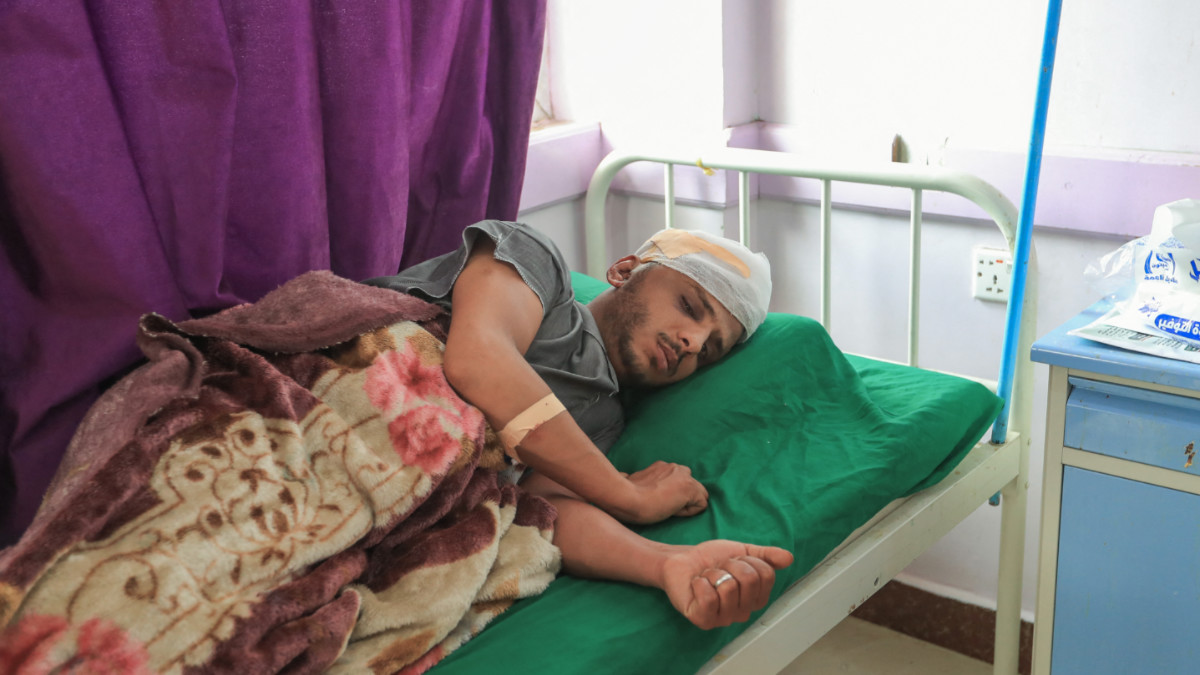
A confidential internal assessment from the United States Department of Defense, submitted to congressional lawmakers, has confirmed that U.S. military attacks on Yemen carried out last year left hundreds of civilian bystanders dead and injured, according to disclosures that have recently entered the public sphere.
In a 12-page report transmitted Monday to the U.S. Senate Armed Services Committee, the Pentagon formally documented that 153 Yemeni civilians were killed and an additional 243 sustained wounds across the campaign of airstrikes launched by former President Donald Trump. Trump authorized the bombing campaign targeting Houthi militant positions in March 2025, a retaliatory measure launched after the group launched a series of attacks on commercial shipping transiting the Red Sea. The Houthis have stated their attacks on Red Sea vessels are an act of solidarity with Palestinian communities under siege in Gaza.
The report lays out specific details of multiple airstrikes that the Pentagon acknowledges “more likely than not” resulted in unintended civilian harm. One strike carried out on April 6 in the Yemeni capital of Sanaa left five civilians dead and 25 more injured, according to the document. A separate U.S. attack on the coastal city of Hodeidah on April 17 killed no fewer than 80 civilians, a strike that Human Rights Watch concluded in a June analysis should be probed as a potential war crime.
Niku Jafarnia, a researcher specializing in Yemeni and Bahraini affairs at Human Rights Watch, condemned the strike targeting Ras Issa Port, a vital hub for humanitarian aid entering Yemen that was hit while hundreds of port workers were on site. “The U.S. government’s decision to strike this critical aid entry point, while hundreds of workers were present, demonstrates a callous disregard for civilians’ lives,” Jafarnia said. Another late-April airstrike in Yemen’s northwestern Saada province killed at least 68 African migrants who were staying in the area, the report confirms.
To date, Pentagon officials confirm that 15 additional strike-related incidents remain under active review to assess whether civilian casualties occurred. Beyond the casualty disclosures, the launch of the Trump administration’s military campaign was initially overshadowed by a major security breach that has become known as SignalGate, when Atlantic magazine editor-in-chief Jeffrey Goldberg was accidentally added to a private Signal group chat planning the military operation. The chat included 19 senior U.S. national security officials, including Vice President JD Vance, Secretary of State Marco Rubio, U.S. Ambassador to the United Nations Mike Waltz, and special envoy Steve Witkoff. The accidental inclusion of an outsider journalist provided an unprecedented look into the administration’s internal deliberations around the campaign, which largely focused on grievances that Europe and Egypt were not compensating the U.S. for its military involvement.
Over the course of the two-month campaign, the U.S. carried out more than 1,000 airstrikes against Houthi positions across Yemen. The campaign was ultimately halted in May 2025, just ahead of a planned visit by Trump to the Gulf Cooperation Council region. Investigative reporting by Middle East Eye has revealed that Saudi Arabia, a key U.S. partner in the region, pushed American officials to end the strikes ahead of Trump’s visit.
Regional officials who spoke to Middle East Eye noted that while the U.S. bombardment inflicted significant damage to the Houthis’ stockpiled military equipment, the impact of the campaign was short-lived. In the months since the strikes ended, the Houthi movement has resumed its attacks on commercial shipping in the Red Sea and even expanded its operational reach to target energy infrastructure sites within Saudi Arabia itself.