In a landmark overhaul of competition policies, the European Broadcasting Union (EBU), governing body of the Eurovision Song Contest, has approved sweeping rule amendments that fundamentally change how the contest’s host country is selected, along with updates to participation and performance standards. The changes, finalized following input from competing broadcasters after the 2026 contest held in Vienna, introduce a new provision that bars any winning nation from hosting the following year’s event if it is involved in active armed conflict, or if a tense geopolitical scenario threatens the security, public safety or regional stability of the country.
The rule change is widely interpreted as a direct response to ongoing controversy surrounding Israel’s participation in the contest, which has sparked widespread criticism over the country’s military operations in Gaza and the broader Middle East. Last November, an attempt to suspend Israel from the competition failed, prompting five national broadcasters — including major Eurovision players Spain and Ireland — to announce a full boycott of the event. Despite the widespread protests, Israel’s contestant Noam Bettan finished second with his entry *Michelle*, marking the second consecutive year the country has claimed the runner-up spot. Following the result, many participating broadcasters raised private concerns about the risks of staging the contest in Jerusalem or Tel Aviv if Israel were to secure a win in future editions.
While Israel is the most visible target of the new host eligibility rule, the policy also applies to Ukraine, which has been locked in a full-scale defensive war against Russian invasion since 2022. In 2022, Ukrainian folk-rap group Kalush Orchestra won the contest with *Stefania*, a symbolic victory that drew global public support for the war-torn country. After the win, EBU organizers conducted a comprehensive feasibility study to evaluate whether the 2023 contest could safely be held in Kyiv. Ultimately, organizers concluded security risks were unacceptably high, and the United Kingdom stepped in to host the event in Liverpool on Ukraine’s behalf.
The new rules formalize this ad-hoc evaluation process into official policy. Under the updated framework, the EBU may commission an independent security assessment of the winning country’s region whenever such a step is deemed necessary. After reviewing the assessment findings, the EBU’s Reference Group will make a final determination on whether the winning broadcaster can safely host the competition. If the winning nation is ruled ineligible to host, the EBU will select an alternate broadcaster to organize the event — and crucially, the alternate will not be required to stage the contest on behalf of the original winning country, a departure from the 2023 arrangement that saw the BBC partner with Ukraine’s public broadcaster to center Ukrainian cultural heritage throughout the Liverpool event.
In addition to the host eligibility changes, the EBU announced two other notable policy updates on Tuesday. First, the minimum age for Eurovision contestants will be raised from 16 to 18, a significant shift after decades of the lower age limit. Second, organizers have issued new clarifications for rules governing the use of pre-recorded backing tracks. Since 1999, live instruments have largely been prohibited from Eurovision performances, with only lead vocalists required to perform live. Starting with next year’s contest, backing tracks will no longer be permitted to “unduly assist” competing artists — a ban that specifically prohibits pre-recorded vocals singing the main melody to supplement or support a singer’s live performance.
EBU officials noted that this clarification is designed to protect the competitive integrity of Eurovision performances, ensuring audiences always hear the lead vocalist’s live performance unassisted. Martin Green, Eurovision Contest Director, framed the package of changes as a balanced update that preserves what makes the contest unique while strengthening protections for all participants. “These changes are about giving everyone involved greater clarity, protecting artists and ensuring the Contest continues to provide a safe and welcoming environment, while preserving the spirit and integrity that make the Eurovision Song Contest so special,” Green said in a statement.
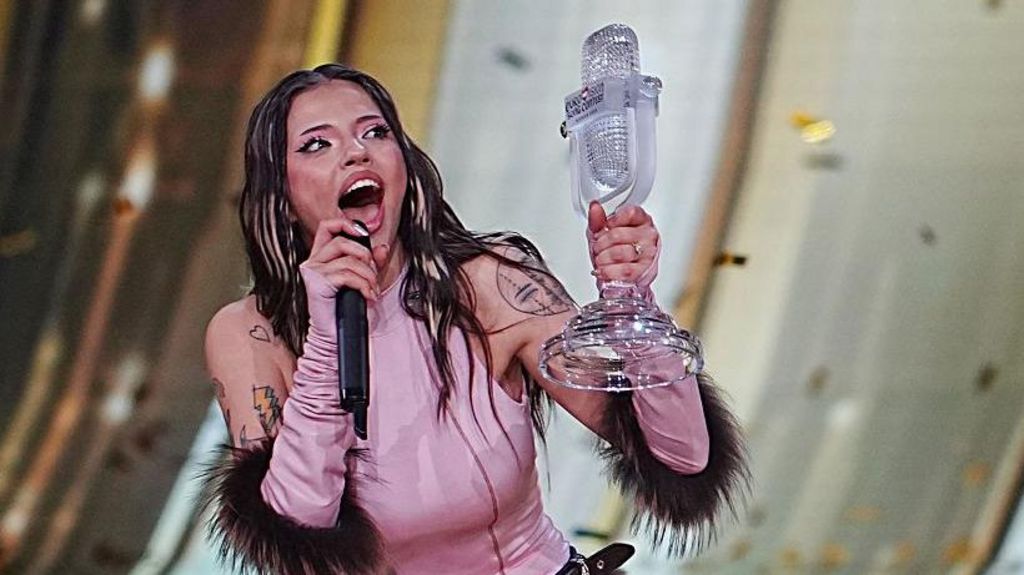
Looking ahead, the 2027 Eurovision Song Contest will be hosted in Bulgaria, following Bulgarian singer Dara’s victory at the 2026 contest with her upbeat club anthem *Bangaranga*. The announcement of the new rule changes also comes just weeks after organizers confirmed that Canada will make its Eurovision debut in next year’s competition, marking a major expansion of the contest’s geographic reach beyond its traditional European base.