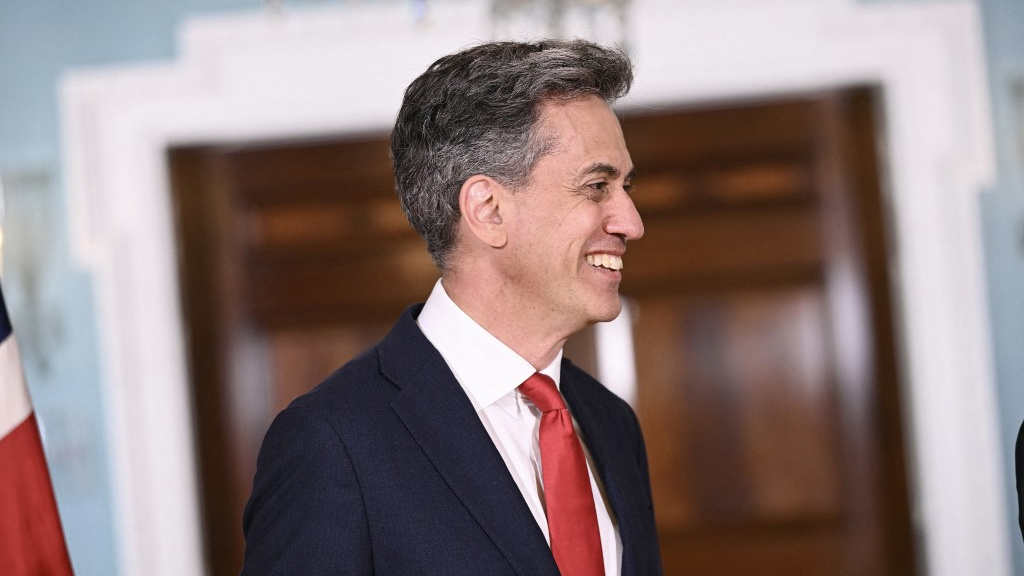
When Andy Burnham took office as United Kingdom Prime Minister, political observers immediately anticipated a shift in the nation’s approach to Middle East foreign policy. For weeks, that shift has only been visible in subtle shifts in ministerial rhetoric, with no concrete policy changes laid out for the public. That veil of secrecy is set to lift, however, when UK Parliament returns from its summer recess, multiple senior sources across Whitehall and British civil society have confirmed to independent outlet Middle East Eye.
At the top of the slate of proposed policy changes is a long-debated ban on goods imported from illegal Israeli settlements in the occupied Palestinian territories. According to reporting from MEE, Foreign Secretary Ed Miliband has emerged as a leading advocate for stricter measures against settlements, holding ongoing consultations with a broad cross-section of civil society organizations to refine the proposal. Senior Foreign Office discussions are currently weighing whether to extend the measures to include legal penalties for UK companies and organizations that maintain business or operational ties to settlements in the occupied territories.
The push for new regulations comes as the Charity Commission, the UK’s independent charity regulator, is already investigating multiple British charities accused of funneling funds to Israeli settlements. Former Prime Minister Keir Starmer stated publicly in June that no UK charity should provide support to settlements, but he refused to commit the government to an official ban on charitable donations to the entities. The Burnham administration, by contrast, is actively exploring a full ban on such donations, insiders confirm.
Beyond trade and charity regulations, the Foreign Office is also evaluating new targeted sanctions against individuals and organizations tied to the aggressive Israeli settler movement in the occupied West Bank. The UK previously imposed sanctions on far-right Israeli cabinet ministers Itamar Ben Gvir and Bezalel Smotrich last year, and internal discussions are now centered on expanding that sanctions list to include additional Israeli political figures.
Another high-stakes policy under review is the UK’s controversial arms sales regime to Israel. In September 2024, shortly after taking office, the Starmer government suspended approximately 30 direct export licenses for UK-made military hardware, after an official assessment found a “clear risk” the equipment could be used in Gaza to commit serious violations of international humanitarian law. That suspension included direct exports of UK-manufactured components for F-35 fighter jets, but the Starmer administration carved out a critical exemption for components sent to the global F-35 spare parts pool, even though those parts can ultimately end up in Israeli aircraft. UK-made components account for 15% of every F-35, a advanced fighter jet Israel has deployed heavily throughout its military campaign in Gaza, as well as in strikes on Lebanon and Iran.
The Starmer government defended the exemption, arguing that a full unilateral halt on UK component exports would disrupt the entire global F-35 fleet and threaten broader international security. Starmer also approved $169 million in new military exports to Israel during his tenure, including more than 8,600 separate munitions shipments categorized as “bombs, grenades, torpedoes, mines, missiles and other similar munitions.” Senior sources confirm that a full ban on these military exports is now active under discussion within the Burnham government, though no final decision has been reached.
In a statement provided to Middle East Eye on Wednesday, a Foreign Office spokesperson reaffirmed the UK’s long-standing legal position: “Settlements are illegal under international law, undermine the viability of a two-state solution and fuel insecurity for both Palestinians and Israelis. We have given clear advice to UK businesses that they should not engage in economic activity in illegal settlements and warn them of the reputational and potentially legal consequences of any such activities.”
Months before he assumed the premiership in July, Burnham set the stage for this policy shift by issuing a public apology for the Starmer-led Labour Party’s early support for Israel’s military campaign in Gaza and its refusal to back an immediate ceasefire in 2023 and early 2024. Since taking office, he has faced mounting pressure from Labour Party backbenchers to follow through on campaign-adjacent promises by banning trade with illegal settlements and adopting a firmer stance on Middle East issues.
MEE first reported in November last year that senior Foreign Office ministers had already privately concluded a ban on settlement goods was a desirable policy. Initial discussions on how to implement such a ban actually began in the final months of Starmer’s premiership, and in early July, then-Middle East Minister Hamish Falconer publicly confirmed that UK officials were working through the technical challenges of implementing a ban and coordinating with European Union allies on the issue. Several EU member states, including the Netherlands and Spain, have already implemented their own national bans on settlement goods, with Ireland currently in the process of rolling out its own restrictions.
Insiders note that Burnham has intentionally prioritized rolling out domestic policy initiatives during his first weeks in Downing Street, but last month he publicly confirmed his government is evaluating “further measures to deter unacceptable violence” in the occupied West Bank.
The push for new restrictions has faced pushback from within the Labour Party itself. Labour Friends of Israel (LFI), a prominent pro-Israel parliamentary lobby group that counts more than 70 sitting MPs as members, published a report earlier this month that pushed back against a full ban, arguing that some illegal settlement activity is justified and urging the government to abandon the proposal. The LFI report claimed a full trade boycott of all settlements is “practically and politically impossible” and would harm all Israeli businesses operating in major settlement blocs, as well as areas of East Jerusalem and the Old City.
This position stands in stark contrast to the Labour Party’s own stance when it was in opposition. Back in June 2020, then-shadow Foreign Secretary Lisa Nandy publicly called for a ban on settlement goods imports, saying the move required “courage that so far ministers have not been willing to show.” The pressure for action also reflects overwhelming grassroots support within the party: polling conducted earlier this year found that 87% of rank-and-file Labour members support a ban on trade with Israeli settlements, with only 6% opposing the measure.