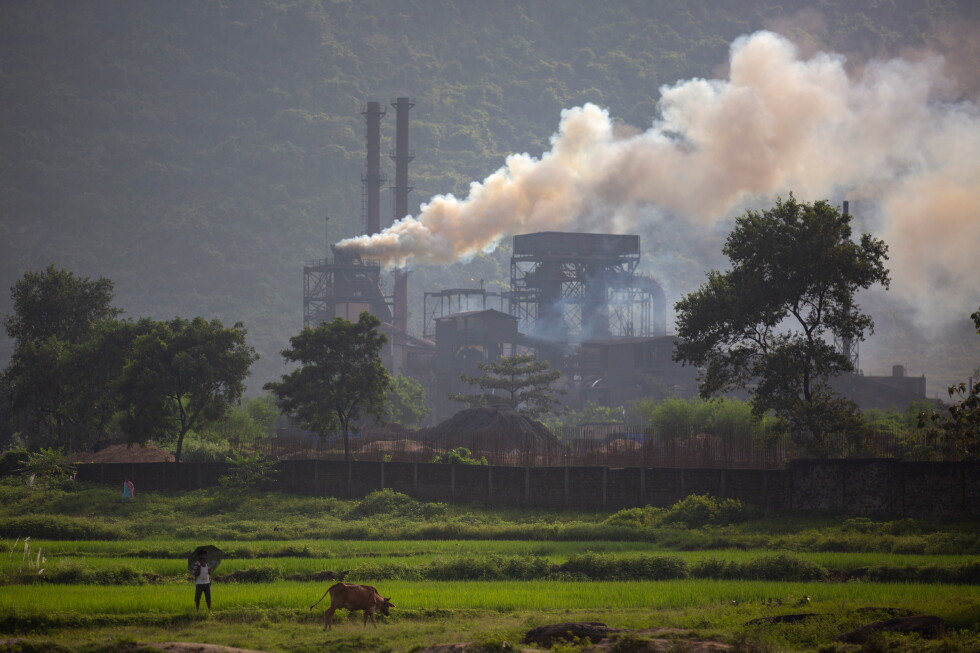
India’s secondary, small-scale steel producers, which collectively churn out nearly 40 percent of the country’s total crude steel output, could slash their electricity expenses by up to a third and deliver dramatic cuts to their carbon footprint by transitioning to renewable energy sources, according to a new collaborative study published Wednesday.
The analysis, titled *Powering India’s Secondary Steel Transition*, calculates that switching to renewables would cut annual power expenditures between 22 million and 24 million Indian rupees ($250,000 to $275,000) per production unit, a reduction of as much as 34 percent. The report was developed through a partnership between leading industry associations and environmental organizations, including the Confederation of Indian Industry, WWF-India, non-profit climate action group Climate Catalyst, and independent energy think tank JMK Research.
For most small steel manufacturing operations, electricity makes up as much as 40 percent of total operating costs, ranking it among the sector’s biggest ongoing expenses. In recent years, thin profit margins at many of these smaller firms have been squeezed even further by spiking global fuel costs driven by geopolitical instability including the Iran conflict.
As the world’s most populous country and one of the globe’s top contributors to greenhouse gas emissions driving global climate change, India has staked its international climate reputation on a pledge to reach full net-zero carbon emissions by 2070. The domestic steel industry alone accounts for roughly 12 percent of India’s total annual carbon output, making decarbonization of this sector non-negotiable to hitting the country’s 2070 target. Beyond climate and cost benefits, transitioning to clean power would also help insulate Indian steel exporters from the European Union’s new carbon border adjustment tax, which came into force at the start of 2026.
“With rising pressure on all industries across the globe to cut carbon emissions, high-emitting sectors like steel have to seek out cost-effective decarbonization pathways,” explained Prabhakar, a lead author of the report from JMK Research who uses a single name. “India has seen explosive growth in renewable energy capacity in recent years, so switching to renewable electricity is an accessible, low-cost win for cutting carbon pollution.”
The study identifies the most feasible pathway for small producers as collective, joint investment in shared renewable energy projects, where participating firms draw power proportional to their capital contribution and energy needs. This clustered model dramatically reduces the upfront financial burden that would fall on individual smaller companies, while also creating projects large enough to attract commercial financing and deliver economies of scale.
“A cluster-based approach fundamentally transforms how small steelmakers can access affordable renewable energy,” Prabhakar noted. “Aggregating demand through existing industry associations makes projects far more attractive to lenders, allows for optimal plant sizing, and spreads investment risk across multiple participants rather than concentrating it on any single operation.”
Despite India’s total renewable energy capacity tripling over the past 10 years, adoption of clean power among small and medium-sized steel producers has lagged far behind the national average. The report estimates that only around 11 percent of smaller steelmakers currently source any power from renewables, compared to 22 percent of India’s total national electricity mix that comes from clean sources.
Vinoth Balakumar, of the Confederation of Indian Industry, emphasized that expanding clean energy access for small steel producers is a core requirement for India to meet its ambitious climate commitments. “These companies are ready to transition, and they have recognized that shifting to renewable electricity is a critical step to protect their long-term profitability,” he said.
Still, the report outlines multiple persistent barriers slowing the transition. Many small steel firm leaders report that both domestic and international buyers increasingly prioritize low-carbon steel, and they are eager to switch, but obstacles including limited awareness of cost benefits, burdensome bureaucratic red tape, high upfront capital costs, and inadequate grid infrastructure are holding back progress.
“When capital costs are already extremely elevated, it makes the transition unviable for most smaller operations,” said Sanjay Tripathi, a steel company owner based in central India’s Chhattisgarh state. In Gujarat, India’s second-largest producer of renewable energy, small steelmakers say underdeveloped transmission and grid infrastructure leaves them unable to use all the solar power they have already invested in.
Dhirubai Patel, a steel manufacturer in Rajkot, Gujarat, which hosts one of India’s largest small-scale steelmaking clusters, noted that his firm and other local producers launched a shared solar power plant in 2021, but state authorities regularly order operators to cut solar output by as much as 80 percent due to grid constraints.
Patel called on the Indian government to upgrade core energy infrastructure and streamline regulatory processes to speed the transition. “We already have many strong national policies in place, but there is a lack of coordination and support across many government departments,” he said. “Regulatory officials are still working with outdated mindsets that need to change to support clean energy growth.”