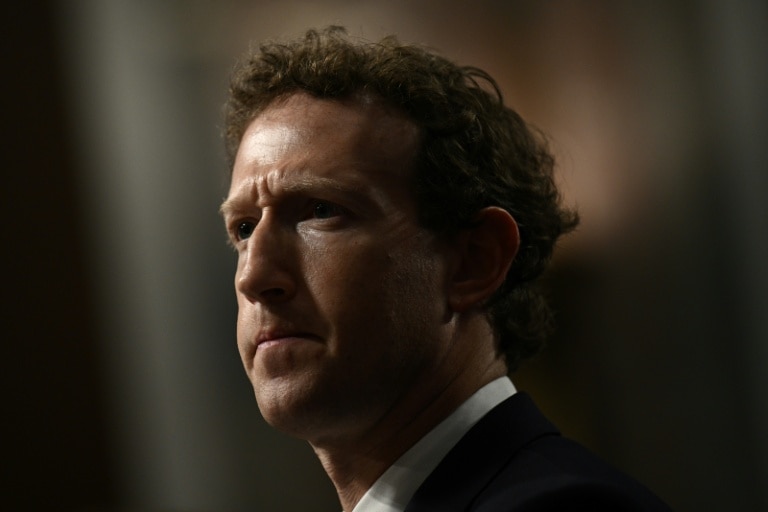
A defining legal showdown for global social media giant Meta Platforms kicks off this week in a U.S. federal court, where the company will confront allegations that it knowingly designed addictive features on Facebook and Instagram that cause measurable harm to children and adolescents. Legal experts widely frame the case as social media’s equivalent of the 1990s tobacco industry reckoning that transformed corporate accountability for harmful consumer products.
The lawsuit originates from a 2023 filing by a coalition of U.S. states, with California, Colorado, Kentucky, and New Jersey selected to lead the consolidated claims against Meta. Top prosecutors from these four states will argue in court that Meta intentionally engineered its platforms to hook underage users, prioritizing user engagement and revenue growth over child well-being.
In an official statement to Agence France-Presse, a Meta spokesperson rejected the claims, saying the company “strongly disagrees with these allegations” and remains “confident the evidence will show our longstanding commitment to supporting young people.” The company added it has collaborated with parents, independent experts, and law enforcement to implement safeguards for young users, and reaffirmed its confidence in its record of protecting teens online.
While this is not the first lawsuit holding a social media company accountable for youth mental health and safety harms, legal analysts agree this trial carries unprecedented stakes for the entire industry. Vincent Joralemon, director of the University of California Berkeley’s Life Sciences Law and Policy Center, drew a direct parallel to the 1990s U.S. tobacco litigation, noting that just like the tobacco cases, the current suit against Meta centers on deceptive corporate business practices rather than just the harms of the product itself.
Thirty years ago, decades of scientific research confirmed tobacco caused life-threatening conditions including cancer, before subsequent investigations exposed that major tobacco companies intentionally downplayed and hid the well-documented harms of their products from the public. When dozens of U.S. states sued four leading tobacco firms, the litigation ended in a 1998 landmark settlement that imposed massive financial penalties and forced sweeping changes to industry marketing practices—particularly the targeting of children with tactics like cartoon mascot Joe Camel.
Jury selection for the Meta trial is scheduled to begin Monday in Oakland, California, just a short distance from Meta’s headquarters in Menlo Park, with opening statements set to commence August 18. This is not the first time Meta has faced adverse rulings on similar claims: separate trials in Los Angeles and New Mexico have already resulted in convictions, with combined damages approaching $1 billion.
In the Oakland trial, the plaintiff states are seeking not only sweeping regulatory changes to Meta’s platform designs but also financial penalties that could reach as high as $1.4 trillion—an amount nearly equal to Meta’s current total market capitalization of around $1.5 trillion. Despite the staggering financial sum, legal experts say a ruling against Meta would bring far greater threats than just the financial penalty.
Joralemon argues that the biggest risk for Meta is severe reputational damage and the mandate to implement fundamental, costly changes to how its core platforms operate. He added that compelling Meta founder and CEO Mark Zuckerberg—who is listed as one of the prosecution’s key witnesses—to testify could also significantly damage the company’s position in court.
Nora Freeman Engstrom, a law professor and associate dean at Stanford University, told AFP the trial could mark “the beginning of a broader reckoning” for Meta. A key focus of the proceedings will be examining the gap between what Meta internally knew about the harms its platforms caused to children, and what it disclosed publicly, she noted.
This trial is just one of thousands of legal actions facing Meta and other major social media companies over youth harms, and Joralemon noted the wave of litigation could potentially stretch on for decades. In May of this year, Snap, TikTok, YouTube, and Meta reached a $27 million settlement with a Kentucky school district to avoid a trial that would have set a binding precedent for roughly 1,200 similar pending lawsuits. Just this Monday, a federal appeals court ruled that more than 3,000 additional lawsuits against Meta, Google (parent company of YouTube), Snap, and TikTok can move forward in court, underscoring the growing wave of legal pressure on the social media industry.