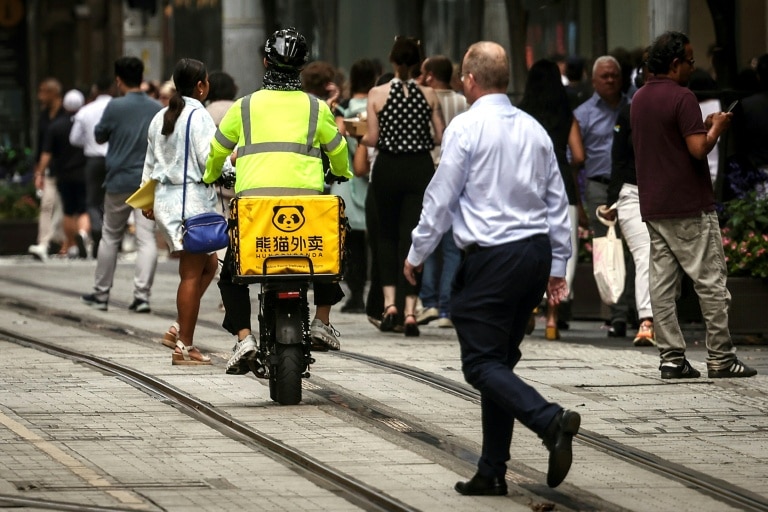
In a landmark decision widely hailed as a global precedent for gig worker rights, Australia’s Fair Work Commission has ordered sweeping new workplace protections and a substantial pay increase for hundreds of thousands of app-based delivery drivers, set to take effect next Monday, August 17.
Under the new ruling, delivery drivers working for major online platforms including UberEats, DoorDash, and HungryPanda will be guaranteed a minimum hourly wage of Aus$31.30, equivalent to roughly US$22. This rate is nearly 18% higher than Australia’s current national minimum wage of Aus$26.44 per hour. Beyond base pay, the new regulations also require platforms to provide mandatory workplace accident insurance for all delivery drivers covered by the order.
The policy outcome marks an unprecedented collaborative effort: the new minimum standards were jointly brought before the tribunal by Australia’s Transport Workers Union (TWU), which advocates for gig worker interests, and two of the largest gig delivery operating companies in the country, DoorDash and UberEats. TWU National Secretary Michael Kaine emphasized that for decades, gig workers in Australia have been excluded from core national workplace protection frameworks, leaving them without basic employment security. Starting next week, he noted, these workers will gain access to a set of standards that lead the world, with more improvements planned for the future.
Australia’s Employment Minister Amanda Rishworth called the decision a critical milestone for workers in the rapidly growing gig economy. The new rules, she said, deliver stronger safeguards and a fairer social safety net for a segment of the workforce that long operated without formal protections.
Global data underscores the urgency of this regulatory shift. The World Bank estimated in 2023 that as many as 435 million people around the world work in online gig roles, the vast majority of whom lack access to the standard labor protections extended to traditional full-time employees. Just two months ago, in June 2024, the International Labour Organization adopted a new global convention designed to formalize and extend basic job protections to gig workers worldwide.
For years, gig platforms have operated under a model that classifies delivery drivers and other gig workers as independent contractors rather than formal employees, even as the companies exercise extensive control over work processes. Through algorithmic management, platforms assign tasks, set pay rates, evaluate worker performance, and even terminate working arrangements. This classification has allowed companies to avoid obligations such as meeting minimum wage requirements, providing workplace safety coverage, and contributing to social security systems that traditional employees rely on.
The Australian ruling represents one of the most significant regulatory steps to date to address this gap, setting a benchmark that labor advocates around the world are likely to reference in future campaigns for gig worker rights.