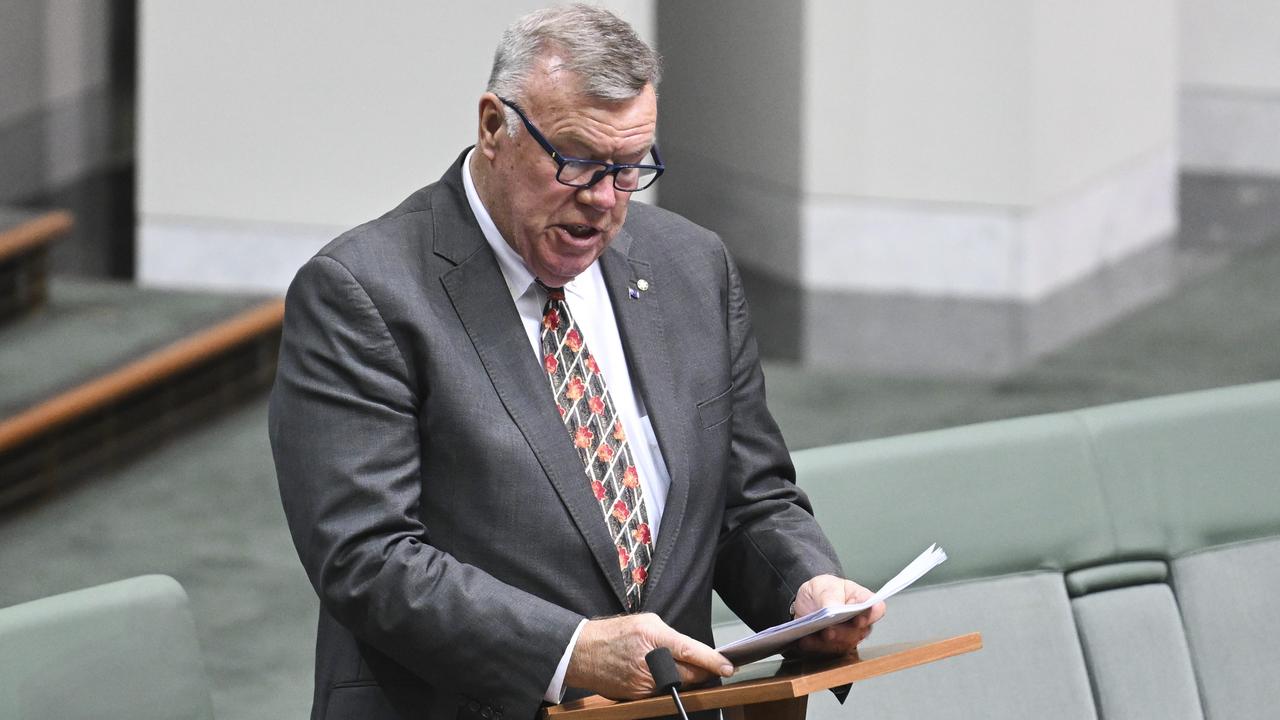
David Farley, the second lower-house Member of Parliament in Australia’s One Nation party, has used his first address to federal parliament to lay out his policy priorities, anchored by a hardline call for the rapid removal of individuals seeking to harm Australian communities and protect the nation’s longstanding culture of welcoming new migrants. Farley won a surprise victory in the May by-election for the regional seat of Farrer, replacing former opposition leader Sussan Ley to claim the seat.
In his 20-minute inaugural speech, Farley opened by acknowledging Australia as a uniquely fortunate nation built on a diverse tapestry of racial and religious backgrounds, noting his own early schooling experience brought him together with First Nations Australians and new migrants from across the globe. He recognized that Australia’s history of inviting skilled migrants from every corner of the world who go on to become contributing citizens is a core part of the national identity, but argued that this privilege of entry must be actively protected.
“Our national generosity, kindness, and humanity has offered the opportunity of new life to those who have been discriminated and persecuted against,” Farley told parliament. “That same generosity and kindness must be guarded and respected. As we open our welcoming doors, there are those who arrive onto our shores who want to change, and expect that change must be on us and not them. We must, with expediency and with minimal cost, remove those who want to bring harm and disrespect to this great nation of ours.”
Farley, a long-time resident of regional New South Wales with deep roots in agriculture, centered much of his speech on the specific concerns of his rural electorate. He launched sharp criticism of the Murray-Darling Basin Plan, labeling it a “failing, expensive ideology” that has failed to deliver on its core promises and cannot sustain functioning regional communities. He also hit out at the decision to end live cattle exports to Indonesia, arguing policymakers pushed the change through without fully examining the cascading harm the policy would cause across regional Australia. Farley claimed the damage extended far beyond farm gates, rippling through local transport businesses, Indigenous enterprises, regional communities, worker families, and even tourism links to Bali.
A third-generation Australian with a lifelong background in farming, Farley drew heavily on his personal and professional experiences to frame his political philosophy. Raised in Narrandera, NSW, he recalled learning core values of accountability and collective responsibility from his local community, and keeps two formative texts — a framed copy of Rudyard Kipling’s poem *If* and a transcript of Theodore Roosevelt’s famous “Man in the Ring” speech — as reminders of those values. He left home at 17 to work in agriculture, where he said he learned that success is earned through hard work, reliability, and commitment to team goals, rather than granted by entitlement. That career also taught him what “productive capital” can achieve, and that societal progress is not created by government mandate alone.
Looking to broader national and global challenges, Farley noted that for decades, most Australians have enjoyed relative security and prosperity under the U.S.-led post-war global order, but argued that long-held assumptions about steady access to critical goods like medicine and technology can no longer be taken for granted. He described the current global order as shifting toward a more fragmented, transactional, and multipolar system, where key resources and sectors — from artificial intelligence and semiconductors to energy, critical minerals, food, shipping lanes and supply chains — have become tools of strategic geopolitical power.
“Australia cannot be blind, deaf, arrogant or naive about that change,” he said. “A sovereign nation must possess the productive capacity to withstand shocks and to survive on its own.” Farley stressed that this requires urgent action to shore up national energy and food security.
Farley closed his speech by thanking One Nation leader Pauline Hanson, who first entered Australian politics in 1995, for her ongoing support. He framed his political career as a generational obligation: Australians inherit the nation built by previous generations, and hold a temporary responsibility as custodians to leave the country stronger for future generations. “That obligation between generations is at the heart of why I’m here,” he said. His 98-year-old mother, two daughters, and grandchildren were in attendance for the speech, which he closed by saying “They are not incidental to what I say today. They are the reason for it.”
Following the speech, Hanson embraced Farley, and One Nation’s only other sitting lower house MP, Barnaby Joyce, praised the address, telling Farley “Great speech, Nailed it.” Hanson and other One Nation party representatives were in the chamber for the inaugural address. Farley also said he is willing to work across the aisle with any political party that shares the goal of leaving Australia stronger than it was inherited, noting that the challenges facing the nation are larger than any single party.