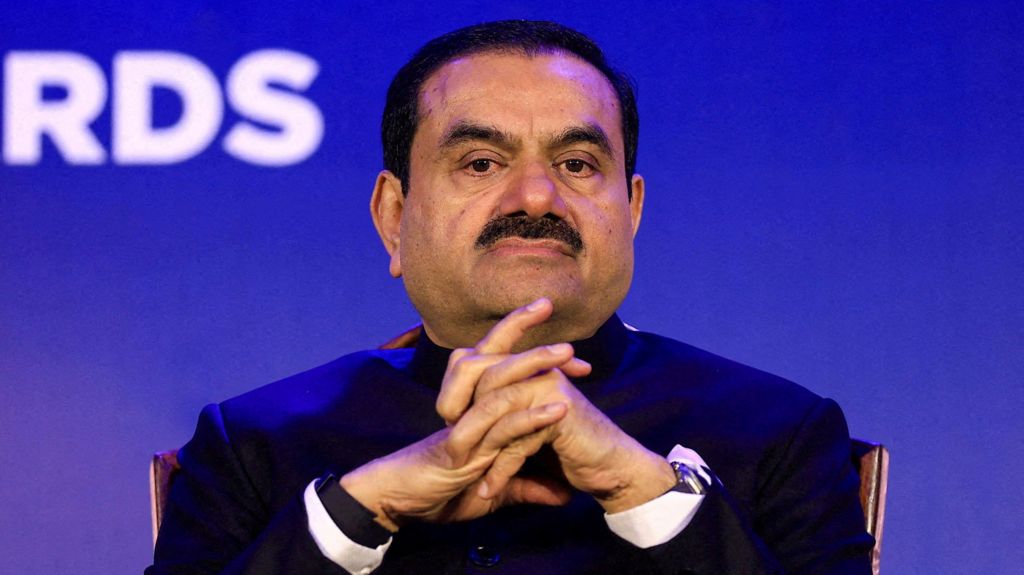
A high-profile transnational legal saga centered on one of India’s wealthiest business magnates has reached an abrupt conclusion after a federal judge in the United States approved the Justice Department’s request to dismiss all criminal bribery and fraud charges against Adani Group chair Gautam Adani. While the case is now permanently closed, the ruling left behind sharp public criticism of the unusual behind-the-scenes process that led to the dismissal, raising lingering questions about procedural fairness and equal application of the rule of law.
The case dates back to 2024, when federal prosecutors brought charges alleging Adani had paid millions in bribes to senior Indian government officials to secure approvals for large-scale renewable energy projects, while intentionally misleading American investors about the illegal practice. From the outset of the proceedings, Adani and all Adani Group entities have forcefully denied any and all wrongdoing, and maintained that stance through the conclusion of the case.
On Monday, U.S. District Judge Nicholas Garaufis formally granted the Justice Department’s motion to dismiss the indictment in a 47-page written ruling. The decision to drop the case came after senior department official R. Trent McCotter, principal associate deputy attorney general, collaborated directly with Adani’s defense team to craft the dismissal request — a move that cut out the line prosecutors and FBI and SEC investigators who had spent months building the criminal case.
In his ruling, Judge Garaufis did not mince words in condemning the irregular process. He described the arrangement as “highly unusual,” noting that McCotter had overstepped to replace the independent judgment of the career law enforcement officials directly involved in the investigation with his own. “The irregularities in the decision to dismiss the indictment are concerning,” Garaufis wrote in the official order. While he ultimately concluded that there was no direct evidence that Adani’s November 2024 pledge to invest $10 billion in U.S. infrastructure projects and create 15,000 jobs — announced in a post congratulating Donald Trump on his presidential election victory — influenced the Justice Department’s call, he acknowledged that the public retains the right to draw its own conclusions about how these backchannel discussions could shape public trust in equal justice.
The Justice Department first formally requested dismissal of the charges in May of this year. Department officials argued that most of the alleged misconduct occurred outside U.S. borders, making successful prosecution extremely challenging, and added that pursuing the case no longer aligned with the agency’s current prosecutorial priorities. The request came only after Adani assembled a high-powered new legal team led by Robert J. Giuffra Jr., co-chair of elite Washington law firm Sullivan & Cromwell and a longtime personal attorney to former President and current President-elect Donald Trump. Multiple reports confirm Giuffra met with senior Justice Department officials earlier this year to push back on the case and raise the defense’s objections. Judge Garaufis initially rejected the department’s first dismissal request in June, writing that the agency’s explanation for abandoning the prosecution was insufficient and ordering additional disclosures to clarify the decision-making process.
While the criminal charges are now dismissed with prejudice — a legal designation that means they can never be refiled against Adani — this case is not the only ongoing U.S. legal action involving the billionaire and his conglomerate. Earlier this year in May, Adani agreed to pay a $6 million civil penalty, and his nephew Sagar Adani agreed to a $12 million penalty, to settle civil disclosure allegations brought by the Securities and Exchange Commission, without admitting or denying the agency’s claims. Separately, Adani Enterprises, the Adani Group’s flagship publicly traded company, reached a $275 million settlement to resolve potential civil liability over apparent violations of U.S. sanctions imposed on Iran.
Adani, 64, who never appeared in any U.S. court during the criminal proceedings, issued a public statement welcoming the ruling, writing on social media platform X that “Throughout this challenging period, our faith in truth, fairness and the rule of law remained unwavering.” He added that he accepted the court’s order with humility and deep respect for the U.S. judicial process. A well-connected tycoon, Adani chairs a sprawling multinational conglomerate with core holdings in ports, energy, airports, and large-scale infrastructure across India and beyond, and is widely recognized as one of the richest men in India, with long-documented personal and political ties to Indian Prime Minister Narendra Modi, who hails from the same western Indian state of Gujarat.