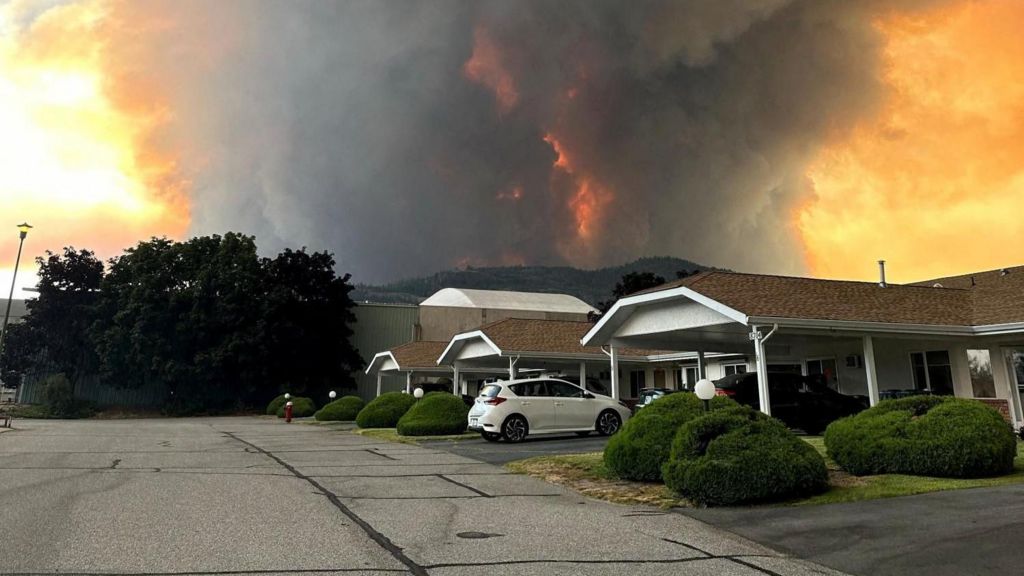
On a Friday in early August, a new wildfire sparked to life in British Columbia’s beloved Okanagan region, a scenic stretch of Western Canada famous for its crystal blue lake and award-winning wine estates. Named the Bald Range Fire, what began as a small ignition exploded across parched landscape over the following weekend, expanding rapidly to cover 136 square kilometers (53 square miles) in mere hours and triggering urgent evacuation orders for thousands of local residents.
For long-term locals like Earl Kurz, who has called the lakeside town of Peachland home for 30 years, wildfire scares have become an all-too-familiar part of life over the past decade. But the Bald Range Fire marks the first time he has been forced to abandon his property—and the aftermath he witnessed after the blaze passed has been gut-wrenching. “It’s total incinerated destruction,” Kurz described of the charred landscape. “The hot spots are just barren areas of nothing except 12 inches of ash.”
As of Monday, the inferno remains completely out of control, and provincial officials are still working to count the full number of homes destroyed by the flames. More than 12,000 residents across the region remain under mandatory evacuation orders, and local police confirmed Sunday that one 80-year-old woman died while attempting to flee the rapidly advancing fire.
The Okanagan region has been grappling with severe, long-term drought for years, a crisis that has left vegetation tinder-dry and primed for combustion. Data from the Okanagan Basin Water Board shows that as of July, Okanagan Lake’s water levels dropped to their lowest point since 1992, creating ideal conditions for wildfires to spread at breakneck speed.
The Bald Range Fire is far from an isolated incident: as of Monday, more than 100 active wildfires are burning across British Columbia, 70 of which ignited just in the last seven days. In response to the escalating crisis, provincial premier David Eby declared a provincial state of emergency over the weekend, urging all residents in at-risk areas to follow evacuation orders immediately and warning that the blazes continue to advance “incredibly quickly”.
Keegan Radomski, an 18-year-old resident of Summerland— a lakeside town just south of Peachland— is one of thousands of displaced residents, having fled her family home in the middle of Friday evening’s dinner. The property, built by Radomski’s grandmother in 1996, was one the family had held for three decades, and like many long-term Okanagan locals, they had weathered multiple wildfire scares in the past. But nothing prepared them for how fast the Bald Range Fire would move. After spotting distant smoke over dinner, less than four hours passed before Radomski watched a hill on her family’s property catch fire. She barely escaped with only her mother’s ashes before the fire crossed onto the property line, and she still has no confirmation on whether the family home has survived, or when she will be able to return to assess the damage. “We’ve had a lot of close calls before, but it’s never been like this,” Radomski said. “You always think it’s not going to be you, and then it’s you.”
The Bald Range Fire follows closely on the heels of the nearby Bradley Creek Fire, another major Okanagan blaze that is estimated to have destroyed more than 200 homes. After days of “tireless work” by firefighting crews, officials announced that the Bradley Creek Fire is now contained. But the crisis stretching across Western North America is far from over. Just south of British Columbia, the U.S. state of Washington is also facing extreme drought-fueled fires that have forced more than 65,000 people to evacuate their homes. Across the Atlantic, Southern Europe is grappling with its own devastating summer fire season, fueled by record-breaking heat and prolonged drought. France is currently facing its worst wildfire season in 20 years, while regional officials in Madrid, Spain describe the current blazes as the most destructive the region has ever seen.
While wildfires are a natural part of the ecological cycle in Canada’s extensive boreal forests, climate experts agree that human-caused climate change has dramatically amplified the risk: rising temperatures and prolonged dry conditions have made wildfires across Canada more frequent and far more intense over the past decade. In 2023, Canada recorded its most destructive wildfire season in recorded history, measured by total area burned. This summer’s outbreak in British Columbia is the latest example of the growing threat climate change poses to communities across the globe.