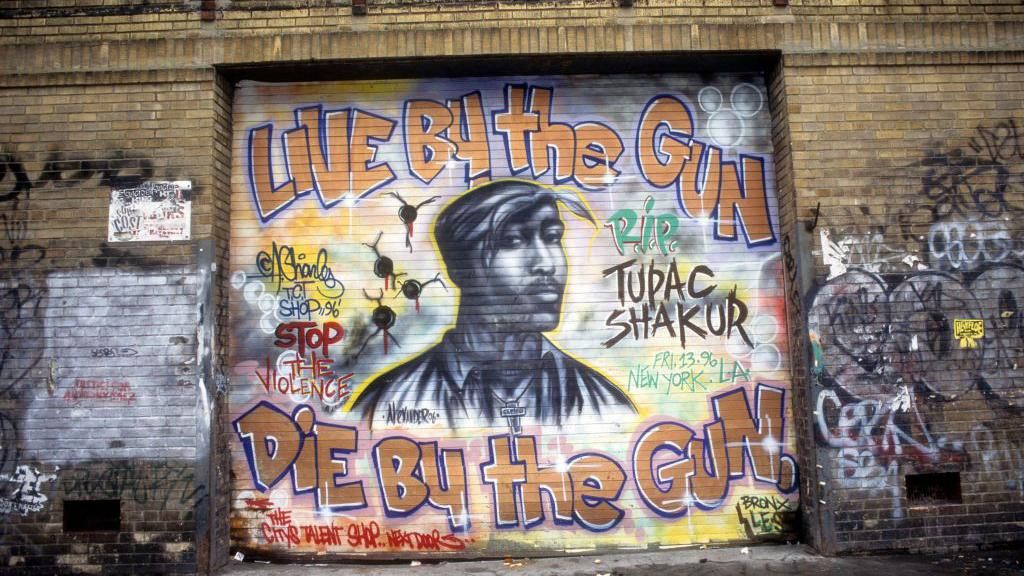
Thirty years have passed since the drive-by shooting that claimed the life of rap legend Tupac Shakur, a killing that remained shrouded in mystery, fueled endless conspiracy theories, and left decades of unresolved anger among fans and loved ones. Now, for the first time, a suspect is set to face a jury, offering a long-awaited chance to untangle the web of 1990s gang and rap rivalries that led to the rapper’s death.
The killing of 25-year-old Shakur on September 7, 1996, permanently altered the course of hip-hop history, transforming the already famous performer from the public face of gangsta rap into a globally recognized cultural icon whose influence endures three decades later. No arrests were made in the case for 27 years, until prosecutors in Las Vegas unexpectedly charged former Los Angeles gang leader Duane “Keffe D” Davis with murder in 2023. Jury selection for Davis’ trial got underway this week, with opening arguments scheduled to begin on August 17.
Davis, 60, who has pleaded not guilty to charges of murder with a deadly weapon committed to further criminal gang activity, faces a mandatory sentence of life without parole if convicted. Prosecutors allege he masterminded the attack as retaliation for the beating of his nephew, Orlando Anderson, by Shakur and his entourage just hours before the shooting, and that he supplied the weapon used in the attack. What makes the case particularly unusual is that the bulk of the evidence against Davis comes from his own public statements and a 2019 memoir he co-authored, Compton Street Legend.
To understand why this killing became one of popular culture’s most mythologized unsolved crimes, it is necessary to revisit the bitter rivalries that defined 1990s Los Angeles and hip-hop. At the time, a violent territorial feud between two of the city’s largest street gangs, the Bloods and the Crips, merged into a high-profile national rivalry between East Coast and West Coast rap scenes. This divide was embodied by two competing record labels: Suge Knight’s West Coast-based Death Row Records, which signed Shakur, and Sean “Diddy” Combs’ New York-based Bad Boy Records, home to rival rap star the Notorious B.I.G. (also known as Biggie Smalls).
Despite often being framed as the face of West Coast rap, Tupac Amaru Shakur was born and raised in New York City, the son of prominent Black Panther activist Afeni Shakur. He moved to California as a teenager, and signed to Death Row Records after building his early career as a solo artist and actor. Tupac’s biography, which blended working-class upbringing, Black liberation politics, Hollywood acting experience, and raw street storytelling, set him apart from many of his contemporaries. Months before his death, he released *All Eyez on Me*, the first double album in hip-hop history, which sold more than five million copies and cemented his legacy as a defining voice of gangsta rap.
The fatal night of September 7 began when Shakur and Knight attended a high-profile boxing match between Mike Tyson and Bruce Seldon at Las Vegas’ MGM Grand. After the match, security footage captured Shakur and his entourage, who were affiliated with the Mob Piru Bloods gang, attacking Orlando Anderson, a member of the rival South Side Compton Crips and Davis’ nephew. Roughly three hours after the altercation, as Shakur rode as a passenger in Knight’s BMW through central Las Vegas, a white Cadillac pulled alongside the vehicle and opened fire. Shakur was hit four times, and died six days later.
For nearly 30 years, the case went cold. Las Vegas law enforcement long cited a widespread refusal of witnesses to cooperate with the investigation, a street code that forbade working with police, and the deaths of multiple potential witnesses in unrelated gang violence. Investigators identified Anderson as a person of interest within weeks of the shooting, but he denied involvement and was never charged; he was killed in an unrelated gang shooting in 1998. It was not until Davis, Anderson’s uncle, began speaking publicly that the case moved forward again.
Ironically, it was the investigation into the killing of Biggie Smalls — who was gunned down in a 1997 Los Angeles drive-by killing that remains unsolved to this day — that ultimately led to charges in Tupac’s case. In the mid-2000s, Los Angeles investigators re-interviewed Davis in connection with Biggie’s death. While Davis denied any knowledge of Biggie’s killing, he admitted he was in the Cadillac when Tupac was shot, and claimed he had passed the gun used in the attack to the shooter. He entered an immunity agreement with police in exchange for that testimony, which remained in place until he began giving public interviews and publishing his memoir.
In Compton Street Legend, Davis openly confirmed his account of the night, writing that he supplied the murder weapon. His defense team argues that portions of the book were fictionalized and embellished by his co-author to boost sales, and that Davis never actually admitted to planning or ordering the killing. In a recent interview with local Fox 5 Las Vegas, Davis denied writing the book entirely, claiming “a ghost writer wrote that,” and denied he was even in Las Vegas the night Tupac was killed. He has also indicated he may take the stand in his own defense to deny the charges.
Davis has also made repeated public claims that Sean “Diddy” Combs offered him $1 million to kill Tupac and Suge Knight. Combs, who is currently serving a 50-month prison sentence on separate prostitution-related convictions, has repeatedly and categorically denied any involvement in Tupac’s death.
Prosecutors argue that Davis’ decision to go public with his account of the killing broke the terms of his original immunity agreement, a ruling a judge accepted, clearing the way for his 2023 arrest. Prosecutors have assembled a list of more than 200 potential witnesses, including members of Tupac’s family, former Las Vegas mayor Oscar Goodman, and former Los Angeles Police Department detective Greg Kading. The most high-profile potential witness is former Death Row Records CEO Suge Knight, who is the last surviving person who was in the car with Tupac the night of the shooting. It remains unclear if Knight will testify; he has previously stated he will not cooperate, but his testimony would be unprecedented, as he has never shared information with law enforcement about the case.
Legal observers have described the upcoming trial as a landmark event, with one trial attorney calling it “a legal scholar’s Super Bowl.” Beyond the legal process, the trial is expected to pull back the curtain on the deadly, high-stakes East Coast-West Coast rap rivalry and gang turf wars that defined 1990s hip-hop, answering questions that have lingered for an entire generation.