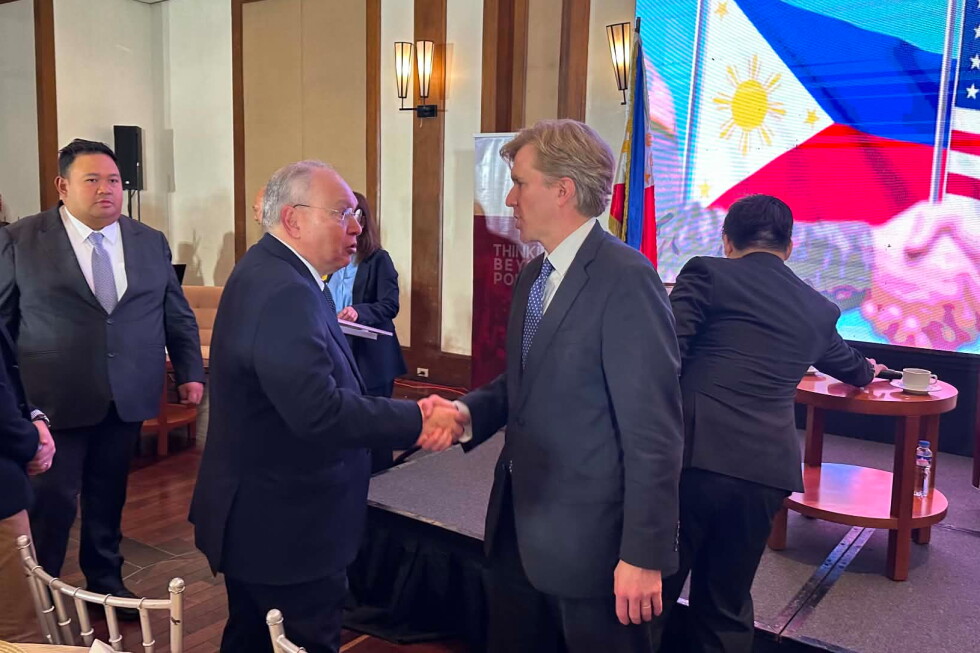
MANILA, Philippines – During a regional security forum held in the Philippine capital on Monday, a senior U.S. Department of Defense official called on Asian ally nations to increase their own defense investments and contribute to collective deterrence of potential regional aggression, while emphasizing that Washington seeks equal partnerships rather than dependent protectorates in the Indo-Pacific.
Elbridge Colby, U.S. Undersecretary of Defense for Policy, delivered the remarks as part of his first stop on an ongoing Southeast Asian tour, which will also include official stops in Indonesia, Thailand, and Cambodia in the coming days. Amid growing global speculation that the United States has shifted its strategic focus away from Asia amid escalating tensions in the Middle East tied to the ongoing Iran conflict, Colby used the high-profile platform to push back against those narratives, delivering a clear reassurance that Washington remains deeply invested in regional security.
“America is definitely not stepping back from Asia. To the contrary, our core national interests demand that we maintain an enduring, visible presence here,” Colby told the assembled crowd, which included senior foreign diplomats, ranking military officers, regional business leaders, and international journalists. “We are not leaving; in fact, we are digging in, to ensure a favorable balance of power where it matters most,” added Colby, the Pentagon’s top policy advisor. “We see Asia as of paramount importance to global and American security.”
In a departure from past high-profile U.S. remarks that have featured sharp public criticism of China’s increasing territorial assertiveness in the region – most notably in the contested South China Sea – Colby avoided direct, heated rhetoric targeting Beijing. The South China Sea, a critical global maritime trade chokepoint, has been the site of overlapping territorial disputes for decades: China claims sovereignty over nearly the entire waterway, while the Philippines, Vietnam, Malaysia, Brunei, and Taiwan hold competing claims. A 2016 international arbitration ruling, initiated by Manila, formally invalidated Beijing’s expansive territorial claims, but China has repeatedly rejected the ruling’s authority. In recent years, Washington has repeatedly voiced alarm over Beijing’s increasingly hostile actions against Philippine coast guard and naval vessels operating in the disputed waters, and has reaffirmed its long-standing treaty obligation to defend the Philippines, its oldest Asian ally, if Filipino military assets come under armed attack anywhere in the region, including the South China Sea.
Colby echoed a previous commitment made by U.S. Defense Secretary Pete Hegseth during his June address at the Shangri-La Dialogue, Asia’s premier annual defense summit, held in Singapore. Hegseth pledged that the U.S. would build and maintain robust defense posture in the Western Pacific “that ensures aggression is infeasible, escalation unattractive and war deemed irrational,” a promise Colby reaffirmed on Monday.
“The United States remains fully committed to sustaining combat-credible military power in the critical Indo-Pacific region,” Colby said. “Yet this regional defense architecture cannot rest entirely on American shoulders alone. It must be upheld by a network of highly capable, sovereign nations that have modernized their own armed forces and stepped up to secure their own national territory — transforming our relationships into true partnerships of equals.”
He went on to clarify that Washington’s call for increased ally investment does not signal a planned withdrawal from the region. “When we ask our allies and partners to step up, to invest more in their own defense and to take responsibility for their own sovereign security, we are not signaling abandonment. We are looking for partners, not protectorates,” Colby said.
The Pentagon official singled out the Philippines for praise for its ongoing efforts to strengthen national defense capabilities, noting Manila’s annual large-scale joint combat exercises with U.S. forces as a key example of productive cooperation. He also highlighted similar progress from other Southeast Asian security partners including Thailand and Indonesia.