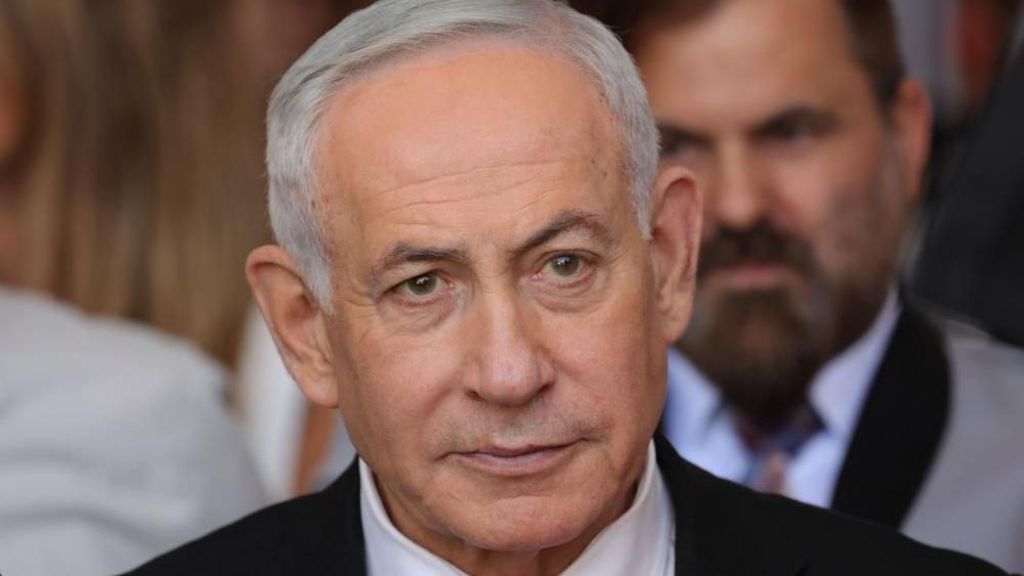
As Israel heads toward a high-stakes general election on October 27, Israeli Prime Minister Benjamin Netanyahu has thrown down the gauntlet, formally rejecting a US-backed 15-point peace roadmap crafted to disarm Hamas and end the years-long Gaza war. The rejection, delivered last Sunday to his cabinet, has thrown a high-profile diplomatic breakthrough into doubt, though US officials appear ready to write off the move as pre-election political posturing rather than a final break from negotiations.
The framework, announced by US President Donald Trump in July following months of closed-door negotiations through the Board of Peace, marked what the American leader called a “major milestone” toward ending the conflict. Under the terms of the deal, Hamas and all other Palestinian armed groups in Gaza would complete a phased full disarmament, with all weapons secured and stored by a new Palestinian administration that reports to the Board of Peace. In exchange, Israeli forces would withdraw from more than 60% of Gaza that they currently occupy, clearing the way for long-delayed reconstruction of the war-ravaged enclave, where vast swathes of infrastructure have been reduced to rubble after more than two years of fighting.
Senior Hamas officials confirmed their commitment to the agreement, contingent on Israel upholding its end of the bargain. The deal was broadly celebrated by the international community: the UK issued a statement welcoming the breakthrough, while the European Union labeled it a “crucial step” toward lasting peace in the region. For more than a week after the agreement was announced, however, Israeli officials offered only a muted, non-committal response, with a government spokesperson only noting that the roadmap did not align with Israeli positions. Hardline far-right government figures like Itamar Ben-Gvir quickly came out against the plan, calling it “unacceptable,” while mainstream opposition politicians raised their own doubts over the details of disarmament and the sequencing of Israeli withdrawals. Those pressures ultimately pushed Netanyahu to issue a formal rejection.
In his cabinet address, Netanyahu spelled out his red lines clearly: “I wish to be precise here: Israel does not accept the 15-point document. The IDF [Israel Defense Forces] will not carry out any withdrawal until Hamas is disarmed. And when I say the disarming of Hamas, it means heavy weaponry, lighter weaponry, all weaponry. And we are talking about genuine disarmament, not fictitious disarmament.” While he described Trump as “the greatest of our friends in the White House,” Netanyahu added that Israel would “stand firm” against any terms it deems unacceptable.
Netanyahu’s hardline stance comes as no surprise to many political observers, given deep-seated skepticism across Israeli society that Hamas will follow through on its disarmament commitments. The Islamist group has long framed armed resistance to Israeli occupation as a core ideological principle, and recent months have brought signs it is reconsolidating its authority across parts of Gaza. Fleur Hassan-Nahoum, an Israeli commentator and former deputy mayor of Jerusalem, told the BBC that the trauma of the October 7, 2023 attacks that sparked the war cannot be overstated. “Israel can certainly never agree to retreating anywhere where the terrorist group that caused the worst massacres since the Holocaust is still there and is still ruling the Strip,” she said.
Crucially, Netanyahu’s rejection comes against the backdrop of a make-or-break election, the first Israel has held since the October 7 attacks. Three years into the war, the prime minister has yet to deliver on his campaign promise of “absolute victory” over Hamas, and he faces a tough uphill battle to hold onto his position. Analysts note that the prime minister is walking a diplomatic tightrope: he needs to shore up support among his right-wing base ahead of polling day, while avoiding a full break with Trump, his closest ally in the White House.
So far, that bet appears to be paying off with the Trump administration. While the White House has not issued an official public response to Netanyahu’s rejection, senior US officials have privately downplayed the move, framing it as nothing more than campaign rhetoric ahead of Israel’s election. “We understand Bibi’s political needs,” a senior unnamed US official told Israeli journalist Barak Ravid. “We have no problem with it as long as he continues to do what we ask – especially regarding restraining attacks in Gaza.” In recent days, Israel has already paused large-scale strikes on Gaza, a key concession Hamas demanded when it signed onto the roadmap. There are also signs that Israeli authorities are still moving forward with preparations for the implementation of Trump’s broader plan, including the deployment of a new International Stabilization Force (ISF) made up of international troops. The force will partner with a new Palestinian police force to secure Gaza after Israeli withdrawal, and Israeli public broadcaster Kan News reports that construction of the first ISF base in the ruins of Rafah in southern Gaza is still on track to begin by the end of the month, clearing the way for reconstruction to start.
Aaron David Miller, a veteran former US diplomat and Middle East negotiator, told the BBC that Netanyahu is facing “the most consequential election” of his decades-long political career, and that the White House is willing to give him leeway in the lead-up to polling day. “He’s navigating a very fine line between keeping his constituents happy and not angering or alienating President Trump,” Miller said. “It’s hard to believe that you’re going to see any serious movement before you have another Israeli government.”
Board of Peace officials have moved quickly to reassure the Israeli public that the roadmap is structured to protect Israeli security interests, even after Netanyahu’s rejection. Nickolay Mladenov, the Board’s High Commissioner for Gaza who led the months of negotiations with Hamas, told Israel’s Channel 12 just hours after Netanyahu’s announcement that the plan’s core goal is to ensure “that Gaza is never again a threat to Israeli security and that what happened before, [on] October 7, never happens again.”
Mladenov emphasized that the plan relies on a phased, verification-first approach, not blind trust: “If there is verified decommissioning of weapons, that they are taken away from the factions and stored and ultimately rendered unusable, Israel then withdraws from Gaza. Nothing is being built on the basis of trust, but on verification.”
Hamas has since reaffirmed its commitment to the roadmap, calling on international mediators and the Board of Peace to pressure Israel to honor the agreed terms. Netanyahu has confirmed that bilateral talks with US officials are continuing, but pressure from Washington is expected to ramp up in the coming weeks. Trump is also facing high stakes this election cycle: with November’s US midterm elections approaching, his Republican Party is bracing for potential heavy losses, driven in part by soaring fuel and grocery prices that have been tied to Washington’s unpopular five-month military intervention in Iran. Trump’s approval ratings have fallen sharply, and a high-profile foreign policy win from his Gaza peace plan would offer a much-needed boost to his party’s electoral prospects, making continued Israeli intransigence a major problem for the US president.