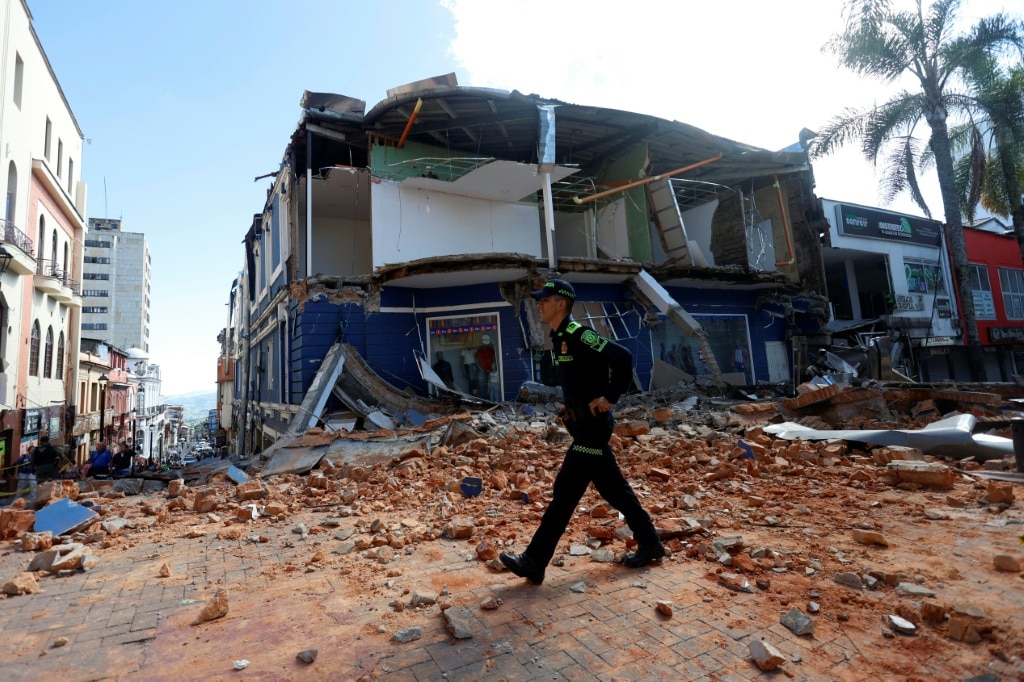
A devastating 7.4-magnitude earthquake shook western Colombia and nearby Latin American nations early on Monday, leaving at least 18 people dead and widespread structural damage across multiple urban centers in its wake. According to geological surveys, the earthquake struck at a depth of 100 kilometers, with its epicenter located in Colombia’s Choco province, triggering immediate emergency response deployments to pull survivors from collapsed infrastructure. The tremors were strong enough to be felt as far as Ecuador, Panama, and Venezuela — a country still reeling from a pair of major deadly quakes that struck in late June. On-site reporting from Agence France-Presse correspondents confirms that thousands of residents in the Colombian capital Bogota fled multi-story buildings in panic immediately after the shaking began, many taking to the streets in their sleepwear as emergency sirens blared across the city.
Early casualty reports put the highest death toll in Pereira, where Mayor Mauricio Salazar told local broadcaster Caracol Radio that 18 lives had already been lost in the city, describing the overall situation there as critical. Choco province, which lies directly over the quake’s epicenter, has reported severe structural damage to the provincial capital Quibdo, with circulating video footage showing multiple fully collapsed buildings. Full casualty counts for the region have not yet been released, as downed communication lines have slowed damage assessments. In Cali, Colombia’s third-largest city, Mayor Alejandro Eder confirmed that at least 20 buildings have collapsed, with reports of people still trapped under rubble. Emergency officials are using drone surveys to map the full extent of the damage across the metro area. Additional damage has been documented in other western Colombian cities, including Manizales, where local news outlets have broadcast images of leveled structures.
Residents across the affected region described the intense shaking that caught many off guard in the early morning hours. “There is no electricity or cell phone coverage. It was strong, really strong. Things fell in my house,” 66-year-old Martha Estrada, a resident of Colombia’s major coffee-growing region Eje Cafetero, told AFP. Valeria Polo, a 29-year-old content creator based in Bogota, echoed that account, saying “The quake was very, very strong.” Colombia’s civil aeronautics agency has announced that six regional airports in the western part of the country have suspended all operations to assess runway and terminal damage for safety. In Bogota, Mayor Carlos Galan told Blu Radio that damage in the capital was largely limited to minor cracks in building facades, with no major casualties or collapses reported as of yet. Colombian President Abelardo de la Espriella has announced he will travel to the impacted region in the coming days to oversee emergency response efforts and meet with affected communities. Emergency management officials have stated there is no risk of a tsunami triggered by the earthquake, easing concerns of additional hazards for coastal communities. The disaster comes just six weeks after twin 7.2 and 7.5-magnitude earthquakes hit Venezuela on June 24, killing more than 6,000 people and causing billions of dollars in property damage across that country.