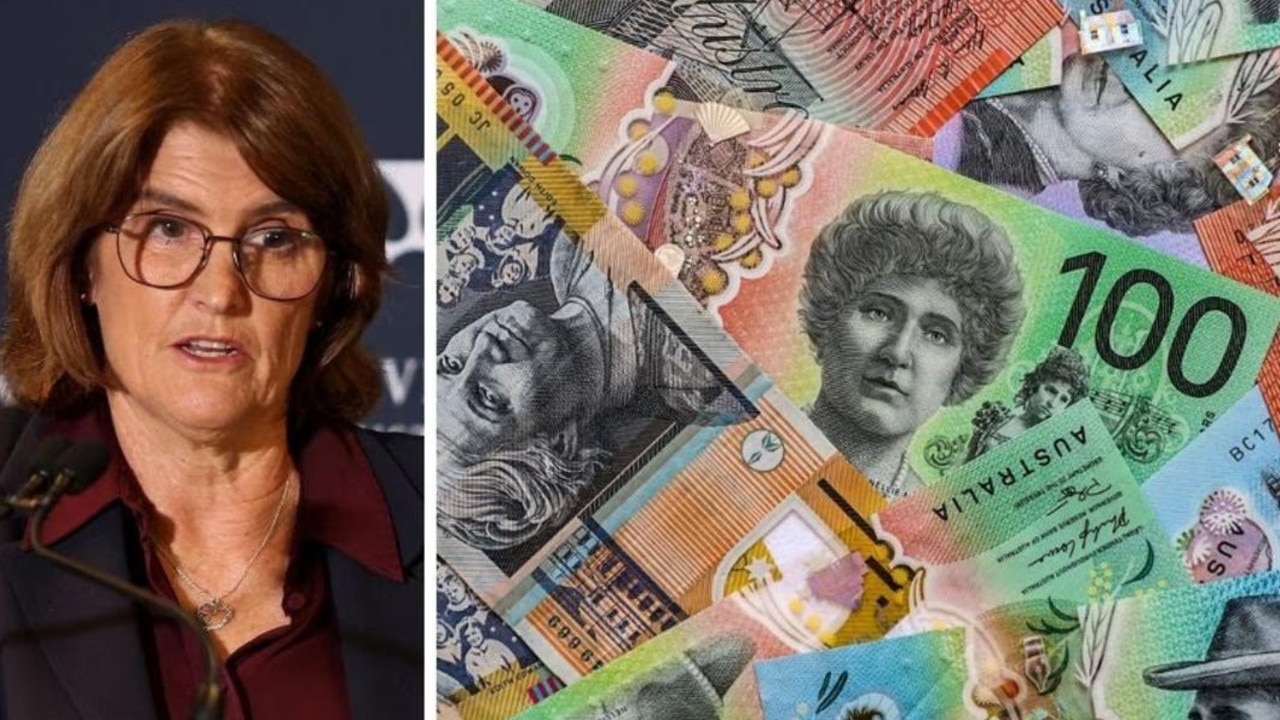
As Australia’s Reserve Bank (RBA) prepares for its August policy meeting, a leading independent economist has issued a stark warning that the central bank’s cautious approach to interest rate policy has sparked an ongoing inflation crisis, and failure to implement aggressive rate hikes now could lead to a catastrophic financial meltdown similar to the worst economic downturns of the past century.
Market consensus overwhelmingly predicts the RBA will hold the official cash rate steady at 4.35% this week, a pause that would bring temporary relief to mortgage borrowers already reeling from three rate increases so far in 2026. But Warren Hogan, managing director of EQ Economics, argues this popular policy path is a dangerous mistake that will only deepen long-term economic pain.
Hogan argues that the RBA’s years-long “economic experiment” of keeping interest rates far lower than most other developed economies has failed to bring inflation back to the central bank’s 2-3% target band. Australia’s trimmed mean inflation, the RBA’s preferred core measure that strips out volatile price swings, hit 3.6% in the 12 months to June 2026, well above the target range. To get inflation under control, Hogan says the cash rate needs to rise to at least 5.6% – matching the level reached by other major central banks in 2024 – and could even need to climb as high as 6% or 7% to fully tame persistent price pressures.
“They’ve been too kind … pulling up stumps on the hiking cycle at 4.35 was a risky proposition and they needed to get up to 5 per cent if not a bit higher because they needed to kill this thing off when they could,” Hogan told NewsWire. “The problem the Reserve Bank has is the framework and thinking over the last few years has proven to be wrong. The reality is the interest rate is not out by one or two rate hikes, it is out by at least four. That is why they need to raise rates this week.”
He argues that the RBA missed its window to crush inflation early, and delaying further hikes now will only force more severe action later, raising the risk of a full-blown financial crisis rather than a mild, short-lived downturn. While Hogan acknowledges that additional rate hikes will strain household budgets in the short term, he insists that inaction will lead to far worse outcomes, including a deep, prolonged recession.
A key factor backing Hogan’s call for immediate action is surprisingly resilient household spending, which has remained far stronger than expected despite previous rate hikes and global energy market volatility stemming from the US-Iran conflict. Data from the Australian Bureau of Statistics shows household spending rose 0.8% in June 2026, bringing total spending growth for the 2026 financial year to 6%. Most of that growth has come from discretionary spending, indicating that consumers are still keeping demand high enough to sustain upward price pressure. To bring inflation under control, economic growth needs to slow to 2% or lower; any faster growth exceeds Australia’s “economic speed limit” and fuels further inflation.
“Recent data is showing households might be feeling bad, but they have not stopped spending,” Hogan said. “We got the latest number earlier this week and they were nothing short of spectacular, after a strong May. Overall, an overall picture being painted by the numbers shows the consumer is hanging in there. We have this data saying Australian consumers hardly missed a beat.”
Compounding inflation pressures, Hogan notes, is continued expansionary fiscal policy across Australia’s state and federal governments. Total government spending as a share of GDP has risen from pre-pandemic levels below 25% to around 27.3% today, adding extra demand to an already overheated economy and pushing prices higher. He argues that current economic conditions bear a striking resemblance to the 1970s, a decade marked by crippling stagflation that eroded living standards across the Western world. “Right now we are in about 1976 ready to have another ripping of inflation for the next couple of years,” he warned.
Federal Treasurer Jim Chalmers has pushed back against this criticism, pointing to the federal government’s recent $63.8 billion package of net spending cuts and reprioritisations, which Chalmers calls the largest savings package in Australian history. The package includes $37.8 billion in savings to reform the National Disability Insurance Scheme to put it on a more sustainable long-term footing. Chalmers says these measures are already improving the budget position, which is $44.9 billion better off than projected in the mid-year economic update.
Hogan says a coordinated approach between fiscal and monetary policy could limit the economic damage of bringing inflation under control. If federal and state governments agree to gradually reduce spending alongside gradual RBA rate hikes, Australia may only face a mild, short “garden variety” recession rather than a catastrophic financial crisis. But if governments continue to run large deficits and leave the RBA to do all the work to cool inflation, the central bank will be forced to implement far sharper rate hikes that raise the risk of systemic financial instability.
RBA Governor Michele Bullock has previously acknowledged that both rate hikes and inflation impose broad hardship on Australian households, but emphasizes that taming inflation is a necessary priority. “Higher inflation isn’t just a statistic. It strains household budgets, complicates business planning, and weighs on confidence,” Bullock said in a recent speech at the Anika Foundation. “Many Australians are again feeling this pressure; indeed, we recently published survey evidence showing that inflation is the single most pressing economic concern for Australians. Getting inflation back to target requires slowing demand to align with the growth of supply, which is exactly what interest rate hikes are designed to do.”
Money markets currently assign just a 5% probability to a rate hike at this week’s meeting, with all four of Australia’s major banks predicting rates will remain on hold until at least 2027. Hogan warns that this widespread complacency about inflation puts Australia on track for an economic crisis not seen in 50 years, with destabilizing impacts on both the economy and the political environment that have stemmed from four years of unrelenting cost-of-living pressures.