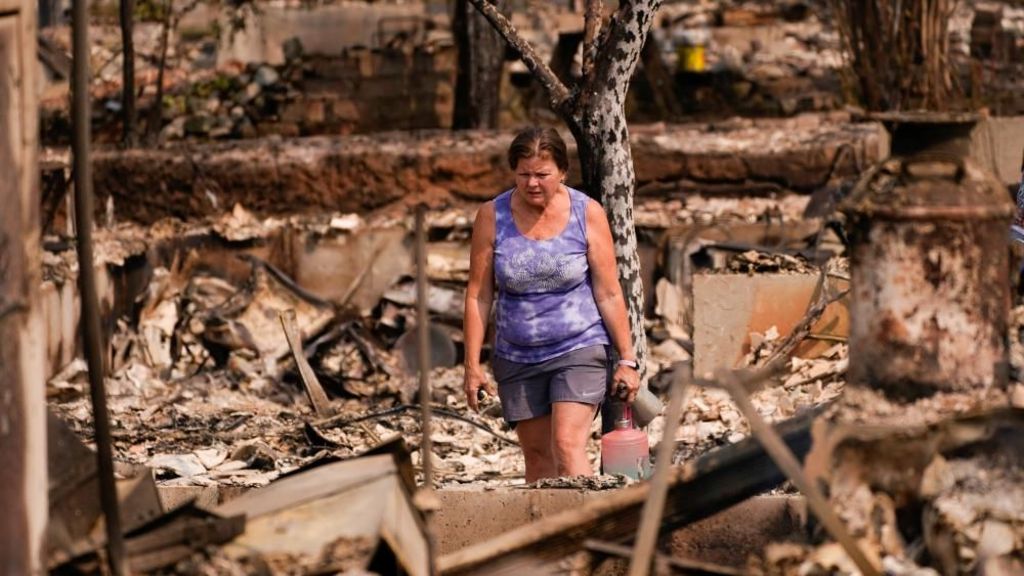
Every summer, seasonal wildfire smoke and small-scale evacuation drills are a familiar routine for residents of Spokane, Washington, located in the U.S. Pacific Northwest. Communities here have long grown accustomed to waiting out the dry fire season for the damp autumn rains that eventually extinguish blazes, and few expected the 2026 fire season to bring anything out of the ordinary. But this year’s wildfire outbreak has shattered all local expectations, leaving widespread destruction in its wake and marking an unprecedented disaster for the city.
For Chris Matthews, a Spokane resident with a family of five, the second evacuation in a year felt routine at first. Just 12 months prior, a brushfire had forced his family to flee their home for only a few hours before they were allowed to return. So when a towering dark smoke column bore down on his neighborhood last Saturday, Matthews grabbed his family and evacuated assuming they would be back home by the end of the day. Instead, when he finally returned to his property, all that remained was smoldering ash and ruined foundations. “All of us thought we were going to be able to get back to our houses,” Matthews recalled. “And we didn’t think it’d be a situation where we were going to lose our homes or anything like that.”
The scale of the blaze’s advance shocked even long-time residents. Kira Townsend, a 39-year-old local, said she understood the catastrophic danger the fire posed only when officials announced it had crossed the Spokane River – a natural geographic barrier that has never failed to stop wildfires from reaching developed neighborhoods. “It’s never jumped the river like that, and just roared up the hill that fast,” Townsend described. Driven by unusually strong winds, the fire crossed the water barrier as if it did not exist, local resident Scott Hansen, 73, explained.
Since the outbreak began, nearly 65,000 people – a quarter of Spokane’s total population – have been ordered to evacuate their homes. Roughly 900 buildings across the city have been confirmed destroyed, leaving hundreds of families like Matthews’ with nothing. Even for residents whose homes survived the blaze, officials warn it may take weeks before air quality and fire risks subside enough to allow a safe return to affected neighborhoods. Miraculously, however, no deaths or critical injuries have been reported as of the latest updates.
The destruction has left many survivors reeling from grief and shock. Thirty-one-year-old Matthew Kincanon fled his Prosperity Lane neighborhood as the fire swept through Saturday night, and when he returned 12 hours later to find his home completely gone, he was overcome. “As soon as I stepped out of the car I threw up. I felt sick. I couldn’t control it. I just lost it. It hit me all at once,” Kincanon said.
Right now, the city is navigating two overlapping crises: three large active blazes surrounding Spokane remain less than 40% contained, with hundreds of firefighters working nonstop to stop the spread, while early recovery efforts are already underway for residents who have lost their homes. “We have two fronts going at the same time. We’re actively fighting the fire and trying to put that out. But we’re also starting recovering for folks that have lost their homes,” City Councilman Zack Zappone, who grew up in the destroyed Indian Trails neighborhood, told the BBC. Speaking from a city-run evacuation shelter, Zappone acknowledged the widespread strain across the community: “There just a lot of uncertainty and frustrations and difficultness.”
Many residents are also directing intense anger at preventable causes of the blaze, urging the public to take extra precautions to avoid sparking new fires. Local officials have warned that even routine, seemingly harmless activities such as lawn mowing can generate sparks that ignite dry brush, and many residents are calling for greater public care. “People have got to use their brains. Stop doing things that are gonna cause sparks. I can’t believe someone was mowing. So many people have lost their houses, and people are just being so stupid,” said Chrissy Goodrich, who remains trapped in a mandatory evacuation zone with her father Hansen.
Public anger intensified after local police arrested 37-year-old Aaron Farinacci, a local man who investigators say has confessed to intentionally starting one of the major fires. Court records show Farinacci has a prior criminal history: he was previously convicted of killing his own father in Arizona in 2010, and had been questioned for arson in previous local incidents. According to investigator accounts, Farinacci specifically chose a dry, windy day to ignite the blaze, aiming to spark a large-scale wildfire. He has not yet entered a plea, and a judge has ordered a mental competency evaluation to determine if he is fit to stand trial. For many survivors, the arrest has brought a strange sense of closure. “It brought a little bit of closure, that sounds weird to say,” said Melissa Matthews, whose home was destroyed in the blaze. Her husband Chris echoed that feeling: “Knowing that a person did this, as opposed to it being a natural thing that happened, it just does feel a little bit comforting for some reason.”
With more dry, windy days forecast for the region in the coming weeks, the fire risk remains far from over. Having lost his home to the unprecedented blaze, Matthews is now urging his fellow residents to prepare for the worst, warning that past patterns cannot predict the new reality of regional wildfires. “For future reference, and for everyone else – take it seriously. Don’t assume past historical times are what’s going to happen in the future as well,” Matthews said.