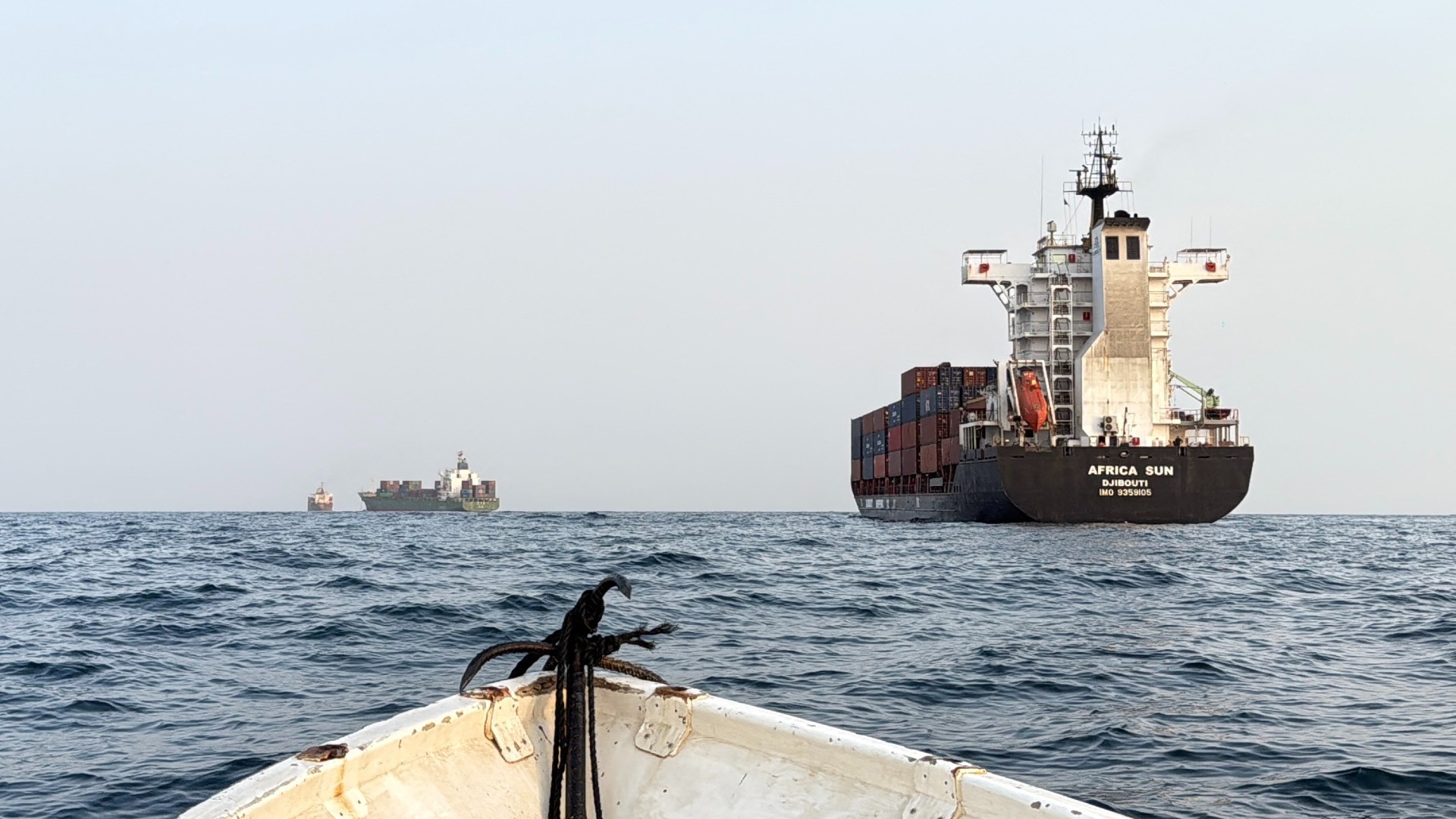
In a significant escalation of maritime hostilities against Saudi Arabia, the Houthi movement announced Wednesday it had launched ballistic missiles targeting the Saudi-flagged oil tanker NCC Wafaa off the coast of Yanbu, Saudi Arabia’s key northern Red Sea export hub. This assault marks the northernmost attack the Yemeni militant group has carried out since it declared a full blockade of Saudi shipping on July 22, a strategic shift that analysts warn could amplify economic pressure on Riyadh and disrupt critical global trade lanes.
Prior to this strike, Houthi attacks on maritime traffic were almost entirely concentrated off Yemen’s own coast, spanning the southern Red Sea and Gulf of Aden. The group claims the NCC Wafaa violated blockade terms and ignored multiple pre-strike warnings before coming under fire.
The attack comes amid a wider regional crisis triggered by the closure of the Strait of Hormuz earlier this year, which forced Saudi Arabia to reroute the vast majority of its oil exports through the Bab al-Mandab strait and Red Sea, en route to the Suez Canal for delivery to its primary Asian market. Ibrahim Jalal, a prominent Yemen-based analyst, framed the northern strike as a deliberate attempt to close off this alternative export corridor that Riyadh has become increasingly dependent on.
Jalal outlined two core drivers behind the Houthi’s northward expansion: externally, the move bolsters Iran’s bargaining power in negotiations surrounding the Strait of Hormuz standoff; internally, it aims to reassert the group’s coercive leverage over the Saudi government.
Maritime security analysts warn the situation has reached its most severe point since the crisis began. Matthew Wright, an analyst at leading ship-tracking firm Kpler, noted this week that threats to global crude trade have never been higher since the Houthi blockade was implemented. To date, the Houthis claim to have struck eight commercial tankers since July 22: five Saudi-flagged vessels and one Indian-flagged tanker that sank near Bab al-Mandab on August 4. Only four of these strikes have been independently verified by the United Kingdom Maritime Trade Operations Centre (UKMTO), the global authoritative body for maritime security incident reporting, and Saudi government officials have yet to publicly confirm any of the attacks.
Houthi military spokesperson Yahya Saree claimed on August 5 that at least 29 Saudi commercial vessels have already diverted away from Bab al-Mandab in the first two weeks of the blockade. Framing the campaign as “blockade for blockade”, Saree reiterated the group’s commitment to matching any Saudi escalation with proportional counteraction.
Salah Ali Salah, a security researcher at the Sanaa Centre, warned that the Houthi movement remains on a clear escalatory trajectory, and has not yet deployed the full scope of its maritime strike capabilities against Saudi shipping. As the threat grows, shipping operators are adapting in uneven ways: Bloomberg reports that while some Saudi tankers have chosen to take the far longer route around the Cape of Good Hope in southern Africa (six vessels took this alternative route this week alone), others have disabled their onboard transponders to cross Bab al-Mandab undetected.
The strategic importance of this waterway can hardly be overstated: Saudi oil shipments typically make up roughly 66 percent of all commercial traffic passing through Bab al-Mandab, and the Red Sea as a whole carries 10 to 12 percent of all global traded goods.
Ryan Bohl, senior Middle East and North Africa analyst at global risk intelligence firm RANE, noted that it is unlikely the Houthis can fully block all commercial traffic in the northern Red Sea. Instead, their strategy is to establish themselves as a credible persistent threat to shipping near Egypt and the Suez Canal, forcing Saudi shipping firms to adopt costly risk-mitigation measures that cut into their bottom line. These measures include disabling transponders, paying substantial hazard pay to crew members, and absorbing the full cost of war risk insurance for all transits.
Rerouting around the Cape of Good Hope also introduces major logistical hurdles: tankers sailing for Asia must still pass through the Suez Canal to reach Yanbu, adding a minimum of four weeks to total voyage time. Furthermore, the Suez Canal’s limited depth restrictions prevent fully loaded Very Large Crude Carriers (VLCCs) – the standard vessel for Saudi crude exports, which carry roughly 2 million barrels of oil – from transiting fully loaded. Instead, Saudi exporters must use smaller Suezmax vessels (with 1 million barrel capacity) or sail VLCCs partially loaded, drastically reducing export efficiency. Bohl explained that this means more voyages are required to deliver the same total volume of crude, adding approximately $1.6 million in extra fuel costs plus a $1 million Suez Canal toll per transit.
Salah emphasized that the core challenge for Saudi Arabia is not simply finding an alternative route for exports, but finding one that can match the scale, cost efficiency, and reliability of its pre-crisis export network. Partial workarounds do exist: the Egyptian Sumed pipeline allows exporters to offload part of a VLCC’s cargo in deep water off Egypt’s northern coast, transit the Suez Canal with a reduced load, then reload the cargo onto the same vessel on the other side, partially offsetting the capacity losses from Suez restrictions. Saudi Arabia also uses its domestic East-West pipeline to move crude from the Persian Gulf across the country to Red Sea export terminals, and Bloomberg data shows that export volumes out of Yanbu have tripled since the Strait of Hormuz closed.
Some analysts warn the strike on the NCC Wafaa could signal a coming expansion of Houthi targeting beyond oil tankers to include non-tanker commercial vessels and import cargo, a shift that would set a dangerous precedent for wider regional maritime disruption. Bohl, however, argues that such a move would run counter to the Houthis’ own strategic interests, as it would likely trigger a major new Saudi offensive against Houthi-held territory in Yemen, specifically targeting Hodeidah – the group’s own critical Red Sea supply lifeline.
To date, the Houthi blockade of Bab al-Mandab has had a less severe impact on Saudi oil exports than the March 4 closure of the Strait of Hormuz. After the Hormuz closure, Riyadh rapidly shifted almost all its export capacity to Red Sea terminals, leading to an eightfold increase in traffic through Bab al-Mandab, according to Kpler data. On August 1, Yanbu recorded one of its busiest single days on record, with five supertankers simultaneously positioned for loading.
Despite the escalating threat, Saudi state oil giant Aramco reported a 33 percent surge in second-quarter profits this week, driven by elevated global energy prices tied to the regional crisis and the efficiency of Saudi Arabia’s pipeline network for rerouting exports. Aramco CEO Amin Nasser also confirmed that previous Houthi attacks on Aramco infrastructure in July had no material impact on the company’s operations or financial performance.
This week, emerging hopes of an Iran-Oman agreement to reopen the Strait of Hormuz led Saudi Arabia to cut its official crude price for Asian buyers by between 50 cents and $2 per barrel, a signal that Riyadh does not currently view the Houthi Red Sea blockade as an existential threat to its export capacity. Still, Salah noted that even a reopening of the Strait of Hormuz would not resolve the underlying Houthi threat to Red Sea shipping, leaving continued uncertainty for global energy markets.