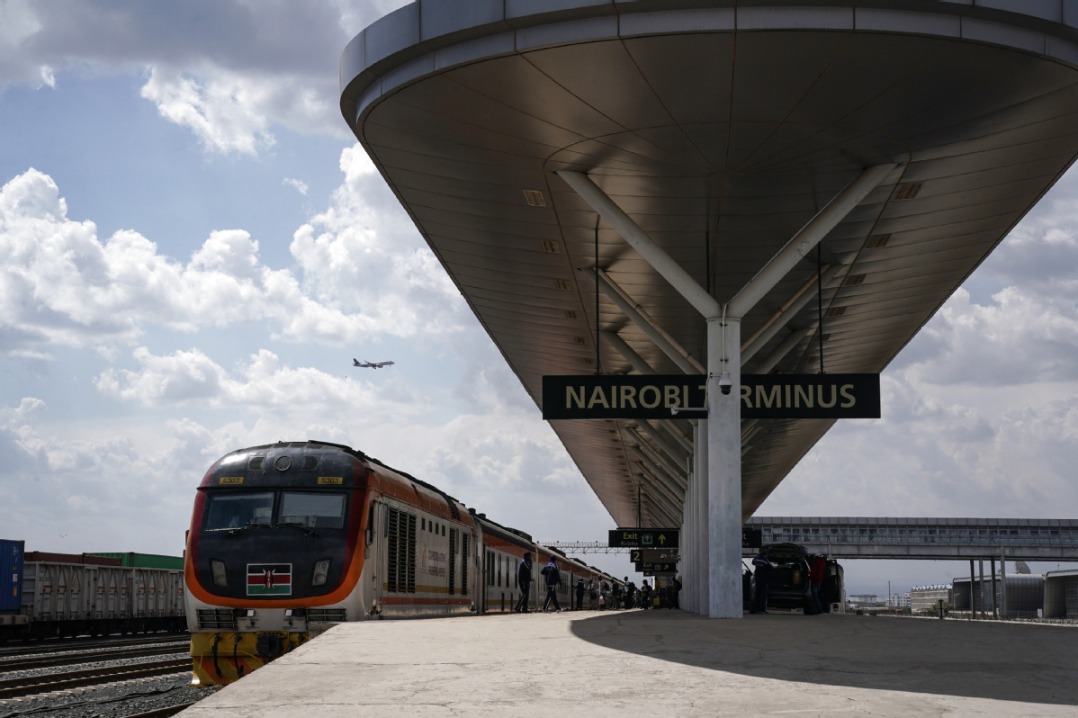
Against a backdrop of shifting global trade flows and widespread economic uncertainty, Africa has cemented its status as the top destination for new investment under the Belt and Road Initiative (BRI), new collaborative research shows. In the first half of 2026, the continent attracted $33.5 billion in Chinese BRI investment, marking a staggering 254% jump from the same period a year earlier, with growth fueled by rapidly expanding activity in manufacturing, clean energy and critical infrastructure development.
The report, produced jointly by Fudan University’s Green Finance & Development Center in Shanghai and the University of Queensland Business School in Australia, breaks down the key drivers of Africa’s outperformance against other global regions. Among African nations, Ethiopia recorded the fastest growth in BRI-linked engagement of any country worldwide, pulling in more than $18.9 billion in total investment in the first half of the year.
The East African nation secured the world’s largest single allocation of Chinese energy investment through a landmark green energy partnership with China’s Ming Yang Smart Energy Group, valued at over $14 billion. The mega-project is set to dramatically accelerate Ethiopia’s transition to a low-carbon green economy. Its first phase will deliver an 8.4-gigawatt renewable energy facility combining wind and solar power capacity, representing a $7.5 billion investment. For the second phase, Ming Yang Smart Energy will commit an additional $7.3 billion to develop green ammonia production facilities, as well as local manufacturing for electric transmission infrastructure and wind turbine components.
Beyond expanding Ethiopia’s renewable energy capacity, the investment is projected to deliver broad-based economic benefits: catalyzing national industrial development, generating thousands of local jobs, facilitating cross-border technology transfer, and strengthening the country’s foreign exchange earnings.
Egypt also saw a dramatic surge in announced Chinese BRI investment in the first half of 2026, hitting $12.2 billion for the period. China’s Xinfeng Steel is leading a $10 billion project to build a integrated industrial and steel manufacturing complex in Egypt’s Ain Sokhna industrial zone, which will specialize in producing high-grade automotive steel and other large-format industrial steel products for regional and global markets.
Since the BRI launched in 2013, the initiative has driven transformative progress across Africa, expanding critical infrastructure networks, boosting intra-regional and international trade, and unlocking billions in new foreign investment. Flagship projects across the continent continue to deliver sustained positive spillovers for local economic and social development.
On a global scale, the first half of 2026 marked the highest level of overall BRI activity recorded for any opening half of the year since the initiative’s founding. Total global BRI investment hit $49.8 billion, with an additional $76.5 billion in signed construction contracts.
Energy investment remained the primary engine of Chinese BRI engagement worldwide, with total energy-related investment reaching $36.3 billion in H1 2026. This figure is nearly twice the average first-half total recorded since 2013, and only exceeded by the energy investment total recorded in 2025. Notably, investment in green energy reached an all-time record: $14.3 billion was committed to wind, solar, and waste-to-energy projects, alongside $5.3 billion in new hydropower investment. Overall, Chinese investment in green energy and hydropower more than doubled year-on-year in the first half of 2026.
Cumulatively, total BRI activity has surpassed $1.5 trillion since the initiative launched, split between $926 billion in construction contracts and $614 billion in direct investment.
Christoph Nedopil Wang, founding director of the Green Finance & Development Center, noted that BRI engagement is on track to remain strong for the remainder of 2026, even amid widespread global economic uncertainty driven by U.S. trade policy shifts and fossil fuel market volatility tied to geopolitical tensions around the Strait of Hormuz.
“With strong engagement in capital-intensive sectors such as mining and manufacturing, and a growing capacity to scale up investment in energy and digital infrastructure like data centers, I expect average deal sizes to remain large going forward,” Wang said.