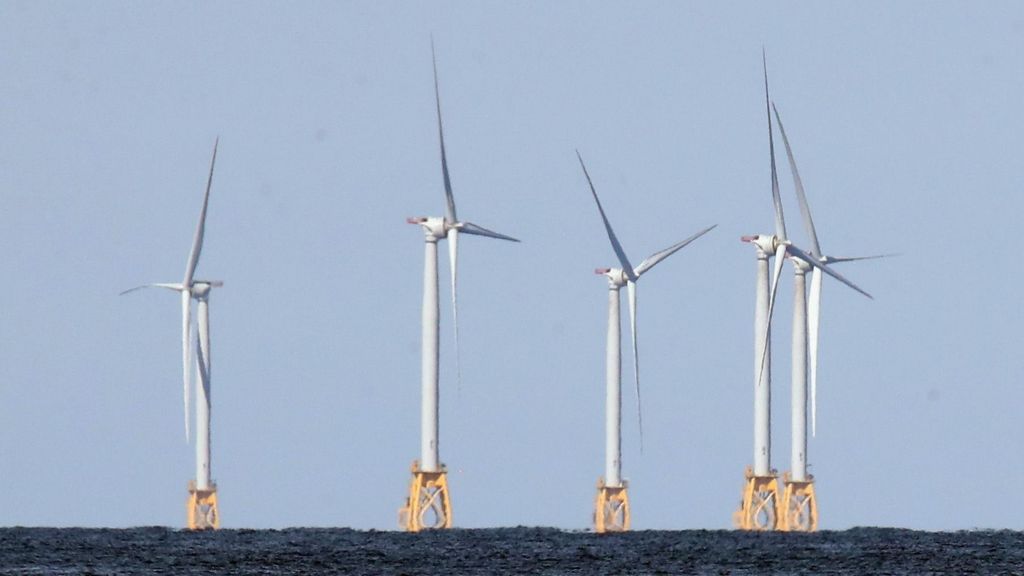
In a move that underscores the Trump administration’s aggressive rollback of offshore wind energy development, German energy giant RWE has announced it will abandon all its U.S. offshore wind projects after securing a $1.2 billion settlement with the U.S. Department of the Interior (DoI). The company confirmed it will redirect the entire payout to conventional natural gas infrastructure, earmarking $900 million alone for a new liquefied natural gas (LNG) export terminal under construction in Louisiana.
After a months-long internal review, RWE concluded there was no viable path to secure necessary construction permits for its offshore wind leases in the foreseeable future under the current administration’s regulatory framework. As part of the settlement agreement, the firm will relinquish all its federal wind leases spanning three major regions: the California coast, the Louisiana coast, and the New York Bight, a busy offshore stretch between New York and New Jersey that was targeted for large-scale wind development under prior administrations.
Despite exiting offshore wind, RWE reaffirmed its long-term commitment to the U.S. energy market, outlining plans to invest roughly $19.6 billion (€17 billion) in expanding its U.S. power generation capacity over the next six years, all of which will focus on conventional fossil fuel and baseload energy projects under the new regulatory landscape.
Interior Secretary Doug Burgum welcomed the deal in a post to social platform X, framing the agreement as aligned with the administration’s vision for U.S. energy. “Americans deserve an energy system built on common sense, not one propped up by costly, wasteful subsidies,” Burgum wrote. “We welcome RWE’s agreement and voluntary investment in projects that strengthen our nation’s energy security.”
This settlement marks the third high-profile exit of a major energy company from U.S. offshore wind since Trump returned to office, consistent with his long-standing opposition to renewable wind development and his commitment to boosting the domestic fossil fuel industry. During his 2024 presidential campaign, Trump ran on the iconic fossil fuel-friendly slogan “drill, baby, drill,” and moved quickly to curtail offshore wind after his inauguration.
Within days of taking office, Trump explicitly stated his administration would not advance new wind projects, dismissing offshore wind turbines as “big, ugly windmills” that pose unacceptable risks to coastal wildlife and marine ecosystems. The administration has since systematically slowed permit approvals for new offshore wind developments and encouraged companies to voluntarily exit existing wind leases in exchange for financial settlements, with incentives to redirect capital to fossil fuel projects.
The pattern of exits began earlier this year in March 2026, when French energy major TotalEnergies reached a similar settlement to abandon its U.S. offshore wind holdings. In exchange for ending its wind projects, TotalEnergies agreed to shift investment to a new LNG facility in Texas and expand conventional oil exploration in the Gulf of Mexico. Just last month, the administration closed a $129 billion settlement with Duke Energy, a major U.S. utility based in Charlotte, North Carolina. Under that deal, Duke Energy relinquished its offshore wind lease in the Carolina Long Bay area in exchange for the settlement, which the company plans to redirect to conventional energy projects.
The string of settlements has effectively halted most planned large-scale offshore wind development along U.S. coastlines, rolling back years of progress made under prior administrations to expand renewable energy capacity and cut greenhouse gas emissions from the power sector.