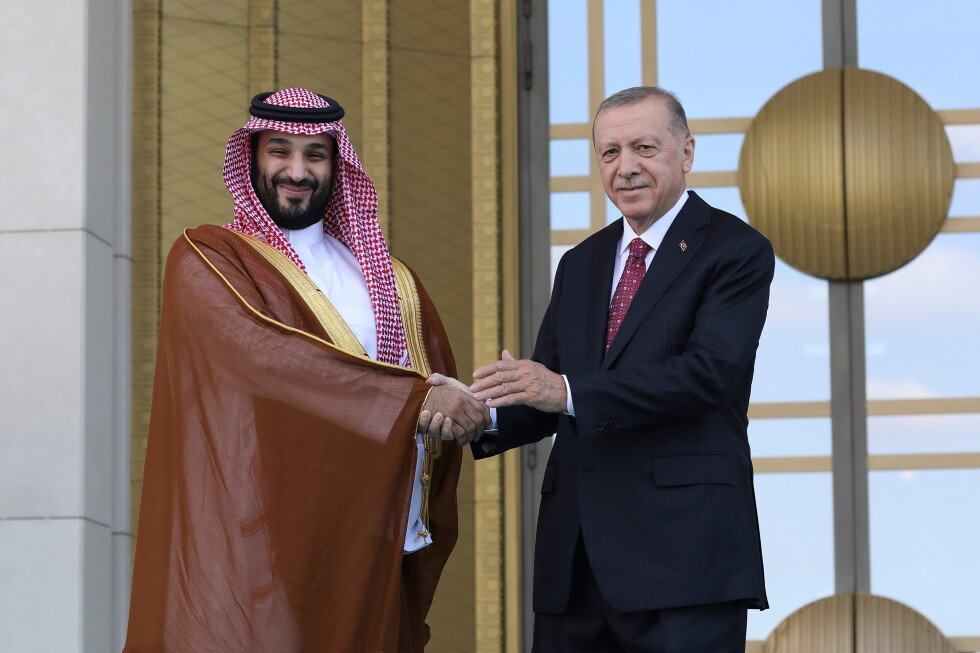
Amid a wave of escalating security uncertainties across the Middle East and South Asia, Saudi Arabia, Turkey, and Pakistan have formalized a landmark trilateral defense cooperation agreement, Pakistan’s Foreign Ministry confirmed in an official statement released Friday. The signing ceremony took place in Mecca, Islam’s holiest city, bringing together three of the region’s most influential leaders: Saudi Crown Prince Mohammed bin Salman, Turkish President Recep Tayyip Erdogan, and Pakistani Prime Minister Shehbaz Sharif.
The core principle of the new pact is designed to build unified collective deterrence against external threats: according to the Pakistani Foreign Ministry’s text, any armed aggression against one of the three signatory nations will be considered an attack on all three members. Beyond this mutual defense commitment, the agreement lays the groundwork for expanding defense collaboration across every relevant domain, bringing together three nations with distinct strategic strengths: oil-rich Saudi Arabia, nuclear-armed Pakistan, and Turkey, which boasts NATO’s second-largest standing military and a fast-expanding domestic defense industry.
According to preliminary reporting from Turkey’s Haberturk television and other local Turkish media outlets, the pact is expected to open the door to deeper practical cooperation, including joint military training exercises, cross-border defense technology transfers, and real-time intelligence sharing between the three states.
The agreement marks a significant step in Saudi Arabia’s ongoing push to diversify its network of defense partnerships, a shift that comes after the kingdom’s critical energy infrastructure and oil facilities faced repeated targeted attacks amid escalating regional confrontation linked to tensions with Iran. It also builds on a separate bilateral mutual defense pact Islamabad and Riyadh signed just months earlier in September, which already established the principle that an attack on one constitutes an attack on both.
For Turkey, the new trilateral alliance comes at a moment of sharp diplomatic friction with Israel over the ongoing conflict in Gaza, alongside widening instability across the broader Middle East, including active conflicts in Iran and Lebanon.
Sharif arrived in Saudi Arabia on Thursday for a three-day official visit, accompanied by a high-level delegation that included Pakistan’s Army Chief Field Marshal Asim Munir, signaling the military’s strong backing for the new partnership. Beyond the defense pact, regional officials noted that the three leaders used the summit to discuss strategies to de-escalate ongoing tensions between the United States and Iran, while also exploring opportunities to expand cross-border trade, deepen economic ties, and build out broader security cooperation frameworks across the region.
The Pakistani Foreign Ministry emphasized that while Sharif’s visit unfolded against the backdrop of heightened tensions in the Persian Gulf, the engagement was not limited to addressing the immediate crisis. Instead, the long-term goal of the trilateral partnership is to strengthen bilateral ties between all three nations and boost coordinated policy action on shared regional and international challenges.