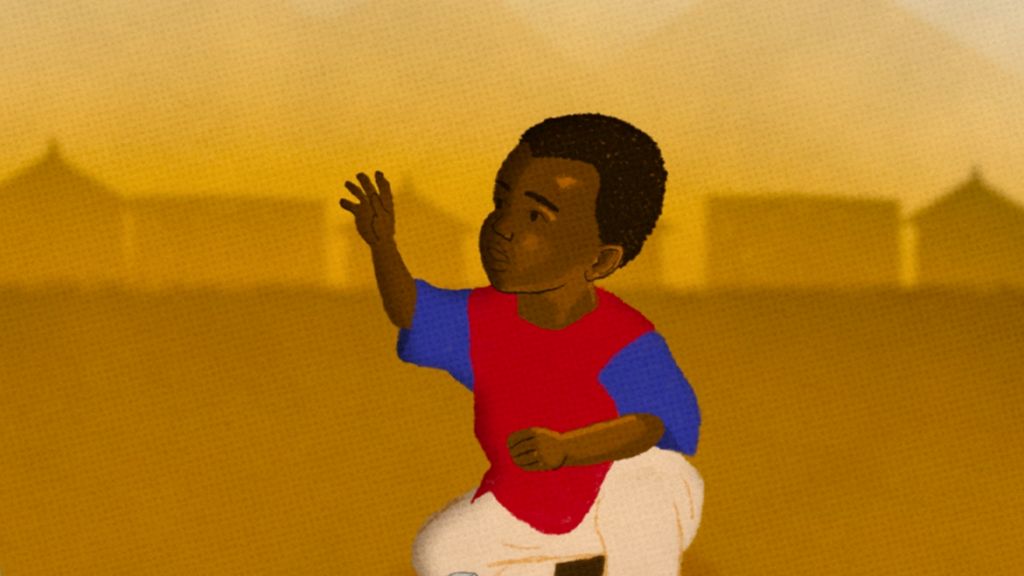
Eight months after holding her newborn son for the first time, 17-year-old Amira – her name changed to protect her from harm – still cannot secure the one document that would guarantee her son a shot at basic rights: a birth certificate. Her story, one of thousands unfolding across war-ravaged Sudan, lays bare the invisible crisis plaguing children born from sexual violence amid the country’s 28-month civil war.
Sudan’s brutal power struggle between the national military and the paramilitary Rapid Support Forces (RSF) erupted in April 2023, turning the Darfur city of el-Fasher into one of the conflict’s bloodiest battlefields. For 18 months, the city held out as the military’s last major stronghold in Darfur, before falling to the RSF and its allied Arab militias in October 2024. For the tens of thousands of civilians trapped through the months-long siege, daily life was a cycle of relentless bombardment, violent street clashes, and crippling hunger. Desperate to survive, Amira and her family joined a wave of displaced residents fleeing the city in early 2025. But their escape turned to horror when three armed RSF fighters abducted Amira as the group snuck along a southwestern road out of el-Fasher.
“They blindfolded me and took me to the Tabit area south of el-Fasher. I was locked in a room for two months, and every day one of them raped me in turn,” Amira recounts quietly, her trauma still raw. Weeks into her captivity, she discovered she was pregnant and fell severely ill. When her captors chose to abandon her, they dumped her near the site of her abduction, where other fleeing el-Fasher residents found her and arranged for emergency medical care. Months later, she gave birth at an International Medical Corps-run hospital in a humanitarian hub outside RSF control, where local Sudanese aid group Nada Al-Azhar Foundation for Disaster Prevention and Sustainable Development (Nada) stepped in to support her and help track down her displaced family, who had reached a sprawling refugee camp hosting hundreds of thousands of other el-Fasher escapees. The reunion was a moment of profound relief for the whole family, but new, ongoing struggles quickly took its place.
Under current Sudanese administrative rules, birth registration requires formal identification details for the child’s father – information Amira cannot provide. Even the initial birth notification from her delivery hospital demands this data, locking her son out of official legal recognition before he can even access basic services. “I can’t get him vaccinated, or enrol him in nursery or school,” Amira explains. “I’m afraid for his future because he isn’t registered at all. My economic situation is very difficult, and I can’t afford his treatment or care. I can’t even go to work for fear of being exposed to violence again.”
Amira’s ordeal is far from unique. Aid workers report this pattern repeats across every conflict zone in Sudan, where widespread sexual violence by armed groups has left hundreds of underage and adult survivors pregnant, with no path to register their children. “Many children are being born in complex circumstances, often without the knowledge of the father – meaning their births cannot be registered,” explains Abu Bakr Yousif Yaqoub, Nada’s director of protection programmes. “Registering a child requires identity information, a national number and a birth certificate. But when the father is absent or unknown, it becomes extremely difficult. The mother is often alone, and sometimes she herself is still a child who needs care, which limits her ability to care for her baby. There are also health challenges related to the lack of follow-up on essential vaccinations, which begin at birth and continue through the child’s early years.”
Yaqoub warns the impact stretches far beyond early childhood: unregistered children are barred from formal education, blocked from travel, and unable to obtain any official identity documents as adults, leaving them effectively stateless for life.
Capturing an accurate count of these children is nearly impossible. Deep social stigma attached to sexual assault in Sudan prevents most survivors from coming forward, meaning the true scale of the crisis remains unrecorded. “Women who experience such assaults do not feel comfortable reporting them,” says Shaza Ahmed, Nada’s director general, speaking from the army-held eastern city of Port Sudan. “Unfortunately, most of the mothers of these children are themselves children – girls under the age of 18. Therefore, they cannot make the decision to go officially to court or the police, as they need a guardian to accompany them.” Ahmed adds that 90% of the cases Nada has documented involve families refusing to allow official reporting of the assaults that led to pregnancy, out of fear of social judgment.
“As a Sudanese woman, my greatest fear and concern for children born as a result of rape is that we are facing a whole generation that will live under stigma, danger and fear,” Ahmed says. “These children will not receive respect from society, their well-being will not be truly protected, and above all, they will not have access to services or their rights. For Ahmed they are not being treated as if they are “fully human”, even though Sudanese law does grant all children the right to obtain an identity.
On paper, Sudan’s 2010 Child Act already protects the right to birth registration for children born outside of marriage, including those conceived through rape. The law allows for children to be registered under their mother’s name if she files a formal report of assault, which triggers a social services documentation process before the civil registry issues the birth certificate. But the collapse of state institutions across large swathes of Sudan, particularly conflict-ravaged Darfur, has rendered this legal protection meaningless on the ground. Civil registry offices are shuttered, administrative systems are broken, and many survivors lack the access or support to navigate the fragmented remaining bureaucracy.
“The absence of documents does not just mean the absence of a piece of paper – it means denying the child access to education, healthcare and legal recognition,” explains Sudanese lawyer Majida Idris. She says urgent action is needed: civil registry operations must be reactivated in safe, accessible areas, and expanded legal support must be offered to survivors to help them secure their children’s rights.
For now, Amira and her son remain stuck in administrative limbo in Darfur, their future uncertain. While Amira’s grandmother says the reunion of the family after Amira’s captivity is a miracle she never expected, the weight of the unregistered child’s future hangs over the entire household. Nada has provided Amira with psychological counseling and practical guidance, a small source of comfort amid ongoing hardship. But without a birth certificate, Amira’s son remains locked out of the basic rights every child is owed – one of hundreds, likely thousands, of Sudanese children growing up invisible in their own country.