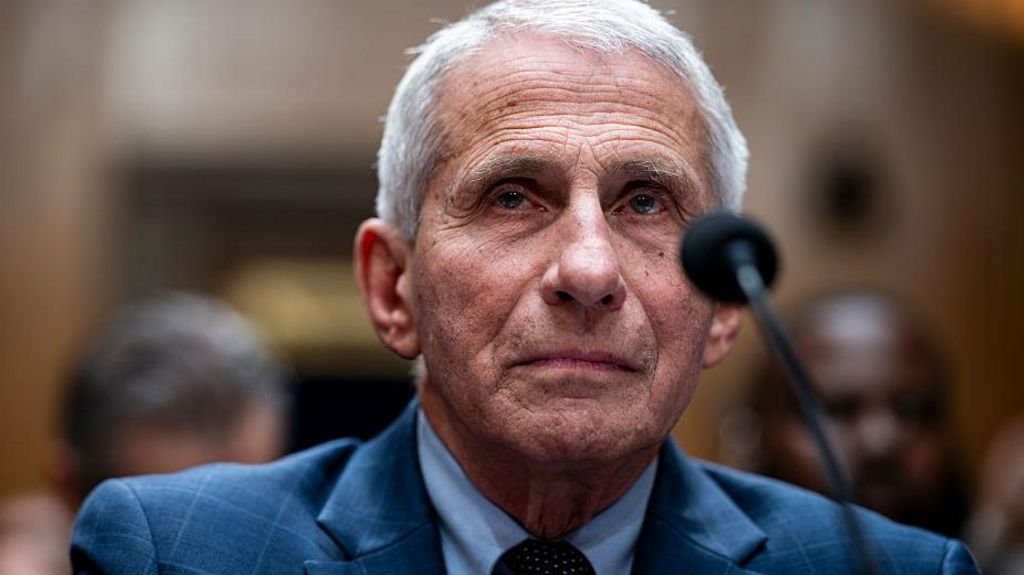
In a partisan vote that marks a sharp escalation of years-long partisan tensions over the early handling of the COVID-19 pandemic, a U.S. Senate committee has approved a contempt of Congress citation against Anthony Fauci, the nation’s former top infectious disease official, after Fauci declined to answer questions during a recent investigative hearing.
The party-line vote clears the way for the committee to send the contempt referral to the U.S. Department of Justice, which will now decide whether to pursue criminal prosecution against Fauci for defying a congressional subpoena. As of this reporting, the Justice Department has not publicly indicated whether it will move forward with the case.
The confrontation stems from a long-running inquiry led by Sen. Rand Paul, a Kentucky Republican who has spent years targeting Fauci over allegations that the former official concealed evidence about COVID-19’s origins and approved federal funding for research at a Wuhan, China lab. The lab leak hypothesis, which remains a divisive unproven claim, contrasts with the broad scientific consensus that the virus most likely jumped to humans from an infected animal population.
During his sworn testimony before the committee last week, Fauci invoked his Fifth Amendment constitutional right against self-incrimination more than 100 times. Fauci has repeatedly pushed back against Paul’s accusations, saying the Kentucky senator’s goal is purely political: to have him incarcerated. In comments ahead of the contempt vote, Paul framed the vote narrowly as a check on witness defiance, not a rehashing of six-year-old pandemic policy debates.
“What we are voting on today — not his opinions, not his policies, not anything he said from the podium six years ago,” Paul said. “We are voting on whether a witness who has received the benefit of a federal pardon can be ordered by this committee to answer questions and then defy that order without consequence.”
A critical legal context for the proceedings is the pre-emptive full pardon Fauci received from then-President Joe Biden on Biden’s final day in office in January 2025. That pardon shields Fauci from any federal prosecution for actions he took between 2014 and 2025, but it does not extend to post-2025 charges — including the current contempt of Congress citation. It also leaves Fauci open to potential state or local charges that fall outside the scope of a federal pardon.
In his own remarks during last week’s hearing, Fauci called out Paul’s long-standing fixation on his case. “The only conclusion I can reach is that the sole reason he is calling me before this committee is to get me to say something – anything – that could vindicate his repeated public pledges that I end up, in his words, ‘behind bars,’” Fauci said, while maintaining that he has never engaged in any unlawful or unethical conduct related to his pandemic work.