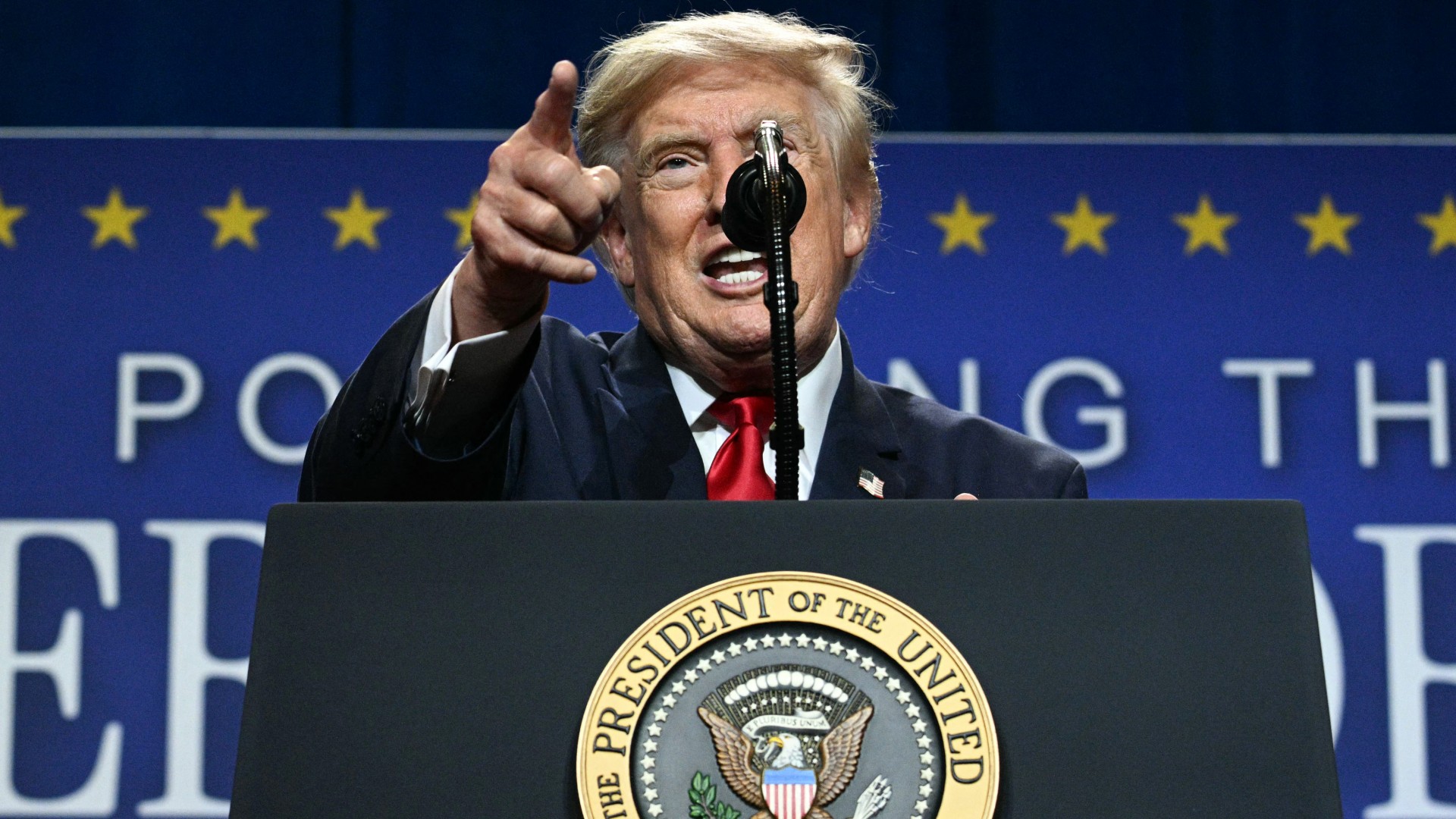
Volatility has surged across the Middle East this week, as overlapping diplomatic and military developments create a fragile security landscape spanning from the Persian Gulf to the Eastern Mediterranean. The most consequential shift came from U.S. President Donald Trump, who announced Wednesday evening during a Las Vegas public event that Washington is currently engaged in direct talks with Iran, and that the administration prioritizes a negotiated agreement over new large-scale military action against Tehran.
Trump surprised attendees by revealing that the U.S. had finalized plans for what he called “the biggest attack since World War II” before Iranian leadership requested negotiations. “I would rather make a deal with Iran because I don’t want to kill people,” he stated, while doubling down on his long-held policy that Iran will never be permitted to develop a nuclear weapon under his administration.
Trump’s announcement comes amid conflicting reports surrounding severe munitions shortages within the U.S. military, which multiple anonymous sources have tied to the decision to halt planned large-scale strikes against Iran. The Washington Post first reported last week that Trump confronted Defense Secretary Pete Hegseth during a cabinet meeting over the unaddressed critical deficit in key weapons stockpiles, which had been depleted by ongoing conflict with Iran. According to sources familiar with the exchange, Hegseth pushed back against criticism and placed blame on Deputy Defense Secretary Stephen Feinberg, accusing him of failing to keep the president fully informed about the true state of U.S. munitions reserves.
Multiple U.S. outlets have since corroborated the severity of the stockpile shortfall. CNN reported Wednesday, citing three unnamed defense sources, that the Pentagon’s stock of critical air defense interceptors has dropped to dangerously low levels following months of combat operations against Iran. The outlet confirmed that roughly 80 percent of the U.S. military’s pre-war THAAD anti-missile inventory has been expended, while half of all Patriot air defense interceptors have been used since the opening of hostilities. One senior defense source added that “virtually all” of the military’s most accurate long-range surface-to-air weapons have been deployed and exhausted in the same period.
The White House has forcefully denied all reports of a munitions crisis. Press Secretary Karoline Leavitt dismissed the Washington Post story as “100 percent fake news” and said Trump retains “the utmost confidence” in Hegseth. Trump doubled down on this pushback in posts to his social media platform Truth Social, insisting that the U.S. military maintains massive stockpiles of key munitions and that domestic weapons manufacturing is expanding at historic rates. “The US has massive amounts of ‘munitions’, especially of certain types,” he wrote, adding that large volumes of new weapons are being produced and shipped to the Middle East “as needed”. He also claimed that “Defense companies are building the largest number of plants and factories in our country’s history”, before threatening harsh action against officials who leaked information about the stockpile issue, writing: “‘Leakers’ of these treasonous statements are being hunted down… long term jail sentences will be sought.”
Simultaneously, violence has intensified along the Lebanon-Israel border even as U.S.-brokered peace negotiations enter their third day in Rome, marking the seventh round of talks to de-escalate the months-long conflict. Lebanon’s health ministry confirmed Thursday that an Israeli strike on the southern Lebanese town of Burj Shemali left eight people wounded. The attack followed a broader escalation of Israeli operations across southern Lebanon, including what Lebanese state media called a “wide-scale aggression” targeting the coastal city of Tyre. The Tyre strikes wounded four people, forced their evacuation to nearby hospitals, and displaced dozens of local residents from their homes.
The current diplomatic push is deadlocked on core demands: Lebanese negotiators are insisting that Israel end all cross-border bombardment and withdraw its forces from roughly 60 Lebanese villages and towns that Israeli forces occupied during a ground offensive launched in March. Israeli negotiators, by contrast, are demanding that the Lebanese military fully disarm and dismantle Hezbollah’s military infrastructure across southern Lebanon. Israeli military and political leaders have signaled they are prepared to escalate operations if talks do not deliver their desired outcome. Israel’s public broadcaster reported Thursday that the military’s response to alleged Hezbollah border violations “has not ended”, and that sensitive offensive operations are ongoing. Israeli Channel 12 also reported that senior military commanders are asking the country’s political leadership to approve a “stronger and more decisive” military campaign across southern Lebanon.
In a separate incident in the Persian Gulf early Thursday, the United Kingdom Maritime Trade Operations (UKMTO) reported that a commercial tanker transiting the Strait of Hormuz recorded two explosions approximately nine nautical miles southeast of the Omani village of Kumzar. The advisory confirmed that the vessel and all crew members escaped unharmed, and no leaks or environmental damage have been detected. The Strait of Hormuz is one of the world’s most critical chokepoints for global energy supplies, with roughly 20 percent of the world’s daily oil consumption passing through the waterway.